QR Codes for Healthcare: Hospitals, Clinics, Pharmacies, and the Patient-Journey Playbookرموز QR للقطاع الصحي: المستشفيات، العيادات، الصيدليّات، وكتالوج رحلة المريض
Healthcare is a sector where the same patient touches the system again and again — check-in, consultation, prescription, follow-up, refill. Every one of those touches is a candidate for a QR. Done right, QR cuts queue time at reception, replaces paper appointment slips, anchors digital prescriptions to physical packs, lets pharmacies route refill requests in one tap, and surfaces drug information in the patient's own language. Done wrong, it leaks patient data, gets impersonated by quishing, and trains patients to scan everything indiscriminately. This is the healthcare playbook: ten patient-journey placements, the compliance moves (PDPL, NPHIES, e-prescription integrity), the MENA-specific angles (Vision 2030 healthcare reform, UAE Mohap, Egypt UHIA), and the eight mistakes that turn a useful QR into a privacy incident.القطاع الصحي قطاع يلامس فيه المريض نفسه النظام مراراً وتكراراً — تسجيل الدخول، الاستشارة، الوصفة، المتابعة، إعادة الصرف. كلّ ملامسة من هذه مرشّحة لرمز QR. إذا فُعل بشكل صحيح، يقلّص الرمز وقت الانتظار في الاستقبال، يستبدل أوراق المواعيد، يربط الوصفات الرقميّة بالعبوات الفعليّة، يتيح للصيدليّات توجيه طلبات إعادة الصرف بنقرة، ويُظهر معلومات الدواء بلغة المريض. إذا فُعل بشكل خاطئ، يسرّب بيانات المرضى، يُنتحَل عبر التصيّد بـQR، ويدرّب المرضى على مسح كلّ شيء دون تمييز. هذا هو كتالوج القطاع الصحي: عشرة مواقع على رحلة المريض، حركات الامتثال (نظام حماية البيانات، نفيس، سلامة الوصفات الرقميّة)، الزوايا الخاصّة بمنطقتنا (إصلاح رؤية ٢٠٣٠ الصحّي، وزارة الصحّة الإماراتيّة، الهيئة العامّة للتأمين الصحّي في مصر)، والأخطاء الثمانية التي تحوّل رمز QR مفيداً إلى حادثة خصوصيّة.
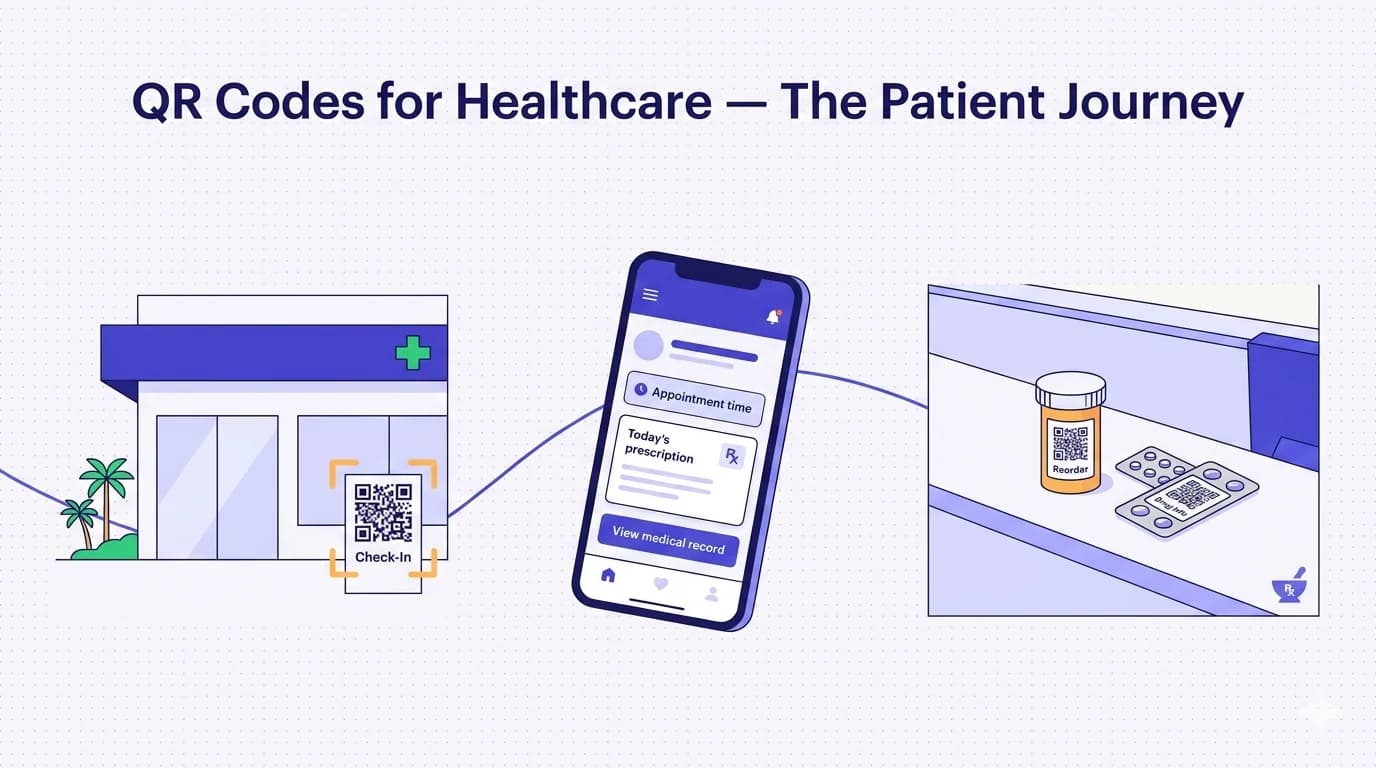
Healthcare is one of the few sectors where the same person touches the same system over and over — check-in at reception, consultation with the doctor, prescription written, pharmacy fill, follow-up appointment, refill weeks later. The continuity of the patient through these stages is the unique structural property of healthcare workflows, and it's also where almost every operational inefficiency lives. Lost paper appointment slips. Patients queueing at reception to fill out the same forms they filled out last visit. Prescriptions illegible enough that the pharmacist calls back to verify. Refill requests that bounce through a call centre. QR codes, properly deployed across the patient journey, address each of these — not as a marketing layer, but as the digital connective tissue between the physical touchpoints.
This piece is the healthcare playbook. It covers ten QR placements across the patient journey (with the specific use case at each), the compliance considerations that healthcare imposes on every other sector's QR strategy (patient data, NPHIES integration in Saudi, PDPL across the GCC, prescription-anti-fraud), the MENA-specific angles (Saudi Vision 2030 healthcare reform, UAE Mohap and DHA digitisation, Egypt's UHIA rollout), and the eight common mistakes that turn a useful clinical QR into a privacy incident. Healthcare is high-stakes — the same features that make QR valuable here also make the failure modes serious.
Why healthcare is uniquely suited to QR
Three structural features of healthcare make it the highest-value QR vertical in non-retail spaces.
First, the patient is touched repeatedly across a long timeline. A retail customer touches a store once, maybe twice a year on average. A patient touches a healthcare provider 4-8 times per year on average — and patients with chronic conditions, the elderly, parents with young children, far more often. The marginal value of digitising each touch compounds across the relationship in a way that doesn't apply to one-off retail interactions.
Second, the consequences of friction are large. A patient who can't find their appointment time, scans the QR on their wristband to check, and immediately gets the answer, has saved themselves and the receptionist both five minutes. Across 200 outpatient visits per day at a midsized clinic, that's ~17 hours of reception-staff time recovered per day. The arithmetic of marginal-friction-reduction at scale in healthcare is enormous.
Third, regulatory and compliance frameworks already expect digital integration. Saudi's NPHIES platform, Saudi Arabia's national e-health information exchange, mandates digital flows that QR naturally connects to. Same with UAE's Mohap digital strategy, Egypt's UHIA, and Kuwait's Sahel programme. A QR pointing at an NPHIES-linked e-prescription is doing real work in the regulatory architecture — not adding an extra layer on top of an analogue system.
Ten QR placements across the patient journey
1 — Hospital/clinic entrance check-in
A QR sign at the entrance lets the patient self-check-in to the facility from their phone before they reach reception. The scan opens a page tied to the facility, asks for the patient ID or national-ID number, confirms the appointment, and issues a digital queue number. By the time the patient reaches the waiting area, the system has already greeted them and the receptionist has been spared a sign-in interaction. For high-volume facilities in Riyadh, Dubai, or Cairo with hundreds of daily visits, this single placement is the highest-ROI QR a facility can deploy.
2 — Patient wristband for inpatients
Hospitalised patients wear an ID wristband with a QR. A nurse or doctor scans the QR to instantly pull up the patient's chart, medication schedule, allergies, and assigned-bed details on their tablet or phone — far faster than searching the EMR by name. The wristband QR is also a safety mechanism: before any procedure or medication is administered, the scan-and-verify step confirms that this patient is the one matching the order, reducing the risk of misadministration.
3 — Appointment confirmation slip with calendar QR
When a patient books an appointment, the printed or emailed confirmation includes a calendar-type QR (encoding an iCal-format event). The patient scans, and their phone's calendar app prompts them to add the appointment — with the date, time, doctor, clinic address, and a reminder. This eliminates the 'I forgot' no-show category, which globally accounts for 10-20% of healthcare missed appointments. The calendar-QR pattern is detailed in our QR types catalogue.
4 — E-prescription as a QR on the printed copy
The prescription itself, whether printed for the patient or filed in the EMR, carries a QR that encodes the prescription's NPHIES (or equivalent) reference. The pharmacist scans the QR, the system pulls the e-prescription from the central registry, and the pharmacist dispenses against the official record — not against an illegible handwritten note. This is mandated in Saudi Arabia under NPHIES Phase 2 rollout and is becoming standard across the GCC. The QR is the bridge between the physical prescription and the digital record.
5 — Drug-information QR on prescription packs
The blister pack, bottle, or box carries a QR that opens the drug's patient-information leaflet in the patient's language. Scan, read the side-effect list and dosing instructions, optionally see video instructions for inhaler use or injection technique. Pharmaceutical manufacturers in MENA are increasingly required to provide multilingual patient information — the QR makes Arabic, English, Urdu, Hindi, Tagalog patient-info leaflets accessible from the same physical pack without printing five different paper inserts.
6 — Refill / reorder QR on prescription bottles
A second QR on the prescription bottle (or a single QR with a tabbed destination page) lets the patient request a refill or reorder in one tap. Scan → confirm patient ID → confirm pharmacy → submit. The pharmacy receives the refill request, processes it under the standing prescription, and notifies the patient when it's ready. For chronic-condition patients (hypertension, diabetes, hyperlipidaemia — all extremely common across MENA), this turns refill management from a phone-call exchange into a one-tap action. Repeat-fill frequency typically rises 20-40% because the friction-removal increases adherence.
7 — Lab result delivery QR
Lab samples taken at the clinic are accompanied by a printed slip with a QR. When results are ready, the patient scans the QR (now associated with the result record) and views the result on their phone — securely, with patient-ID verification before display. This replaces the call-back-when-ready phone process and the patient-visits-to-pick-up paper-result process. For labs running tens of thousands of tests per day (Saudi German Hospital, Mediclinic, Cleopatra Hospitals), the cumulative time savings are substantial.
8 — Telehealth session QR
For telehealth platforms (Cura, Daman, Altibbi, Vezeeta, the Mohap teleclinic apps), the patient receives a session-launch QR via SMS or email. Scan to join the scheduled video consultation — no app login, no meeting ID, no password to type. The QR includes the encrypted session token and routes the patient directly into the consultation. This dramatically reduces the no-show rate for telehealth, which has been historically high due to login friction.
9 — Vaccine / immunisation record QR
Each administered vaccine generates a record with a QR — on the patient's vaccination card, on the digital health passport in Tawakkalna (Saudi) / Al Hosn (UAE) / Sehhaty equivalent, on travel-required immunisation certificates. Scanning the QR verifies the vaccine batch, date administered, administering facility, and the record's authenticity against the central registry. This was scaled up massively during COVID and remains the standard format for childhood-vaccine, travel-vaccine, and Hajj-required vaccine records.
10 — Patient-feedback QR at the exit
At the clinic exit or on the discharge slip, a QR opens a brief patient-experience survey. Scan, three to five questions, submit, optional comment. For facilities under quality-rating regimes (the Saudi CBAHI accreditation, the UAE DHA quality framework, the JCI international accreditation), aggregated patient-experience data feeds into the rating. The QR-based survey doubles or triples response rates over paper-form-at-the-desk surveys.
Compliance: the considerations healthcare imposes that other sectors don't
Patient data and PDPL / national data laws
The destination page of a healthcare QR very often touches patient data — patient ID, appointment time, prescription record, lab result. Each MENA country's data-protection law (Saudi Arabia's PDPL, UAE's PDPL, Egypt's Data Protection Law, etc.) imposes consent, residency, retention, and breach-notification requirements on this data. The QR's destination must be hosted in a jurisdiction the law permits (often the data must reside in-country), encrypted in transit and at rest, accessed only with proper authentication, and retained for only the legally-defined period. A QR pointing at a non-compliant destination is not just operationally fragile — it's a regulatory risk.
Patient-ID verification before sensitive content displays
A QR alone is not authentication. Anyone who happens to be holding a printed slip with the QR could scan it. So sensitive destinations (lab results, prescription details, medical records) must require an authentication step before content displays — at minimum the patient's national-ID number or birthdate, ideally an SMS-OTP confirmation. The QR establishes the routing; the authentication step establishes the right to view.
Prescription-anti-fraud (e-prescription integrity)
Forged prescriptions are a global problem. The QR-on-prescription approach addresses this directly — the prescription cannot be 'photocopied and reused' or 'edited and re-submitted' because the QR encodes a unique, server-side-verified reference. The pharmacist scans, the central registry confirms the prescription has not yet been dispensed or has dispensing remaining (for repeat prescriptions), and the dispense action is logged. Saudi's NPHIES Phase 2, UAE's Riayati platform, Egypt's UHIA prescription registry all use this pattern.
Anti-quishing — pharmacies as a target
Pharmacy storefronts are increasingly targeted by quishing campaigns — fake QRs offering 'discount on prescriptions' or 'special pharmacy partner' that capture card details. The defence is the same as elsewhere — branded dynamic QRs, the pharmacy's logo visibly framing the QR, customer education about scanning only the pharmacy's verified QR. Healthcare's high trust makes patients especially vulnerable, which is why the defence matters more here. The detail in our quishing safety primer applies directly.
MENA healthcare angles
Saudi Vision 2030 healthcare privatisation
Saudi Arabia's healthcare reform under Vision 2030 includes the privatisation of much of the public hospital system into clusters (the Health Holding Company structure), the rollout of NPHIES for nationwide health-information exchange, and the expansion of private-sector capacity. Each cluster, each private chain, and each digital-health platform participating in this transition needs QR infrastructure for patient identity, appointment routing, prescription integrity, and patient-experience measurement. The reform timeline (2025-30) puts healthcare QR demand on a multi-year growth curve significantly above other sectors.
UAE Mohap, DHA, MOHAP digital-health frameworks
UAE's Mohap (federal), DHA (Dubai), and DOH (Abu Dhabi) operate parallel digital-health frameworks with strong QR integration for patient passports, vaccine records, and prescription registries. The Riayati platform (federal e-health record) and the eClaim infrastructure both rely on QR-bridge patterns. UAE is the regional leader in adoption of these patterns and serves as a reference architecture for other GCC countries.
Egypt UHIA rollout and the private-clinic chain expansion
Egypt's Universal Health Insurance Authority rollout phase-by-phase across governorates is the largest national healthcare reform in MENA by patient count. UHIA integration relies on QR-based patient identification and claim referencing. Concurrently, private-clinic chains (Andalusia Health, Cleopatra Hospitals, Saudi German Hospital Egypt) are expanding rapidly and adopting QR patient-journey infrastructure at the same pace as the GCC.
Hajj and pilgrimage health
Saudi Arabia's Hajj and Umrah health infrastructure includes mandatory vaccinations (meningococcal, seasonal flu, COVID), health-screening at entry, on-site clinic placements at Mecca and Mina, and emergency-response logistics. Every pilgrim carries identity and immunisation QRs that connect to the Tawakkalna and Sehhaty registries. This is the highest-density healthcare QR deployment in the world during the Hajj period each year. The framing in our Hajj QR signage piece applies to the operational side; the health-specific use is the layer below it.
Eight mistakes that turn healthcare QR into a problem
- Destination is public-readable. A QR on a discharge slip that opens to the patient's full record without authentication leaks the record to anyone holding the slip — including hospital cleaners, family members, or anyone the patient hands the slip to. Always require authentication for sensitive content.
- Destination is hosted out-of-country in a way that breaches data-residency law. Patient data must reside where the law requires. Check the hosting jurisdiction before deploying.
- Static QR encoding an internal URL that changes. The EMR migrates from Cerner to Epic, the URL pattern changes, every printed wristband with the old URL is now broken. Dynamic QR through a redirect you control prevents this category of failure.
- QR on prescription with no anti-tamper marker. If the prescription is the printed kind, an attacker could overlay their own QR on the original. Use a branded-frame around the QR (the pharmacy's verification mark, the doctor's signature line, the official letterhead), and educate patients to verify the surrounding context, not just the QR.
- Refill QR with no patient-ID verification. The scan opens 'refill prescription X' without checking who's scanning. Refills happen for the wrong patient or under the wrong identity. Always verify identity before processing.
- Wristband QR encoded with the patient name in plain text inside the QR. Anyone scanning sees the patient's name on the lock screen. Encode an opaque ID that only the EMR can resolve, not the patient's identifying information directly.
- Vaccine-record QR linking to a record that doesn't actually verify against the central registry. A 'looks like a vaccine certificate' QR with no live registry verification is forgeable. Always have the QR's destination perform a live look-up against the authoritative source.
- Patient-feedback QR with no anti-spam protection. The same person scans and submits twenty times, skewing the rating. Rate-limit by patient ID, by IP, or by session token.
How QRA handles healthcare workflows
QRA QRs are dynamic by default, hosted on infrastructure with in-region data residency available for MENA deployments, brand-frameable for facility-and-pharmacy identity, password-protectable for sensitive destinations, and analytics-instrumented so facilities can see scan-to-completion rates across the patient journey. The lead-capture-form QR type extends naturally to patient-experience surveys, refill-request workflows, and lab-result-request routing. For facilities that need to bulk-generate QRs (one per patient wristband, one per prescription, one per appointment slip), the bulk-import CSV workflow handles the volume — tens of thousands of QRs generated and assigned in one operation. Integration with downstream EMR / pharmacy systems is via the destination-URL pattern: each QR points at an internal endpoint that the QRA dashboard editable-redirect can re-point if the EMR migrates.
The short answer
Healthcare is the highest-value non-retail QR vertical because patients touch the system repeatedly and the marginal friction-reduction at each touch compounds. Ten placements span the patient journey from entrance check-in through wristband, appointment slip, prescription, drug info, refill, lab result, telehealth, vaccine record, and patient-feedback at exit. The compliance overhead is real — patient data, residency, prescription integrity, anti-quishing defence — and requires authentication on sensitive destinations, dynamic QRs that survive EMR migrations, branded frames that resist impersonation, and in-region hosting where the law requires. MENA-specifically, Saudi Vision 2030, UAE Mohap/DHA, Egypt UHIA, and the Hajj health infrastructure all already use QR-bridge patterns at scale. Healthcare QR done well saves staff time and reduces patient friction; done poorly, it leaks data and creates regulatory exposure. Branded, dynamic, authenticated, and in-jurisdiction — those are the four non-negotiables.
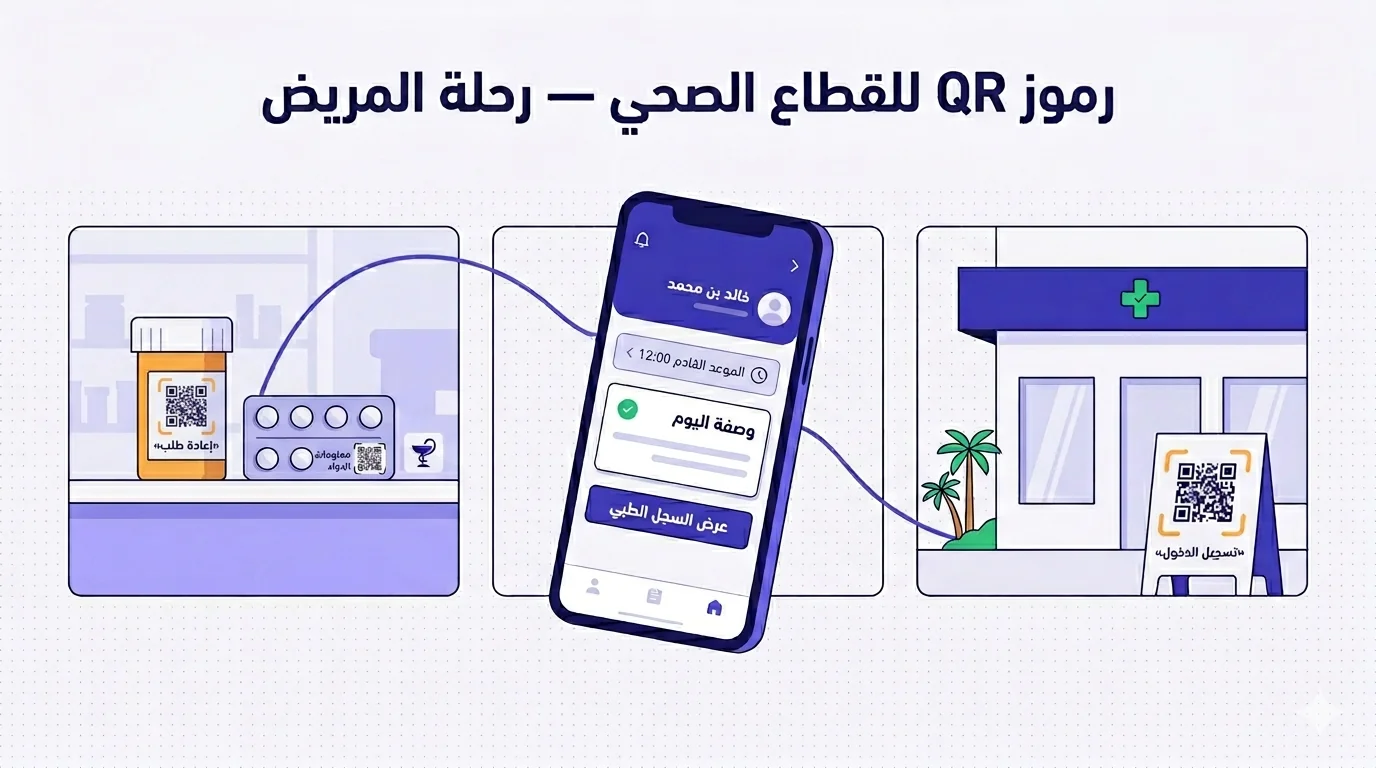
القطاع الصحي من القطاعات القليلة التي يلامس فيها الشخص نفسه النظام مراراً وتكراراً — تسجيل الدخول في الاستقبال، الاستشارة مع الطبيب، كتابة الوصفة، صرف الصيدليّة، موعد المتابعة، إعادة الصرف بعد أسابيع. استمراريّة المريض عبر هذه المراحل هي الخاصّيّة البنيويّة الفريدة لتدفّقات العمل الصحّي، وهي أيضاً المكان الذي تعيش فيه تقريباً كلّ نقاط عدم الكفاءة التشغيليّة. أوراق مواعيد ضائعة. مرضى يقفون في طوابير الاستقبال لملء النماذج نفسها التي ملأوها في الزيارة السابقة. وصفات غير مقروءة بحيث يعيد الصيدلاني الاتّصال للتحقّق. طلبات إعادة صرف تتنقّل عبر مركز اتّصال. رموز QR، إن نُشرت بشكل صحيح عبر رحلة المريض، تعالج كلّ هذه — لا كطبقة تسويقيّة، بل كنسيج رقمي يربط نقاط اللمس الفيزيائيّة.
هذا المقال هو كتالوج القطاع الصحي. يغطّي عشرة مواقع QR عبر رحلة المريض (مع حالة الاستخدام المحدّدة في كلّ منها)، اعتبارات الامتثال التي يفرضها القطاع الصحي على استراتيجيّة QR في كلّ قطاع آخر (بيانات المرضى، تكامل نفيس في السعوديّة، نظام حماية البيانات الشخصيّة في دول الخليج، مكافحة تزوير الوصفات)، الزوايا الخاصّة بمنطقتنا (إصلاح رؤية ٢٠٣٠ الصحّي، وزارة الصحّة الإماراتيّة وهيئة الصحّة بدبي، الهيئة العامّة للتأمين الصحّي في مصر)، والأخطاء الثمانية الشائعة التي تحوّل رمز QR سريريّاً مفيداً إلى حادثة خصوصيّة. القطاع الصحي عالي المخاطر — الخصائص نفسها التي تجعل QR قيّماً هنا هي ما يجعل أنماط الفشل خطيرة.
لماذا القطاع الصحي مناسب فريداً لرمز QR
ثلاث خصائص بنيويّة في القطاع الصحي تجعله أعلى قطاع قيمة QR خارج التجزئة.
أوّلاً، يُلامَس المريض مراراً عبر زمن طويل. عميل التجزئة يلامس متجراً مرّة، وربّما مرّتين في السنة في المتوسّط. مريض يلامس مزوّد رعاية صحّيّة ٤-٨ مرّات في السنة في المتوسّط — والمرضى ذوو الحالات المزمنة، كبار السنّ، الأهالي الصغار، أكثر بكثير. القيمة الحدّيّة لرقمنة كلّ ملامسة تتراكم عبر العلاقة بشكل لا ينطبق على تفاعلات التجزئة لمرّة واحدة.
ثانياً، عواقب الاحتكاك كبيرة. مريض لا يجد وقت موعده، يمسح رمز QR على سواره، ويحصل على الجواب فوراً — وفّر على نفسه وعلى موظّف الاستقبال خمس دقائق. عبر ٢٠٠ زيارة عيادة خارجيّة يوميّاً في عيادة متوسّطة، هذا ١٧ ساعة من وقت موظّفي الاستقبال مستردّ يوميّاً. حساب تقليل الاحتكاك الحدّي على نطاق واسع في القطاع الصحي هائل.
ثالثاً، الأطر التنظيميّة وأطر الامتثال تتوقّع التكامل الرقمي أصلاً. منصّة نفيس السعوديّة، تبادل المعلومات الصحّيّة الوطني، تُلزم تدفّقات رقميّة يرتبط بها QR بشكل طبيعي. الأمر نفسه مع استراتيجيّة الصحّة الرقميّة في الإمارات (Mohap)، الهيئة العامّة للتأمين الصحّي في مصر، وبرنامج «سهل» الكويتي. رمز QR يشير إلى وصفة رقميّة مرتبطة بنفيس يؤدّي عملاً حقيقيّاً في المعماريّة التنظيميّة — لا يضيف طبقة فوق نظام تماثلي.
عشرة مواقع QR عبر رحلة المريض
١ — تسجيل الدخول عند مدخل المستشفى/العيادة
لافتة QR عند المدخل تتيح للمريض تسجيل دخوله إلى المنشأة من هاتفه قبل أن يصل إلى الاستقبال. المسح يفتح صفحة مربوطة بالمنشأة، يطلب رقم هويّة المريض أو رقم الهويّة الوطنيّة، يؤكّد الموعد، ويُصدر رقم طابور رقمي. بحلول وصول المريض إلى صالة الانتظار، يكون النظام قد رحّب به أصلاً ووفّر موظّف الاستقبال تفاعل تسجيل الدخول. للمنشآت عالية الحجم في الرياض ودبي والقاهرة بمئات الزيارات اليوميّة، هذا الموقع الواحد هو أعلى عائد لاستثمار QR يمكن لمنشأة نشره.
٢ — سوار تعريف المريض المنوّم
المرضى المنوّمون يرتدون سوار تعريف يحمل QR. الممرّض أو الطبيب يمسح الرمز ليسحب فوراً ملفّ المريض، جدول الأدوية، الحساسيّات، وتفاصيل السرير المُخصّص على جهازه — أسرع بكثير من البحث في السجلّ الطبّي الإلكتروني بالاسم. سوار QR هو أيضاً آليّة سلامة: قبل أيّ إجراء أو إعطاء دواء، خطوة المسح والتحقّق تؤكّد أنّ هذا المريض هو الذي يطابق الأمر، مقلّلة خطر سوء الإعطاء.
٣ — قسيمة تأكيد الموعد برمز تقويم
عند حجز المريض موعداً، التأكيد المطبوع أو المُرسل بالبريد يحوي رمز QR من نوع تقويم (يخزّن حدث تقويم بصيغة iCal). المريض يمسح، تطبيق التقويم في هاتفه يطالبه بإضافة الموعد — مع التاريخ، الوقت، الطبيب، عنوان العيادة، وتذكير. هذا يُلغي فئة «نسيت» من التغيّب، التي تشكّل عالميّاً ١٠-٢٠٪ من المواعيد الصحّيّة الفائتة. نمط رمز التقويم مفصّل في كتالوج أنواع رموز QR.
٤ — الوصفة الرقميّة كرمز QR على النسخة المطبوعة
الوصفة نفسها، سواء طُبعت للمريض أو حُفظت في السجلّ، تحمل QR يخزّن مرجع نفيس (أو ما يكافئه). الصيدلاني يمسح، النظام يسحب الوصفة الرقميّة من السجلّ المركزي، والصيدلاني يصرف وفق السجلّ الرسمي — لا وفق ملاحظة مكتوبة بخطّ غير مقروء. هذا إلزامي في السعوديّة ضمن المرحلة الثانية من نفيس وأصبح معياريّاً في دول الخليج. الرمز هو الجسر بين الوصفة الفيزيائيّة والسجلّ الرقمي.
٥ — رمز معلومات الدواء على عبوات الوصفات
علبة شرائط الدواء، أو الزجاجة، أو الكرتونة تحمل QR يفتح نشرة معلومات المريض للدواء بلغة المريض. مسح، قراءة قائمة الآثار الجانبيّة وتعليمات الجرعة، اختياريّاً مشاهدة فيديو تعليمات لاستخدام بخّاخ أو تقنيّة حقن. شركات الأدوية في الشرق الأوسط مُلزَمة بشكل متزايد بتقديم معلومات مريض متعدّدة اللغات — الرمز يجعل النشرات بالعربيّة، الإنجليزيّة، الأرديّة، الهنديّة، التاغالوغ متاحة من نفس العبوة الفيزيائيّة دون طباعة خمس نشرات ورقيّة مختلفة.
٦ — رمز إعادة الصرف على زجاجات الوصفات
QR ثانٍ على زجاجة الوصفة (أو رمز واحد بصفحة وجهة مبوّبة) يتيح للمريض طلب إعادة صرف بنقرة. مسح ← تأكيد هويّة المريض ← تأكيد الصيدليّة ← إرسال. الصيدليّة تستلم طلب الإعادة، تعالجه ضمن الوصفة القائمة، وتُبلّغ المريض حين يجهز. للمرضى ذوي الحالات المزمنة (ارتفاع الضغط، السكّري، فرط شحميّات الدم — كلّها شائعة جدّاً في الشرق الأوسط)، هذا يحوّل إدارة إعادة الصرف من تبادل مكالمات هاتفيّة إلى فعل بنقرة واحدة. تردّد إعادة الصرف يرتفع عادةً ٢٠-٤٠٪ لأنّ إزالة الاحتكاك تزيد الالتزام.
٧ — رمز تسليم نتائج المختبر
العيّنات المخبريّة المأخوذة في العيادة تُرفق بقسيمة مطبوعة برمز QR. حين تجهز النتائج، المريض يمسح الرمز (المرتبط الآن بسجلّ النتيجة) ويعرض النتيجة على هاتفه — بأمان، مع التحقّق من هويّة المريض قبل العرض. هذا يستبدل عمليّة الاتّصال عند الجاهزيّة وعمليّة زيارة المريض لاستلام النتيجة الورقيّة. لمختبرات تشغّل عشرات الآلاف من الفحوصات يوميّاً (مستشفى السعودي الألماني، مديكلينك، مستشفيات كليوباترا)، الوفورات الزمنيّة التراكميّة كبيرة.
٨ — رمز جلسة الصحّة عن بعد
لمنصّات الصحّة عن بعد (كيورا، ضمان، الطبّي، Vezeeta، تطبيقات العيادة الافتراضيّة لوزارة الصحّة الإماراتيّة)، المريض يستلم QR لإطلاق الجلسة عبر رسالة قصيرة أو بريد. مسح للانضمام إلى الاستشارة المرئيّة المجدولة — لا تسجيل دخول للتطبيق، لا معرّف اجتماع، لا كلمة مرور للكتابة. الرمز يحوي رمز الجلسة المُشفَّر ويوجّه المريض مباشرةً إلى الاستشارة. هذا يقلّل بشكل كبير معدّل التغيّب في الصحّة عن بعد، الذي كان عالياً تاريخيّاً بسبب احتكاك تسجيل الدخول.
٩ — رمز سجلّ التطعيم/التحصين
كلّ تطعيم مُعطى يولّد سجلّاً برمز QR — على بطاقة تطعيم المريض، على جواز الصحّة الرقمي في «توكّلنا» (السعوديّة) / «الحصن» (الإمارات) / «صحّتي»، على شهادات التحصين المطلوبة للسفر. مسح الرمز يتحقّق من دفعة اللقاح، تاريخ الإعطاء، المنشأة المُعطية، وصحّة السجلّ مقابل السجلّ المركزي. هذا تضخّم بشكل هائل خلال كوفيد ويبقى الصيغة المعياريّة لسجلّات تطعيم الأطفال، تطعيم السفر، وتطعيمات الحجّ المطلوبة.
١٠ — رمز ملاحظات المريض عند الخروج
عند خروج العيادة أو على قسيمة الخروج، QR يفتح استطلاع تجربة مريض موجز. مسح، ثلاث إلى خمس أسئلة، إرسال، تعليق اختياري. للمنشآت تحت أنظمة تصنيف الجودة (اعتماد مركز سباهي السعودي، إطار جودة هيئة الصحّة بدبي، اعتماد JCI الدولي)، بيانات تجربة المريض المجمّعة تغذّي التصنيف. الاستطلاع المبني على QR يضاعف معدّلات الاستجابة مرّتين أو ثلاثاً مقارنةً باستطلاعات النموذج الورقي عند المكتب.
الامتثال: اعتبارات يفرضها القطاع الصحي ولا تفرضها قطاعات أخرى
بيانات المرضى ونظام حماية البيانات الشخصيّة
صفحة وجهة رمز QR صحّي تلامس في الغالب بيانات مريض — هويّة المريض، وقت الموعد، سجلّ الوصفة، نتيجة المختبر. كلّ قانون حماية بيانات في دول الشرق الأوسط (نظام حماية البيانات الشخصيّة السعودي، الإماراتي، قانون حماية البيانات المصري إلخ) يفرض متطلّبات الموافقة، الإقامة، الاحتفاظ، والإبلاغ عن الخروقات على هذه البيانات. وجهة الرمز يجب أن تكون مستضافة في الولاية القضائيّة التي يسمح بها القانون (غالباً يجب أن تقيم البيانات داخل البلد)، مُشفَّرة أثناء النقل والتخزين، يُصل إليها بمصادقة سليمة فقط، وتُحفظ للفترة المحدّدة قانوناً فقط. رمز يشير إلى وجهة غير ممتثلة ليس فقط هشّاً تشغيليّاً — بل خطر تنظيمي.
التحقّق من هويّة المريض قبل عرض المحتوى الحسّاس
QR وحده ليس مصادقة. أيّ شخص يحمل قسيمة مطبوعة بالرمز يستطيع مسحه. لذا الوجهات الحسّاسة (نتائج المختبر، تفاصيل الوصفة، السجلّات الطبّيّة) يجب أن تتطلّب خطوة مصادقة قبل عرض المحتوى — كحدّ أدنى رقم الهويّة الوطنيّة أو تاريخ الميلاد، مثاليّاً تأكيد OTP عبر رسالة قصيرة. الرمز يحدّد التوجيه؛ خطوة المصادقة تحدّد حقّ المشاهدة.
مكافحة تزوير الوصفات (سلامة الوصفة الرقميّة)
الوصفات المزوّرة مشكلة عالميّة. نهج QR-على-الوصفة يعالج هذا مباشرةً — الوصفة لا يمكن «تصويرها وإعادة استخدامها» أو «تعديلها وإعادة تقديمها» لأنّ الرمز يخزّن مرجعاً فريداً يتحقّق منه الخادم. الصيدلاني يمسح، السجلّ المركزي يؤكّد أنّ الوصفة لم تُصرف بعد أو أنّ لها صرفات متبقّية (للوصفات المتكرّرة)، وفعل الصرف يُسجَّل. المرحلة الثانية من نفيس السعوديّة، منصّة رعايتي الإماراتيّة، سجلّ وصفات الهيئة المصريّة، جميعها تستخدم هذا النمط.
مكافحة تصيّد QR — الصيدليّات كهدف
واجهات الصيدليّات مستهدفة بشكل متزايد بحملات تصيّد QR — رموز مزيّفة تعرض «خصماً على الوصفات» أو «شريك صيدليّة خاصّ» تلتقط بيانات البطاقات. الدفاع نفس الدفاع في أيّ مكان آخر — رموز ديناميكيّة موسومة بالعلامة، شعار الصيدليّة يحيط الرمز ظاهراً، وتثقيف العملاء بمسح رمز الصيدليّة المُتحقَّق منه فقط. ثقة المرضى العالية في القطاع الصحي تجعلهم مكشوفين أكثر، ولذلك يهمّ الدفاع أكثر هنا. التفاصيل في دليل أمان QR والتصيّد تنطبق مباشرةً.
زوايا القطاع الصحي في الشرق الأوسط
خصخصة القطاع الصحّي في رؤية ٢٠٣٠ السعوديّة
إصلاح القطاع الصحّي السعودي ضمن رؤية ٢٠٣٠ يشمل خصخصة معظم نظام المستشفيات الحكوميّة إلى تجمّعات (هيكل الشركة القابضة للصحّة)، نشر نفيس لتبادل المعلومات الصحّيّة على مستوى الوطن، وتوسيع طاقة القطاع الخاصّ. كلّ تجمّع، كلّ سلسلة خاصّة، وكلّ منصّة صحّة رقميّة مشاركة في هذا الانتقال تحتاج بنية QR لتعريف المرضى، توجيه المواعيد، سلامة الوصفات، وقياس تجربة المريض. الجدول الزمني للإصلاح (٢٠٢٥-٢٠٣٠) يضع الطلب على QR صحّي في منحنى نموّ متعدّد السنوات أعلى بشكل ملحوظ من القطاعات الأخرى.
أطر الصحّة الرقميّة في وزارة الصحّة الإماراتيّة وهيئة الصحّة بدبي
وزارة الصحّة الإماراتيّة (Mohap الفيدراليّة)، هيئة الصحّة بدبي (DHA)، ودائرة الصحّة في أبوظبي (DOH) تشغّل أطر صحّة رقميّة متوازية مع تكامل QR قوي لجوازات المرضى، سجلّات التطعيم، وسجلّات الوصفات. منصّة «رعايتي» (السجلّ الصحّي الإلكتروني الفيدرالي) وبنية المطالبات الإلكترونيّة كلاهما يعتمد على أنماط جسر QR. الإمارات هي القائد الإقليمي في تبنّي هذه الأنماط وتعمل كمعماريّة مرجعيّة لباقي دول الخليج.
إطلاق هيئة التأمين الصحّي في مصر وتوسّع سلاسل العيادات الخاصّة
إطلاق الهيئة العامّة للتأمين الصحّي في مصر مرحلةً بمرحلة عبر المحافظات هو أكبر إصلاح صحّي وطني في الشرق الأوسط بعدد المرضى. تكامل الهيئة يعتمد على تعريف المرضى المبني على QR ومراجع المطالبات. بالتوازي، سلاسل العيادات الخاصّة (أندلسيّة، كليوباترا، السعودي الألماني مصر) تتوسّع بسرعة وتتبنّى بنية QR لرحلة المريض بالخطى نفسها التي تتبنّاها دول الخليج.
صحّة الحجّ والعمرة
بنية الصحّة في الحجّ والعمرة في السعوديّة تشمل تطعيمات إلزاميّة (الحمّى الشوكيّة، الإنفلونزا الموسميّة، كوفيد)، فحص صحّي عند الدخول، مواقع عيادات في مكّة ومنى، ولوجستيّات استجابة الطوارئ. كلّ حاجّ يحمل QR هويّة وتحصين مرتبطين بسجلّات «توكّلنا» و«صحّتي». هذا أعلى نشر كثافة لـQR صحّي في العالم خلال فترة الحجّ سنويّاً. الإطار في مقال لافتات QR للحج ينطبق على الجانب التشغيلي؛ الاستخدام الصحّي المحدّد هو الطبقة تحته.
ثمانية أخطاء تحوّل QR صحّي إلى مشكلة
- الوجهة قابلة للقراءة العامّة. رمز على قسيمة خروج يفتح سجلّ المريض الكامل دون مصادقة يسرّب السجلّ لأيّ شخص يحمل القسيمة — بمن فيهم عمّال نظافة المستشفى، أفراد الأسرة، أو أيّ شخص يسلّم له المريض القسيمة. اطلب دائماً مصادقة للمحتوى الحسّاس.
- الوجهة مستضافة خارج البلد بطريقة تنتهك قانون إقامة البيانات. بيانات المرضى يجب أن تقيم حيث يتطلّب القانون. افحص ولاية الاستضافة قبل النشر.
- رمز ثابت يخزّن رابطاً داخليّاً يتغيّر. السجلّ الإلكتروني يهاجر من Cerner إلى Epic، نمط الرابط يتغيّر، كلّ سوار مطبوع بالرابط القديم معطوب الآن. الرمز الديناميكي عبر إعادة توجيه تتحكّم بها يمنع هذه الفئة من الفشل.
- QR على وصفة دون علامة مكافحة عبث. إن كانت الوصفة من النوع المطبوع، يمكن لمهاجم وضع رمزه فوق الأصلي. استخدم إطاراً موسوماً حول الرمز (علامة تحقّق الصيدليّة، سطر توقيع الطبيب، الترويسة الرسميّة)، ودرّب المرضى على التحقّق من السياق المحيط، لا الرمز فقط.
- رمز إعادة صرف بلا تحقّق من هويّة المريض. المسح يفتح «إعادة صرف الوصفة س» دون التحقّق من ماسحها. إعادة الصرف تحدث للمريض الخطأ أو تحت هويّة خاطئة. تحقّق دائماً من الهويّة قبل المعالجة.
- رمز سوار يخزّن اسم المريض كنصّ صريح داخل الرمز. أيّ شخص يمسح يرى اسم المريض على شاشة القفل. خزّن معرّفاً غامضاً يستطيع السجلّ الإلكتروني وحده حلّه، لا معلومات تعريف المريض مباشرةً.
- رمز سجلّ تطعيم يربط بسجلّ لا يتحقّق فعلاً مقابل السجلّ المركزي. رمز «يبدو شهادة تطعيم» بلا تحقّق حيّ من السجلّ قابل للتزوير. اجعل وجهة الرمز دائماً تجري بحثاً حيّاً مقابل المصدر الموثوق.
- رمز ملاحظات مريض بلا حماية من السبام. الشخص نفسه يمسح ويُرسل عشرين مرّة، مشوّهاً التصنيف. حُدّ بمعدّل بهويّة المريض، أو IP، أو رمز جلسة.
كيف تتعامل QRA مع تدفّقات القطاع الصحي
رموز QRA ديناميكيّة افتراضيّاً، مستضافة على بنية مع توفّر إقامة بيانات داخل المنطقة لعمليّات نشر الشرق الأوسط، قابلة للتأطير بالعلامة لهويّة المنشأة والصيدليّة، قابلة لحماية كلمة المرور للوجهات الحسّاسة، ومجهّزة بالتحليلات بحيث تستطيع المنشآت رؤية معدّلات المسح إلى الإكمال عبر رحلة المريض. نوع رمز التقاط النموذج يمتدّ طبيعيّاً إلى استطلاعات تجربة المريض، تدفّقات طلب إعادة الصرف، وتوجيه طلب نتائج المختبر. للمنشآت التي تحتاج توليد QR بالجملة (واحد لكلّ سوار مريض، واحد لكلّ وصفة، واحد لكلّ قسيمة موعد)، تدفّق استيراد CSV الجماعي يعالج الحجم — عشرات الآلاف من الرموز تُولَّد وتُسنَد في عمليّة واحدة. التكامل مع أنظمة السجلّ الإلكتروني / الصيدليّة هو عبر نمط رابط الوجهة: كلّ رمز يشير إلى نقطة نهاية داخليّة يمكن لإعادة توجيه قابلة للتعديل في لوحة QRA إعادة توجيهها إن هاجر السجلّ الإلكتروني.
الإجابة المختصرة
القطاع الصحي هو أعلى قطاع قيمة QR خارج التجزئة لأنّ المرضى يلامسون النظام مراراً ولأنّ تقليل الاحتكاك الحدّي في كلّ ملامسة يتراكم. عشرة مواقع تمتدّ على رحلة المريض من تسجيل الدخول عند المدخل عبر السوار، قسيمة الموعد، الوصفة، معلومات الدواء، إعادة الصرف، نتيجة المختبر، الصحّة عن بعد، سجلّ التطعيم، وملاحظات المريض عند الخروج. عبء الامتثال حقيقي — بيانات المرضى، الإقامة، سلامة الوصفات، دفاع مكافحة التصيّد — ويتطلّب مصادقة على الوجهات الحسّاسة، رموزاً ديناميكيّة تنجو من ترحيلات السجلّ الإلكتروني، إطارات موسومة بالعلامة تقاوم الانتحال، واستضافة داخل المنطقة حيث يتطلّب القانون. في الشرق الأوسط تحديداً، رؤية ٢٠٣٠ السعوديّة، Mohap وDHA الإماراتيّة، الهيئة المصريّة، وبنية صحّة الحجّ، جميعها تستخدم بالفعل أنماط جسر QR على نطاق واسع. QR صحّي مُنفَّذ جيّداً يوفّر وقت الموظّفين ويقلّل احتكاك المرضى؛ مُنفَّذ سيّئاً، يسرّب البيانات ويولّد انكشافاً تنظيميّاً. موسوم، ديناميكي، مُصادَق عليه، وداخل الولاية القضائيّة — هذه هي الأربعة غير القابلة للتفاوض.
Ready to make a smarter QR?جاهز لإنشاء رمز QR أذكى؟
Sign up free — no card needed. Track every scan, edit destinations anytime.سجّل مجاناً — بدون بطاقة. تتبّع كل عملية مسح وعدّل الوجهة في أي وقت.