QR Codes for Hajj and Umrah: The 10-Day Logistics Windowرموز QR للحجّ والعمرة: نافذة الـ ١٠ أيّام اللوجستيّة
Hajj concentrates 2.5 million pilgrims from over 180 countries into a 10-day logistics window. Umrah adds a steady year-round flow of millions more. The signage problem is brutal — six languages, dense crowds, ever-changing schedules, weather extremes. QR codes are the only signage technology that solves it without reprinting. Here's how operators, hotels, and tour groups serving Hajj and Umrah actually use them.يُركّز الحجّ ٢٫٥ مليون حاجّ من أكثر من ١٨٠ دولة في نافذة لوجستيّة من عشرة أيّام. وتُضيف العمرة تدفّقاً ثابتاً على مدار السنة بملايين أخرى. مشكلة اللافتات قاسية — ستّ لغات، حشود كثيفة، جداول متغيّرة باستمرار، تقلّبات طقس حادّة. رموز QR هي تقنية اللافتات الوحيدة التي تحلّ المشكلة دون إعادة طباعة. إليك كيف يستخدمها فعلاً المشغّلون والفنادق ومجموعات الحجّ والعمرة.
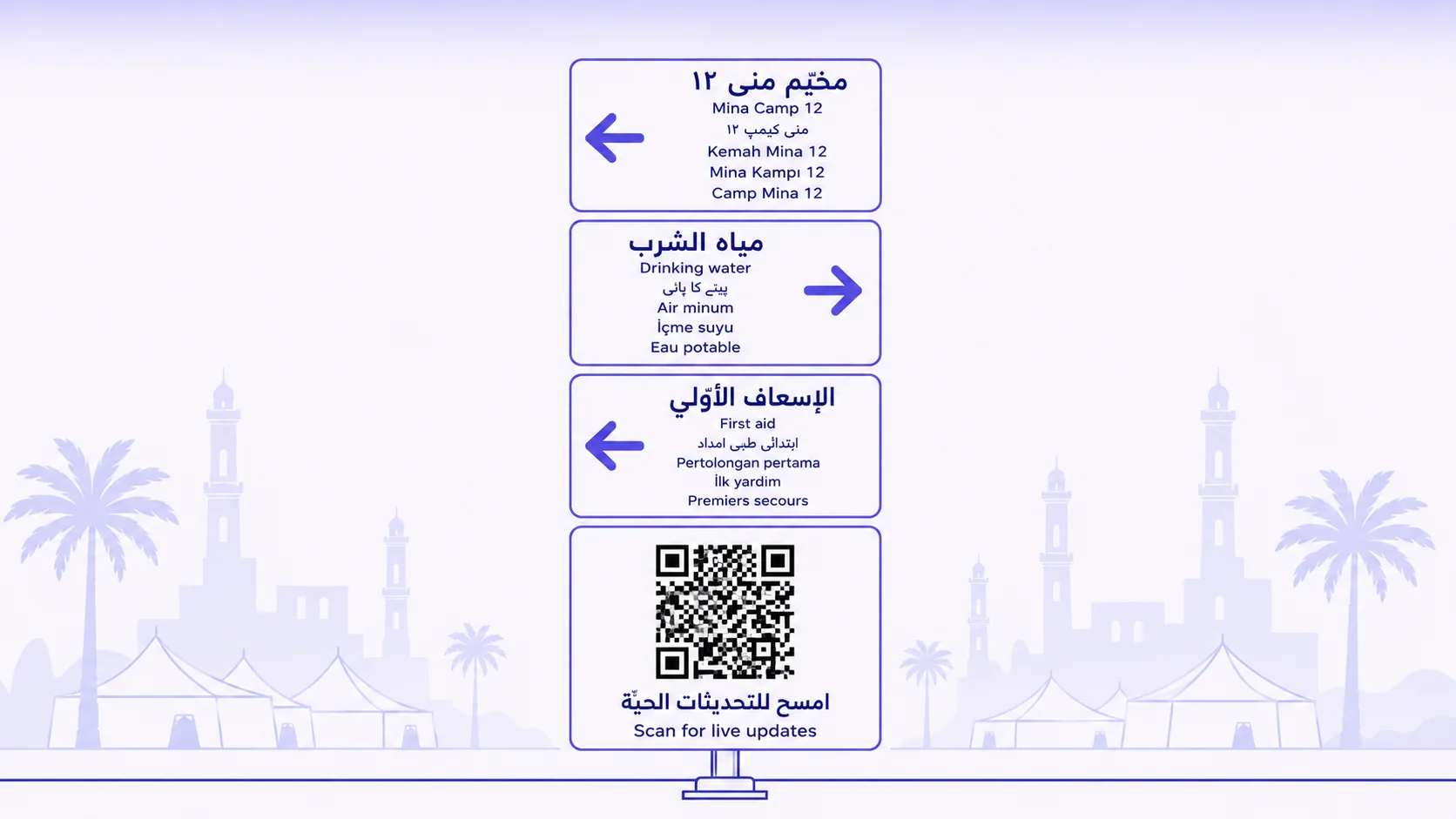
Every year, roughly 2.5 million pilgrims from over 180 countries arrive in Mecca for Hajj, the entire flow compressed into a 10-day window. Add Umrah — a steady year-round flow that crossed 27 million in 2024 — and the Two Holy Mosques and surrounding Mashair sites operate at a logistics density that has no real parallel anywhere else on Earth. Six common languages, dense crowds, schedules that shift with weather or security, narrow infrastructure windows between rituals. The signage problem is brutal.
QR codes are not the entire answer — they don't replace human guides, the tasreeh card system, or the operator briefings that pilgrims rely on. But they're the only signage technology that solves a specific, unsolvable-without-them problem: how do you convey information that changes mid-day, in six languages, on a sign that's already been printed and bolted in place? This piece is for tour operators, Mecca and Medina hotels, transport companies, and signage vendors serving the Hajj and Umrah supply chain. The QR is small; the operational difference is large.
Why printed signage breaks during Hajj
Three structural problems hit printed Hajj signage every year, and they all stem from the same root: the printed sign was finalised months before the pilgrim arrived.
- Language coverage gap. Pilgrims arrive speaking Arabic, English, Urdu, Indonesian, Bengali, Turkish, Malay, French, Hausa, Persian, Russian — and that's just the top ten. A printed sign realistically supports four to six languages before legibility collapses. Whichever languages didn't make the cut create a navigation gap that costs operator time at every information desk.
- Schedule mutability. Hajj-day schedules shift in real time — Tawaf timings adjust for crowd density, transport between Mina and Arafat reroutes when one road clogs, prayer-time anchors move with the lunar calendar. Printed schedules go obsolete the moment they're printed. Operators end up taping handwritten Arabic-only addenda to printed boards, undoing the multilingual investment.
- Weather and emergency overrides. Heat advisories, dust storms, security route changes — Hajj 2024's heat exposure event made the operational stakes vivid. The information you want pilgrims to see most urgently is exactly the information that didn't exist when the sign was printed.
QR codes solve all three by separating the durable signage (multilingual destination labels printed once) from the volatile signage (a QR that resolves to a page you can update in seconds).
The pattern that works: durable + volatile layered together
Every effective Hajj sign QR setup we've seen follows the same layering.
Durable layer (printed once, never changes)
The signpost itself: directional arrows, destination labels in six fixed languages (Arabic primary; English, Urdu, Indonesian, Turkish, French as the common second-tier; expand based on your specific pilgrim mix). The QR symbol and a short call-to-scan in two languages. Make these elements physically durable — UV-resistant inks, weatherproof lamination, mounting hardware rated for desert wind. The hardware survives multiple Hajj seasons; the printing cost amortises across years.
Volatile layer (the QR destination — changes constantly)
The QR resolves to a mobile-friendly page hosted on your operator domain or a dedicated subdomain. That page is what carries everything that moves: today's bus departure times, current weather advisories, the WhatsApp emergency contact for this camp, the live link to your operator's video briefing, the prayer timetable for tomorrow, the updated medical centre hours. Multi-language toggling on the page itself; one URL, all languages handled by the page, not the QR.
Five real Hajj/Umrah QR use cases
1. Camp signage in Mina (and Muzdalifah, Arafat)
Camp directional signs at Mina point to tent numbers, toilets, water, food distribution, medical aid, and the bus pickup zone for the route to Arafat. The QR on each sign goes to a live status page: current bus timing, current queue length at this water station, current medical-aid wait times, today's prayer schedule, the camp WhatsApp for emergencies. Tour operators running multiple camps use a single template URL pattern (e.g. /camp/12, /camp/13) so each camp's QR points to its own status page, and a single backend update propagates to every printed sign in that camp.
2. Hotel room and lobby signage in Mecca and Medina
Hotel QR signage during Hajj season carries information no static printed card can: shuttle bus timings to and from the Haram (which shift hourly with crowd flow), today's prayer times, Wi-Fi credentials, breakfast hours adjusted for fasting status, the hotel-to-Mashair transport schedule. Pilgrims open the QR ten times a day. The hotel updates it once a day, twice during shifts, instantly from a phone.
3. Tour-group identification on coaches and waiting zones
Pilgrim coaches and group waiting zones get a tour-group QR — scanning it opens a page with the group's tasreeh (permit) details, the group leader's WhatsApp, the day's itinerary, the meeting points, and the contingency plan if a pilgrim gets separated. This replaces the laminated leader cards that used to get lost, swapped, or weathered. Update once; every group member scanning has the current information.
4. Multilingual route and ritual guides
QR-linked digital companions to physical sites — a sign near the Marwa-Safa stretch pointing to a page that explains the ritual in the pilgrim's chosen language, with audio narration option. Operators sometimes integrate this with their booking platform so the language preference is already set when the pilgrim scans. The print sign itself only needs the QR and the words 'Scan for guide' / 'امسح للدليل' — every language is delivered by the page.
5. Emergency and lost-pilgrim QR badges
ID lanyards or wristbands carrying a QR that, if a pilgrim becomes disoriented or separated from their group, can be scanned by a fellow pilgrim, security officer, or volunteer to reveal the pilgrim's group, group leader contact, language, medical notes if disclosed, and last-known camp. This is one of the most operationally valuable patterns. The same QR can be re-issued to new pilgrims each season — the badge hardware is reusable, the data behind the QR resets per pilgrim.
The technical details that matter at Mecca scale
A few things break QR setups at Hajj scale that don't break them anywhere else.
Connectivity is uneven
Mobile coverage near the Haram and in dense Mashair sites varies dramatically by hour. Page weight matters more than usual — keep your QR destination page under 100 KB total, defer non-critical images, prioritise text content. Pilgrims with weak signal still get the schedule even if the hero image never loads.
Language detection should fall back gracefully
Don't rely on browser language detection alone — many pilgrim devices are configured to system locales that don't match their reading language. Default to Arabic + English visible by default, with a prominent language switcher showing all supported languages in their native script (العربية / English / اردو / Bahasa Indonesia / Türkçe / Français), not in transliteration.
Print contrast and quiet zone for outdoor desert sun
Mecca and Mashair sun is intense. Print QRs at higher contrast than you would indoors (deep black on white, never grey or coloured for primary outdoor signage), with a generous quiet zone — at least 6 modules of clear space around the code rather than the standard 4 — because reflective glare reduces effective scan area. Size: minimum 8 cm at eye-level signage, larger for elevated camp signs intended to be scanned from a few metres away.
Test from non-iPhones
Pilgrim device mix during Hajj skews heavily toward mid-range Android phones from South and Southeast Asia. Test your QR pages on slower Androids with limited RAM — not on the iPhone that's sitting on the operator's desk. A page that's snappy on a flagship can feel broken on a three-year-old budget Android in a low-signal area.
Compliance and Saudi-side considerations
Saudi authorities (Ministry of Hajj and Umrah, GACA for airport-adjacent signage, municipal authorities for site signage) maintain evolving guidance on operator signage. Three points worth confirming with your local agent before printing at scale:
- Approval for tour-operator signage in the Mashair (Mina, Muzdalifah, Arafat) is managed by the General Authority for Hajj and Umrah and your accredited mu'assasah. QR usage itself is uncontroversial; the surrounding signage layout, branding, and placement are what get approved.
- Data residency: if the QR destination page collects any pilgrim data (sign-up forms, registration, medical notes), confirm with your operator's compliance team whether the data must stay on KSA-hosted infrastructure. For most marketing/scheduling pages this isn't a concern, but the moment you collect personal data, host accordingly.
- Language requirements: Arabic must be present and primary on official signage. QR destination pages should default to Arabic visible, with other languages selectable — never English-only landing pages.
How QRA fits Hajj/Umrah operations
Generate one dynamic QR per camp, per coach, per hotel room cluster, per ID badge type. Each QR points to a destination URL you control, hosted wherever you want. Throughout the season, update destinations from the dashboard — bus timetable changes, weather advisory issued, evening briefing video published — and every printed QR in the field reflects the new content within minutes. Scan analytics show you which signs are getting traffic, which aren't, and which times of day pilgrims actually scan (useful for next year's print run sizing). The infrastructure investment is one-time per season; the operational benefit compounds across thousands of pilgrims a day.
The short answer
Hajj and Umrah signage has one problem printed signs cannot solve: the information that matters most is the information that didn't exist when the sign was printed. Layer durable multilingual signage with a dynamic QR pointing to a live destination page, and you've separated the unchanging from the unchangeable. The hardware lasts seasons; the content updates in seconds. Mecca and the Mashair will see 2.5 million Hajj pilgrims and tens of millions of Umrah visitors next year. Print the durable layer once, plan the volatile layer like an operational dashboard, and the signage problem stops fighting you.
كلّ عام، يصل نحو ٢٫٥ مليون حاجّ من أكثر من ١٨٠ دولة إلى مكّة المكرّمة لأداء فريضة الحجّ، ويتركّز هذا التدفّق كلّه في نافذة من عشرة أيّام. أضف إلى ذلك العمرة — تدفّق ثابت على مدار السنة تجاوز ٢٧ مليوناً في عام ٢٠٢٤ — فإنّ الحرمَين الشريفَين والمشاعر المحيطة بهما تعمل بكثافة لوجستيّة لا نظير لها على وجه الأرض. ستّ لغات شائعة، حشود كثيفة، جداول تتبدّل مع الطقس أو الأمن، نوافذ بنيّة تحتيّة ضيّقة بين الشعائر. مشكلة اللافتات قاسية.
رموز QR ليست الجواب الكامل — فهي لا تحلّ محلّ المرشدين البشريّين، ولا نظام بطاقات التصاريح، ولا الإحاطات التي يعتمد عليها الحجّاج من المشغّلين. لكنّها تقنية اللافتات الوحيدة التي تحلّ مشكلة محدّدة لا حلّ لها بدونها: كيف تنقل معلومةً تتغيّر في منتصف اليوم، بستّ لغات، على لافتة طُبعت ورُكّبت في مكانها بالفعل؟ هذا المقال موجَّه لشركات الحجّ والعمرة، وفنادق مكّة والمدينة، وشركات النقل، ومُورّدي اللافتات الذين يخدمون سلسلة توريد الحجّ والعمرة. الرمز صغير؛ والفرق التشغيلي كبير.
لماذا تنهار اللافتات المطبوعة خلال الحجّ
ثلاث مشكلات هيكليّة تضرب لافتات الحجّ المطبوعة كلّ عام، وكلّها تنبع من جذر واحد: اللافتة المطبوعة أُنجزت قبل وصول الحاجّ بشهور.
- فجوة التغطية اللغويّة. يصل الحجّاج وهم يتحدّثون العربيّة والإنجليزيّة والأرديّة والإندونيسيّة والبنغاليّة والتركيّة والملايو والفرنسيّة والهوسا والفارسيّة والروسيّة — وهذه فقط أكثر عشر لغات. اللافتة المطبوعة تستوعب بشكل واقعي أربع إلى ست لغات قبل أن تنهار قابليّة القراءة. اللغات التي لم تجد مكاناً تُحدث فجوةً ملاحيّة تُكلّف وقت المشغّل عند كلّ مكتب استعلامات.
- تقلّب الجداول. جداول أيّام الحجّ تتبدّل في الوقت الحقيقي — توقيتات الطواف تُعدَّل وفق كثافة الحشود، والنقل بين منى وعرفات يُعاد توجيهه حين يختنق طريق، والمراسي الزمنيّة للصلوات تتحرّك مع التقويم القمري. الجداول المطبوعة تتقادم لحظة طباعتها. ينتهي الأمر بالمشغّلين إلى لصق ملاحق مكتوبة بخطّ اليد بالعربيّة فقط على اللوحات المطبوعة، فيُلغون الاستثمار متعدّد اللغات.
- تجاوزات الطقس والطوارئ. تحذيرات الحرّ، العواصف الترابيّة، تغييرات المسار الأمنيّة — حدث التعرّض الحراري في حجّ ٢٠٢٤ جعل المخاطر التشغيليّة واضحة. المعلومة التي تريد أن يراها الحاجّ بأقصى إلحاح هي بالضبط المعلومة التي لم تكن موجودة حين طُبعت اللافتة.
تحلّ رموز QR المشكلات الثلاث بفصل اللافتات الدائمة (تسميات الوجهات متعدّدة اللغات تُطبع مرّة واحدة) عن اللافتات المتقلّبة (رمز QR يحيل إلى صفحة تستطيع تحديثها بثوانٍ).
النمط الذي ينجح: الدائم + المتقلّب طبقتان متراصّتان
كلّ إعداد ناجح لرموز QR على لافتات الحجّ رأيناه يتّبع التراص نفسه.
الطبقة الدائمة (تُطبع مرّة واحدة، لا تتغيّر أبداً)
اللافتة نفسها: أسهم اتّجاهيّة، تسميات وجهات بست لغات ثابتة (العربيّة أساسيّة؛ ثمّ الإنجليزيّة، الأرديّة، الإندونيسيّة، التركيّة، الفرنسيّة كصفّ ثانٍ شائع؛ توسّع حسب مزيج حجّاجك). رمز QR وعبارة قصيرة «امسح» بلغتين. اجعل هذه العناصر متينة فيزيائيّاً — أحبار مقاومة للأشعّة فوق البنفسجيّة، تغليف مقاوم للطقس، تركيبات معدنيّة مصنّفة لرياح الصحراء. تبقى البنية الصلبة عبر مواسم حجّ متعدّدة؛ تكلفة الطباعة تُستهلَك على مدى سنوات.
الطبقة المتقلّبة (وجهة الـ QR — تتغيّر باستمرار)
يحيل الرمز إلى صفحة محسّنة للموبايل مستضافة على نطاق المشغّل أو نطاق فرعي مخصّص. تلك الصفحة هي التي تحمل كلّ شيء يتحرّك: مواعيد انطلاق الحافلات اليوم، تحذيرات الطقس الحاليّة، رقم واتساب الطوارئ لهذا المخيّم، الرابط الحيّ للإحاطة المرئيّة من المشغّل، جدول صلاة الغد، ساعات المركز الطبّي المحدّثة. تبديل اللغات يحدث في الصفحة نفسها؛ رابط واحد، كلّ اللغات تتعامل معها الصفحة، لا الرمز.
خمس حالات استخدام حقيقيّة لـ QR في الحجّ والعمرة
١. لافتات المخيّمات في منى (والمزدلفة وعرفات)
تشير لافتات المخيّمات الاتّجاهيّة في منى إلى أرقام الخيام، دورات المياه، المياه، توزيع الطعام، الإسعاف الطبّي، ومنطقة استقبال الحافلات لمسار عرفات. يحيل الرمز على كلّ لافتة إلى صفحة حالة حيّة: توقيت الحافلة الحاليّ، طول الطابور الحاليّ عند هذه المحطّة، أوقات الانتظار الحاليّة للإسعاف، جدول الصلوات اليوم، رقم واتساب المخيّم للطوارئ. شركات السياحة التي تدير عدّة مخيّمات تستخدم نمط رابط قالب واحد (مثل /camp/12، /camp/13) فيشير QR كلّ مخيّم إلى صفحة الحالة الخاصّة به، وتحديث واحد في الخلفيّة ينتشر إلى كلّ لافتة مطبوعة في ذلك المخيّم.
٢. لافتات غرف وبهو الفنادق في مكّة والمدينة
لافتات QR الفندقيّة في موسم الحجّ تحمل معلومات لا تستطيع بطاقة مطبوعة ثابتة حملها: توقيتات حافلات النقل من وإلى الحرم (التي تتبدّل ساعةً بساعة مع تدفّق الحشود)، أوقات الصلاة اليوم، بيانات الواي فاي، ساعات الإفطار المعدّلة وفق وضع الصيام، جدول النقل من الفندق إلى المشاعر. يفتح الحجّاج الرمز عشر مرّات في اليوم. والفندق يحدّثه مرّة في اليوم، مرّتين خلال النوبات، فوراً من هاتف.
٣. تعريف المجموعة السياحيّة على الحافلات ومناطق الانتظار
تحصل حافلات الحجّاج ومناطق انتظار المجموعات على رمز QR للمجموعة — مسحه يفتح صفحة بتفاصيل تصريح المجموعة، رقم واتساب قائد المجموعة، جدول اليوم، نقاط الالتقاء، وخطّة الطوارئ في حال انفصل أحد الحجّاج. هذا يحلّ محلّ بطاقات القائد المغلّفة التي كانت تُفقد أو تُستبدل أو تتضرّر بالطقس. حدّث مرّة واحدة؛ كلّ أعضاء المجموعة عند المسح يحصلون على المعلومة الحاليّة.
٤. أدلّة المسارات والشعائر متعدّدة اللغات
مرافقات رقميّة مرتبطة بـ QR للمواقع الفيزيائيّة — لافتة قرب مسعى الصفا والمروة تشير إلى صفحة تشرح الشعيرة باللغة المختارة للحاجّ، مع خيار سرد صوتي. يدمج المشغّلون أحياناً هذا مع منصّة الحجوزات لديهم بحيث يكون تفضيل اللغة محدّداً مسبقاً حين يمسح الحاجّ. اللافتة المطبوعة نفسها تحتاج فقط إلى الرمز وعبارة «امسح للدليل» / «Scan for guide» — كلّ لغة تُقدّم عبر الصفحة.
٥. شارات QR للطوارئ والحجّاج الضائعين
ميداليّات تعريف أو أساور تحمل رمز QR يمكن، إن ضلّ الحاجّ أو انفصل عن مجموعته، أن يُمسح من حاجّ آخر أو رجل أمن أو متطوّع ليكشف عن المجموعة التي ينتمي إليها، ومعلومات اتّصال قائد المجموعة، ولغته، وملاحظات طبّيّة إن أُفصح عنها، وآخر مخيّم معروف. هذا من أكثر الأنماط قيمةً تشغيليّاً. يمكن إعادة إصدار الرمز نفسه لحجّاج جدد كلّ موسم — أجهزة الشارة قابلة لإعادة الاستخدام، والبيانات خلف الرمز تتجدّد لكلّ حاجّ.
التفاصيل التقنيّة التي تهمّ على مقياس مكّة
عدد من الأشياء تكسر إعدادات الـ QR بمقياس الحجّ لا تكسرها في أيّ مكان آخر.
الاتّصال غير متجانس
تتفاوت تغطية الاتّصالات قرب الحرم وفي مواقع المشاعر الكثيفة تفاوتاً حادّاً بحسب الساعة. حجم الصفحة يهمّ أكثر من المعتاد — أبقِ صفحة وجهة QR تحت ١٠٠ كيلوبايت إجمالاً، أجّل تحميل الصور غير الحرجة، أعطِ الأولويّة للمحتوى النصّي. الحجّاج بإشارة ضعيفة يحصلون على الجدول حتّى لو لم تُحمَّل صورة الغلاف أبداً.
اكتشاف اللغة يجب أن يتراجع بأناقة
لا تعتمد على اكتشاف لغة المتصفّح وحده — كثير من أجهزة الحجّاج معدّة على لغة نظام لا تطابق لغة قراءتهم. تخلّف افتراضيّاً إلى العربيّة والإنجليزيّة الظاهرة، مع زرّ تبديل لغة بارز يعرض كلّ اللغات المدعومة بنصّها الأصلي (العربيّة / English / اردو / Bahasa Indonesia / Türkçe / Français)، لا بالتحويل الصوتي.
تباين الطباعة والمنطقة الهادئة لشمس الصحراء الخارجيّة
شمس مكّة والمشاعر شديدة. اطبع رموز QR بتباين أعلى ممّا تفعل في الداخل (أسود غامق على أبيض، لا رمادي أو ملوّن للافتات الخارجيّة الأساسيّة)، مع منطقة هادئة سخيّة — على الأقلّ ٦ وحدات من المساحة الصافية حول الرمز بدلاً من الأربع القياسيّة — لأنّ الوهج العاكس يقلّل من منطقة المسح الفعّالة. الحجم: حدّ أدنى ٨ سم للافتات على مستوى العين، أكبر للافتات المخيّمات المرفوعة المراد مسحها من بضعة أمتار.
اختبر من غير الآيفون
مزيج أجهزة الحجّاج خلال الموسم يميل بقوّة نحو هواتف أندرويد متوسّطة المدى من جنوب وجنوب-شرق آسيا. اختبر صفحات QR على أجهزة أندرويد أبطأ بذاكرة محدودة — لا على الآيفون الذي يجلس على مكتب المشغّل. الصفحة السريعة على هاتف رائد قد تبدو مكسورة على أندرويد متوسّط عمره ثلاث سنوات في منطقة ضعيفة الإشارة.
الامتثال واعتبارات الجانب السعودي
تحافظ السلطات السعوديّة (وزارة الحجّ والعمرة، هيئة الطيران المدنيّ للافتات قرب المطارات، البلديّات للافتات المواقع) على إرشادات متطوّرة لافتات المشغّلين. ثلاث نقاط تستحقّ التأكّد منها مع وكيلك المحلّي قبل الطباعة بالحجم الكبير:
- تخضع الموافقة على لافتات المشغّلين السياحيّين في المشاعر (منى، المزدلفة، عرفات) إلى الإدارة العامّة للحجّ والعمرة ومؤسّستك المعتمدة. استخدام QR في حدّ ذاته غير خلافي؛ ما يخضع للموافقة هو التخطيط المحيط باللافتة وهويّتها التجاريّة وموضعها.
- إقامة البيانات: إن جمعت صفحة وجهة QR أيّ بيانات حاجّ (نماذج تسجيل، استمارات تسجيل، ملاحظات طبّيّة)، تأكّد مع فريق الامتثال لدى مشغّلك ما إذا كانت البيانات يجب أن تبقى على بنية تحتيّة مستضافة في المملكة. لمعظم صفحات التسويق/الجدولة هذا ليس شأناً، لكن لحظة جمع بيانات شخصيّة، استضف وفقاً لذلك.
- متطلّبات اللغة: العربيّة يجب أن تكون حاضرة وأساسيّة على اللافتات الرسميّة. صفحات وجهة QR يجب أن تتخلّف افتراضيّاً إلى العربيّة الظاهرة، مع إمكانيّة اختيار لغات أخرى — لا صفحات هبوط بالإنجليزيّة فقط أبداً.
كيف تتناسب QRA مع عمليّات الحجّ والعمرة
ولّد رمز QR ديناميكياً واحداً لكلّ مخيّم، لكلّ حافلة، لكلّ مجموعة غرف فندقيّة، لكلّ نوع شارة تعريف. كلّ رمز يشير إلى رابط وجهة تتحكّم فيه، مستضاف حيث تريد. خلال الموسم، حدّث الوجهات من لوحة التحكّم — جدول الحافلات تغيّر، صدر تحذير طقس، نُشر فيديو الإحاطة المسائيّة — وكلّ رمز QR مطبوع في الميدان يعكس المحتوى الجديد خلال دقائق. تحليلات المسح تُريك أيّ لافتات تنال حركة، وأيّها لا، وفي أيّ أوقات يومٍ يمسح الحجّاج فعلاً (مفيدة لتحديد حجم طباعة العام القادم). الاستثمار في البنية التحتيّة مرّة واحدة في الموسم؛ الفائدة التشغيليّة تتراكم عبر آلاف الحجّاج يوميّاً.
الإجابة المختصرة
للافتات الحجّ والعمرة مشكلة لا تستطيع اللافتات المطبوعة حلّها: المعلومة الأهمّ هي المعلومة التي لم تكن موجودة حين طُبعت اللافتة. اطبق طبقتي اللافتات الدائمة متعدّدة اللغات ورمز QR الديناميكي الذي يحيل إلى صفحة وجهة حيّة، وقد فصلت الثابت عن غير القابل للتغيير. البنية الصلبة تدوم مواسم؛ المحتوى يتحدّث بثوانٍ. مكّة والمشاعر سترى ٢٫٥ مليون حاجّ وعشرات الملايين من زوّار العمرة في العام القادم. اطبع الطبقة الدائمة مرّة، خطّط للطبقة المتقلّبة كلوحة عمليّات، فتتوقّف مشكلة اللافتات عن قتالك.
Ready to make a smarter QR?جاهز لإنشاء رمز QR أذكى؟
Sign up free — no card needed. Track every scan, edit destinations anytime.سجّل مجاناً — بدون بطاقة. تتبّع كل عملية مسح وعدّل الوجهة في أي وقت.