Static vs. Dynamic QR Codes — When to Use Whichالرمز الثابت مقابل الديناميكي — متى تستخدم كلاً منهما
Static QRs lock the destination forever. Dynamic QRs route through a short URL you can re-point anytime — and unlock analytics, scheduling, and targeting. Here's how to choose.الرموز الثابتة تقفل الوجهة للأبد. الرموز الديناميكية تمر برابط قصير يمكنك توجيهه في أي وقت — وتفتح التحليلات والجدولة والاستهداف. إليك كيف تختار.
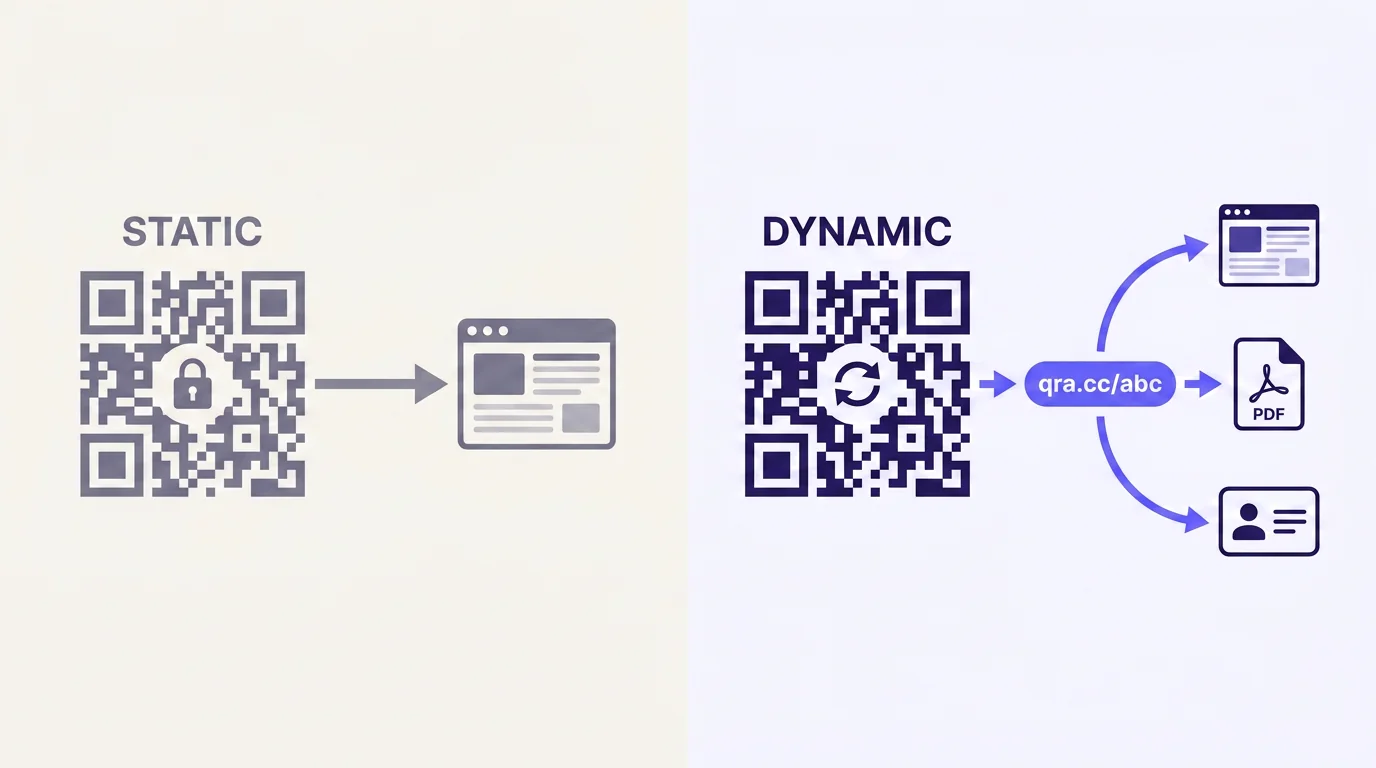
A QR code is just a printed shortcut. The single decision that shapes everything else about how it behaves — whether you can track scans, change the destination later, or expire it on a schedule — is whether you make it static or dynamic. Once you understand the difference, every other QR question becomes much easier to answer.
What is a static QR code?
A static QR code encodes its destination directly into the dot pattern. The URL, the WiFi password, the vCard contact details — they are literally part of the squares a scanner reads. Once you print the code, the destination is locked. The only way to change where it points is to reprint.
Static codes have one real advantage: there is no server in the middle. The phone reads the pattern, decodes it, and acts on the result. No internet round-trip is required for the scan itself. That makes them fast, simple, and dependable when the content will never change.
What is a dynamic QR code?
A dynamic QR code encodes a short URL controlled by a redirect service — for example, qra.cc/abc123. When someone scans it, the redirect service looks up that slug in a database and forwards the visitor to whatever destination you have set. The printed code never changes; the destination behind it can be updated as many times as you like, instantly, from your dashboard.
This indirection is what makes everything else possible. Because every scan passes through your service, you can record the scan, decide where to send the visitor based on rules, and change the answer over time without touching the printed code.
What dynamic codes unlock that static codes can’t do
- Edit the destination after printing — the printed code keeps working forever.
- See real-time scan analytics: who scanned, when, where, on what device, in what country.
- Schedule when a code activates or expires — useful for limited-time campaigns.
- Route different audiences to different URLs based on country, device, or operating system.
- Password-protect the link so only people who know the password reach the destination.
- Inject UTM parameters automatically for marketing attribution in Google Analytics.
- Run A/B tests by re-pointing the same printed code at variant landing pages.
When to use which
Choose static when
- The content will genuinely never change — a personal vCard, a fixed home WiFi network, a permanent address.
- You don’t need analytics or any insight into scan activity.
- You don’t have or want an account with a QR provider.
- You’re printing volumes so large that even one server lookup per scan is unacceptable cost.
Choose dynamic when
- The destination might evolve — marketing campaigns, packaging, signage, real-estate listings, menus.
- You need to know which posters, locations, or campaigns actually drive scans.
- You want a campaign to expire at a specific date without anyone touching the print.
- You want a single code to send iOS users to the App Store and Android users to Play Store.
- You want to keep the option of fixing a broken link, a typo, or a closed page after printing.
Can you convert a static code to dynamic later?
If you have flexibility on the page the QR resolves to, option (b) is a clean rescue. You can’t change what the QR encodes, but you can change what the encoded URL serves — so a 301 redirect on your own site recovers most of the dynamic benefit, just without the analytics.
How QRA handles it
The free generator on the QRA landing page produces static codes — perfect for a one-off WiFi sticker or a personal vCard that will never change. Signing up unlocks the full dynamic flow: short URLs, real-time analytics, scheduling, geo and device targeting, password protection, and unlimited destination edits. The visual design system is identical in both cases, so the user’s scanning experience never changes — only your ability to track, edit, and route does.
The short answer
If you might ever want to change the destination, track scans, or expire a campaign on schedule, you want a dynamic code. If the content is truly fixed forever and analytics don’t matter, a static code is fine. When in doubt, choose dynamic — the option to edit later is worth a great deal more than people expect, and it costs nothing to have it.
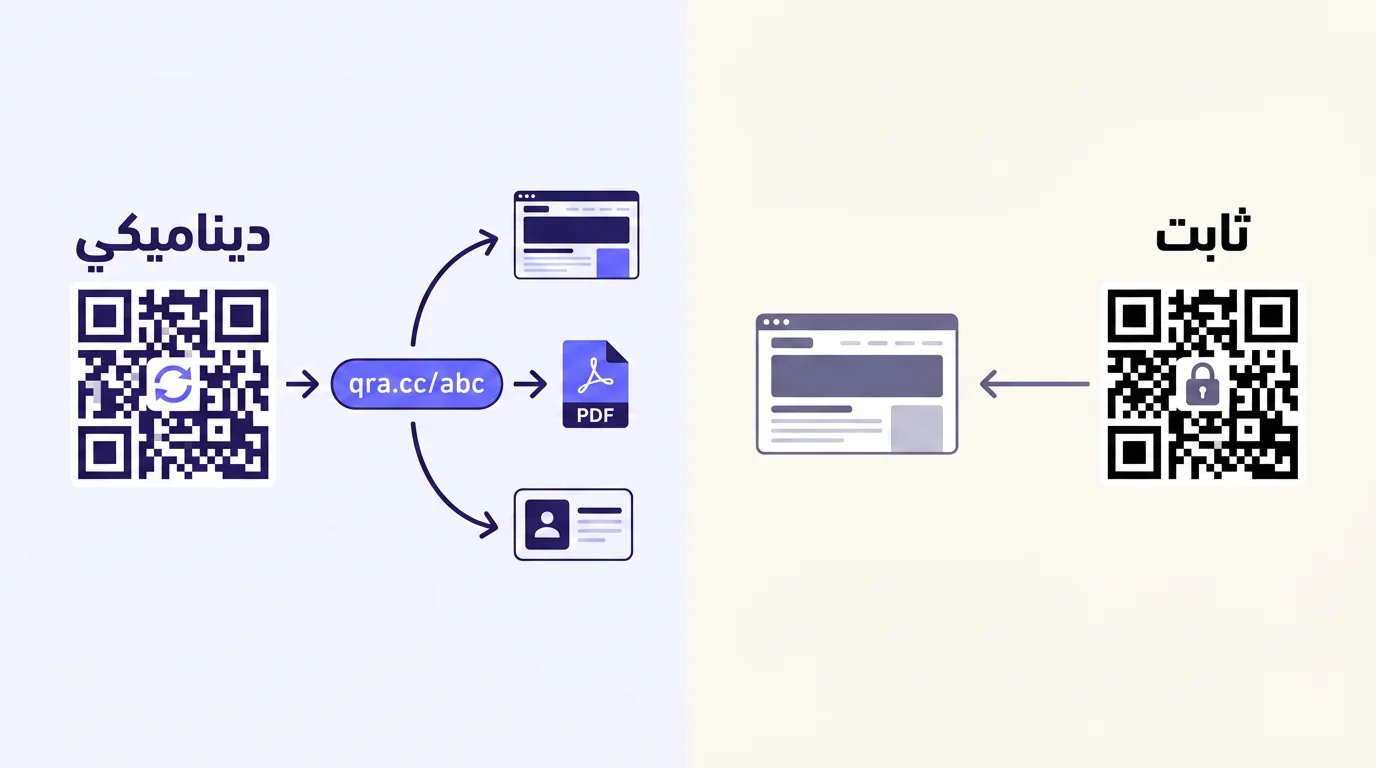
رمز QR ليس أكثر من اختصار مطبوع. والقرار الوحيد الذي يحدد كل شيء آخر يتعلق بسلوكه — هل يمكنك تتبع المسح، أو تغيير الوجهة لاحقاً، أو إنهاء صلاحيته في تاريخ معيّن — هو ما إذا كنت ستجعله ثابتاً أم ديناميكياً. حالما تفهم الفرق يصبح الجواب على بقية أسئلة QR أسهل بكثير.
ما هو رمز QR الثابت؟
الرمز الثابت يضع الوجهة مباشرة داخل نمط النقاط. الرابط أو كلمة مرور الواي فاي أو بيانات بطاقة التعارف — كل ذلك جزء فعلي من المربعات التي يقرأها الماسح. بمجرد طباعة الرمز تُقفل الوجهة، والطريق الوحيد لتغييرها هو إعادة الطباعة.
للرمز الثابت ميزة حقيقية واحدة: لا يوجد خادم في المنتصف. الهاتف يقرأ النمط ويفكّ تشفيره ويتصرّف. لا حاجة لاتصال إنترنت لإتمام عملية المسح ذاتها. هذا يجعله سريعاً وبسيطاً وموثوقاً عندما يكون المحتوى لن يتغيّر.
ما هو رمز QR الديناميكي؟
الرمز الديناميكي يضع داخل النمط رابطاً قصيراً تتحكم به خدمة تحويل — مثلاً qra.cc/abc123. عندما يمسحه أحد، تبحث الخدمة عن المعرّف في قاعدة بياناتها وتحوّل الزائر إلى الوجهة التي حدّدتها أنت. يبقى الرمز المطبوع كما هو، ويمكن تحديث الوجهة خلفه في أي وقت من لوحة التحكم.
هذه الوساطة هي ما يجعل كل شيء آخر ممكناً. ولأن كل عملية مسح تمرّ عبر خدمتك، يمكنك تسجيل المسح، وتحديد وجهة الزائر وفق قواعد معيّنة، وتغيير الإجابة لاحقاً دون أن تلمس الرمز المطبوع.
ما الذي تفتحه الرموز الديناميكية ولا تقدر عليه الثابتة؟
- تعديل الوجهة بعد الطباعة — يستمر الرمز المطبوع بالعمل إلى الأبد.
- تحليلات مسح فورية: من مَسَح، ومتى، وأين، وبأي جهاز، ومن أي دولة.
- جدولة تفعيل الرمز أو انتهاء صلاحيته — مفيدة للحملات المؤقتة.
- توجيه فئات مختلفة من الزوار إلى روابط مختلفة حسب الدولة أو الجهاز أو نظام التشغيل.
- حماية الرابط بكلمة مرور حتى لا يصل للوجهة إلا من يعرفها.
- حقن معاملات UTM تلقائياً لتتبع الحملات في Google Analytics.
- تشغيل اختبارات A/B بإعادة توجيه الرمز ذاته إلى صفحات بديلة.
متى تستخدم كلاً منهما؟
اختر الثابت عندما
- يكون المحتوى لن يتغيّر فعلاً — بطاقة تعارف شخصية، شبكة واي فاي منزلية ثابتة، عنوان دائم.
- لا تحتاج إلى تحليلات أو معرفة عن نشاط المسح.
- لا تملك حساباً لدى مزوّد QR أو لا تريد فتح واحد.
- تطبع كميات ضخمة جداً بحيث يصبح حتى نداء خادم واحد لكل مسح كلفة غير مقبولة.
اختر الديناميكي عندما
- قد تتطوّر الوجهة — حملات تسويقية، تغليف، لافتات، عقارات، قوائم طعام.
- تحتاج معرفة أي ملصق أو موقع أو حملة يحقّق المسحات فعلاً.
- تريد إنهاء الحملة في تاريخ محدد دون أن يلمس أحد المطبوع.
- تريد رمزاً واحداً يوجّه مستخدمي iOS إلى App Store ومستخدمي أندرويد إلى Play Store.
- تريد الإبقاء على خيار إصلاح رابط معطّل أو خطأ مطبعي أو صفحة أغلقت بعد الطباعة.
هل يمكن تحويل رمز ثابت إلى ديناميكي لاحقاً؟
إن كانت لديك مرونة في الصفحة التي يحلّ إليها الرمز، فالخيار (ب) إنقاذ نظيف. لا تستطيع تغيير ما يحتويه الرمز، لكنك تستطيع تغيير ما تقدّمه الصفحة المستهدفة — تحويل 301 من موقعك يستعيد معظم فائدة الديناميكي، باستثناء التحليلات.
كيف تتعامل QRA مع ذلك
المولّد المجاني على صفحة QRA الرئيسية ينتج رموزاً ثابتة — مثاليّاً لملصق واي فاي عابر أو بطاقة تعارف لن تتغيّر. التسجيل يفتح التدفّق الديناميكي الكامل: روابط قصيرة، تحليلات فورية، جدولة، استهداف جغرافي وحسب الجهاز، حماية بكلمة مرور، وعدد لا محدود من التعديلات على الوجهة. نظام التصميم البصري واحد في الحالتين، فتجربة المسح لدى المستخدم لا تتغيّر — يتغيّر فقط ما تستطيع أنت تتبّعه وتعديله وتوجيهه.
الإجابة المختصرة
إذا كان من الوارد ولو احتمالاً أن تغيّر الوجهة أو تتتبّع المسح أو تنهي الحملة في موعد محدد، فأنت تريد رمزاً ديناميكياً. أما إذا كان المحتوى ثابتاً للأبد ولا أهمية للتحليلات، فالرمز الثابت يكفي. وإذا ترددت، اختر الديناميكي — فقيمة الاحتفاظ بإمكانية التعديل لاحقاً أعلى بكثير مما يتوقعه الناس، ولا يكلّفك شيئاً أن تمتلك هذا الخيار.
Ready to make a smarter QR?جاهز لإنشاء رمز QR أذكى؟
Sign up free — no card needed. Track every scan, edit destinations anytime.سجّل مجاناً — بدون بطاقة. تتبّع كل عملية مسح وعدّل الوجهة في أي وقت.