Ramadan QR Marketing Campaigns: A Playbook for MENA Businessesحملات رمضان التسويقية برموز QR: دليل عملي للأعمال العربية
Ramadan across MENA compresses a year of marketing momentum into one month. QR codes are the cheapest, most measurable bridge between iftar-table footfall and a follow-up that converts. Here is the playbook — campaign types, the specific QR plays that work, and the data you actually want to capture.يضغط رمضان في الشرق الأوسط وشمال أفريقيا زخم تسويق سنة كاملة في شهر واحد. ورموز QR هي الجسر الأرخص والأكثر قابلية للقياس بين زحام المطاعم والمتاجر ليلة الإفطار وبين متابعة فعليّة تُحوّل الزائر إلى عميل. إليك الدليل العملي — أنواع الحملات، والاستخدامات المحدّدة التي تنجح، والبيانات التي ينبغي فعلاً التقاطها.
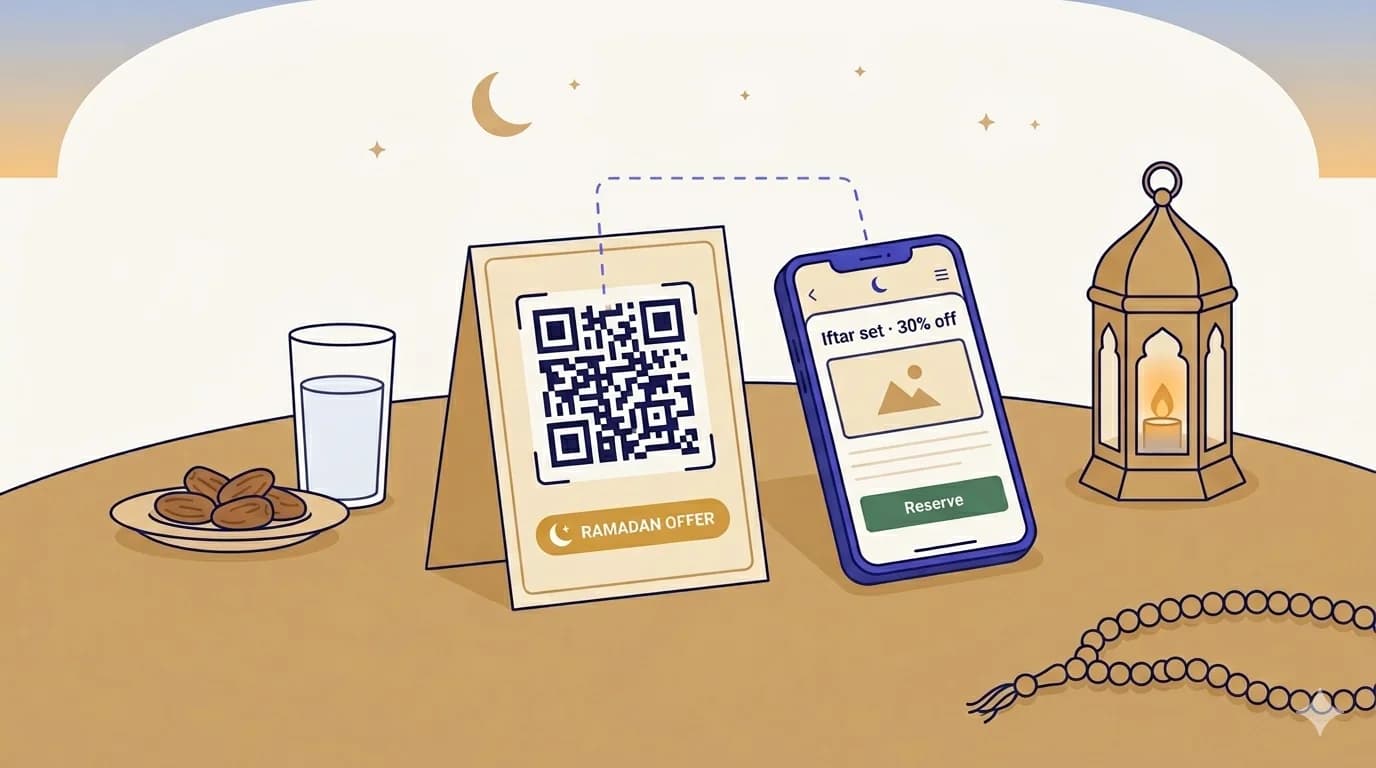
Ramadan across MENA is the most concentrated buying window of the year. Footfall in malls peaks after Taraweeh from Cairo to Riyadh to Dubai, F&B receipts compress into the iftar and suhoor hours, e-commerce conversion rates climb 30-50% over the rest of the year, and a single well-placed QR can carry a customer from a paper table-tent into a measurable, follow-up-able journey. The campaigns that win during Ramadan aren’t the loudest — they’re the ones that respect the rhythm of the month and use the QR as a bridge, not a billboard.
How Ramadan changes consumer behaviour across MENA
Before you design a QR play, anchor the strategy in what actually changes during the month. The shifts are predictable across the region and they all affect QR design choices:
- Schedule inversion — peak browsing, ordering, and in-store traffic moves to 9pm–3am. Your QR landing must work as a thumb-only experience in low light, often while the user is reclined on a sofa, majlis, or floor cushion.
- Family decision-making — purchases skew toward group benefit (gifts, gatherings, gift cards, large F&B orders). A QR that lets one person scan and forward to the family decision-maker outperforms one that funnels everyone through individual checkout.
- Religious giving spike — zakat and sadaqah donations concentrate in the last ten nights. QR codes on mosque flyers, donation bins, or Ramadan tents are the lowest-friction donation path most NGOs and mosques have, from Casablanca to Muscat.
- Eid gifting compression — the week before Eid is the highest gift-card and gift-purchase week in the calendar. Most decisions happen in the last 96 hours. A QR-driven digital gift card flow consistently beats a physical-card-only flow during this window.
- Loyalty program peak — customers are open to signing up for new programs to capture Ramadan-specific double-point promotions. Cost of acquisition drops, lifetime value of the cohort tends to be above average.
Five Ramadan QR plays that consistently work
1. The iftar table-tent reservation QR
Restaurants printing a single QR on every iftar table that links to a ‘reserve a table for tomorrow’s iftar’ landing — pre-filled with the restaurant, capacity, and any Ramadan-specific tasting menu — convert significantly better than the table-tent that links to a generic homepage. The customer is already inside the restaurant, has already validated the food, and is now being given a frictionless way to commit to the next night while the experience is fresh.
If you’re running with a dynamic QR, you can change the linked menu every night without reprinting a single tent. By night 27 your QR points to the suhoor menu; by Eid week it points to your post-Eid family-platter promotion.
2. The suhoor late-night delivery menu QR
From around midnight to 3am, hunger comes back. Most delivery menus aren’t designed for this window — they show the same daytime hero items. Print a QR on stickers attached to your iftar bags (or on the receipts handed out at iftar dine-in) that links to a dedicated, slimmer suhoor menu. Same kitchen, different SKU mix, completely separate landing. Track the click-through and reorder rate — it’s usually one of the highest of the entire year.
3. The Eid digital gift card QR
Retailers who add a QR sticker to every printed receipt during the final ten days, linking to a ‘send an Eid gift card’ flow, consistently see double-digit attach rates. The flow itself should be three taps: pick amount, pick recipient (WhatsApp / phone), pay with whichever card scheme dominates the market (mada in Saudi Arabia, MEEZA in Egypt, KNET in Kuwait, plus Visa/Mastercard everywhere). Make the landing Arabic-first, render currency in Arabic-Indic numerals in the local denomination — ١٤٩ ريال in KSA, ١٤٩ درهم in the UAE, ١٤٩ جنيه in Egypt — and skip the account-creation step entirely. A guest checkout is the right default everywhere in the region during this window.
4. The Ramadan donation / zakat QR
Mosques, food banks, and registered local charities can deploy a QR on a printed card or banner that lands the donor directly into a pre-filled donation amount (with selectable tiers in the local currency — for instance 100, 250, 500, 1000 SAR/AED/EGP/QAR, using Arabic-Indic numerals) and a local-card-first checkout. Add an option to dedicate the donation in the name of a deceased relative — a recurring Ramadan ask across the entire region. Track the QR per location: a QR per mosque, per food drive, per charity drive. The volume of micro-donations from a well-placed Ramadan QR comfortably beats a sponsored social campaign on cost-per-unit-collected.
5. The loyalty signup QR with Ramadan multipliers
Every printed Ramadan offer should include a QR that links to a one-screen loyalty signup with a Ramadan-only bonus (double points for the rest of the month, 500 welcome points expiring on Eid night). The urgency of the expiry drives conversion. The dynamic QR lets you change the offer in real time as you watch the funnel — if conversion lags on day 5, push the bonus to triple points on day 6 without reprinting.
The data you actually want to capture
A Ramadan QR campaign produces a very specific dataset that you can use to plan next year’s campaign before the current one ends. Make sure your QR tool captures:
- Per-location scan volume — which branch, mosque, or table-tent run drove the most engagement. Without this you cannot decide where to print more next year.
- Hour-of-day scan distribution — the iftar peak, the post-Taraweeh peak, the suhoor peak. Three distinct daily peaks across Ramadan, each a different audience.
- Day-of-Ramadan scan distribution — the first ten days, the middle ten, and the last ten behave completely differently. Last-ten-day engagement is gift and donation; first-ten is dining and groceries.
- Device and language split — Arabic-locale scans should outweigh English on most Ramadan campaigns in MENA. If they don’t, your AR landing has a quality problem.
- Conversion rate per landing page — the QR is only the entry. The real measurement is what happens on the landing. Track form completion, reservation confirmation, or purchase per scan, not just scans.
Common Ramadan campaign mistakes
- Printing static QRs and discovering on day 3 that the offer URL is wrong. Print dynamic QRs only — you will change the destination at least once during the month.
- An English-default landing on a Ramadan campaign. Default to Arabic and let the user opt into English, never the inverse, for any campaign live in Arabic-speaking MENA markets during Ramadan.
- Asking for too much on the first landing. Phone number + name is usually the maximum the user will give in the iftar-table moment. Email + address + preferences is a guaranteed drop-off.
- Forgetting to localise numerals — ‘SAR 149’ or ‘AED 149’ in Arabic copy reads as broken. Render ١٤٩ ريال or ١٤٩ درهم instead, matching the user’s market.
- Running the campaign on day 1 of Ramadan and leaving it static. The campaign should evolve across the three Ramadan thirds — opening (welcome / dining), middle (loyalty / repeat), final ten (gift / donation / urgency).
A simple 30-day campaign timeline
If you have one QR campaign budget and you want to ship it well, structure the month as three ten-night phases and shift the landing destination at each phase boundary (the great advantage of a dynamic QR — no reprint needed):
- Nights 1–10 — ‘Welcome to Ramadan’ landing. Iftar reservation, daily offer, suhoor menu. Capture phone number, opt-in for Ramadan SMS schedule.
- Nights 11–20 — ‘Loyalty doubled this Ramadan’ landing. Convert one-time customers into program members with the Ramadan multiplier. Push the suhoor delivery menu and the second-visit discount.
- Nights 21–30 — ‘Eid is coming’ landing. Digital gift cards, Eid family bundles, donation tile for last ten nights, post-Eid table reservations.
Each phase shift is a single dashboard edit — you don’t reprint anything. By Eid morning, every QR on every receipt, table-tent, banner, and sticker has carried the customer through a coherent three-act campaign without a single physical reprint.
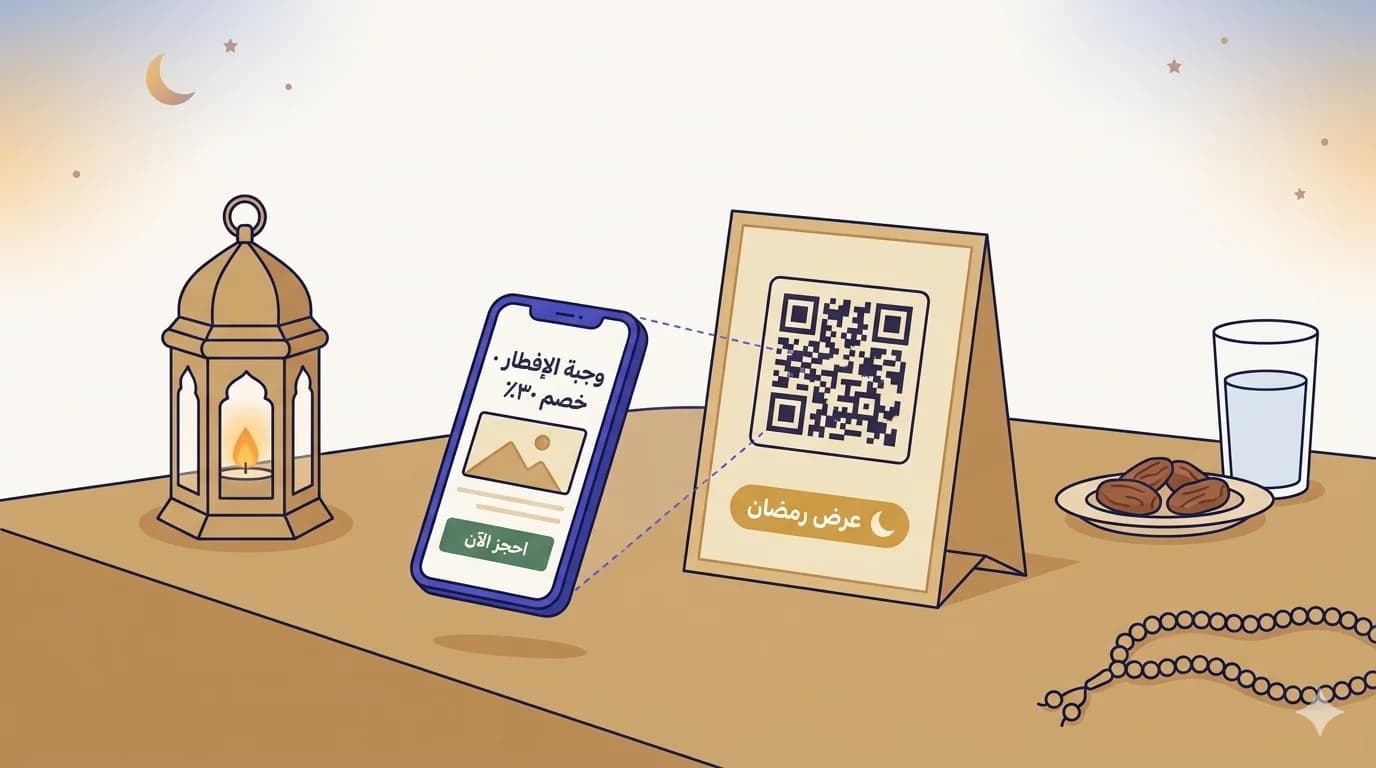
رمضان في الشرق الأوسط وشمال أفريقيا هو أكثر نوافذ الشراء كثافةً في السنة. تبلغ حركة المراكز التجاريّة ذروتها بعد التراويح من القاهرة إلى الرياض إلى دبي، وتنضغط مداخيل المطاعم في ساعات الإفطار والسحور، وترتفع معدّلات تحويل التجارة الإلكترونيّة بنسبة ٣٠–٥٠٪ مقارنةً ببقيّة العام، ويستطيع رمز QR واحد في المكان الصحيح أن ينقل العميل من علامة طاولة ورقيّة إلى رحلة قابلة للقياس والمتابعة. الحملات الفائزة في رمضان ليست الأعلى صوتاً — بل التي تحترم إيقاع الشهر وتستخدم الرمز جسراً، لا لوحةً إعلانيّة.
كيف يُغيّر رمضان سلوك المستهلك في الشرق الأوسط وشمال أفريقيا
قبل تصميم أيّ استخدام لرمز QR، ثبّت الاستراتيجيّة على ما يتغيّر فعلاً خلال الشهر. التحوّلات متوقّعة في المنطقة كلّها، وكلّها تؤثّر على قرارات تصميم الرمز:
- انعكاس الجدول الزمني — تنتقل ذروة التصفّح والطلب والحركة داخل المتاجر إلى الفترة بين التاسعة مساءً والثالثة فجراً. يجب أن تعمل صفحة هبوط الرمز كتجربة إصبع واحد في ضوء خافت، وغالباً والعميل متّكئ على أريكة، أو في المجلس، أو على وسائد الأرض.
- قرار شراء عائلي — تميل المشتريات نحو منفعة الجماعة (هدايا، تجمّعات، بطاقات هدايا، طلبات مطاعم كبيرة). الرمز الذي يسمح لشخص بمسحه ثم إعادة توجيهه لصاحب القرار في العائلة يتفوّق على الذي يدفع الجميع نحو دفعٍ فردي.
- ذروة العطاء الديني — تتركّز الزكاة والصدقات في العشر الأواخر. ورموز QR على لوحات المسجد، وصناديق التبرّع، وخيام رمضان هي أقلّ مسارات التبرّع احتكاكاً المتاحة لمعظم الجمعيّات والمساجد، من الدار البيضاء إلى مسقط.
- ضغط هدايا العيد — الأسبوع الذي يسبق العيد هو أعلى أسبوع لبطاقات الهدايا في التقويم، ومعظم القرارات تتمّ في الـ٩٦ ساعة الأخيرة. مسار بطاقة هديّة رقميّة عبر رمز QR يتفوّق باستمرار على البطاقات الورقيّة وحدها في هذه النافذة.
- ذروة برامج الولاء — يصبح العملاء أكثر انفتاحاً للاشتراك في برامج جديدة لاقتناص عروض النقاط المضاعفة الرمضانيّة. تكلفة الاستحواذ تنخفض، والقيمة الحياتيّة للفئة المسجّلة في رمضان أعلى من المتوسّط.
خمسة استخدامات رمضانيّة لرمز QR تنجح باستمرار
١. رمز حجز طاولة الإفطار
المطاعم التي تطبع رمز QR واحداً على كلّ طاولة إفطار يرتبط بصفحة «احجز طاولتك لإفطار الغد» — معبّأة مسبقاً باسم المطعم، والسعة، وأيّ قائمة تذوّق رمضانيّة — تحوّل بمعدّل أعلى بكثير من علامة الطاولة التي ترتبط بصفحة رئيسيّة عامّة. العميل في داخل المطعم، وقد جرّب الطعام، ويُعطى الآن مساراً سهلاً للالتزام بالليلة التالية والتجربة طازجة.
إن استخدمت رمزاً ديناميكيّاً، يمكنك تغيير القائمة المرتبطة كلّ ليلة دون إعادة طباعة علامة واحدة. في الليلة ٢٧، يشير رمزك إلى قائمة السحور؛ وفي أسبوع العيد، يشير إلى عرض «صحن العائلة بعد العيد».
٢. رمز قائمة توصيل السحور
من حوالي منتصف الليل وحتى الثالثة فجراً، يعود الجوع. معظم قوائم التوصيل غير مصمّمة لهذه النافذة — تعرض نفس عناصر النهار البطلة. اطبع رمز QR على ملصقات تُلصق بأكياس الإفطار (أو على الإيصالات المُسلَّمة في صالة الإفطار) يربط بقائمة سحور مخصّصة وأقصر. المطبخ نفسه، ومزيج أصناف مختلف، وصفحة هبوط منفصلة تماماً. قِس نقرة الرابط ونسبة إعادة الطلب — عادةً ما تكون من أعلى نسب السنة كلّها.
٣. رمز بطاقة هديّة العيد الرقميّة
تجّار التجزئة الذين يُضيفون ملصق QR على كلّ إيصال مطبوع خلال العشر الأواخر، يربط بمسار «أرسل بطاقة هديّة للعيد»، يحقّقون باستمرار نسب إرفاق ثنائيّة الرقم. يجب أن يكون المسار نفسه ثلاث نقرات: اختر المبلغ، اختر المُستلِم (واتساب / رقم)، ادفع بنظام البطاقات المحلّي السائد في السوق (مدى في السعوديّة، MEEZA في مصر، KNET في الكويت، إضافةً إلى Visa/Mastercard في كلّ مكان). اجعل صفحة الهبوط عربيّةً أوّلاً، اعرض العملة بالأرقام العربيّة الهنديّة وبالفئة المحليّة — ١٤٩ ريال في السعوديّة، ١٤٩ درهم في الإمارات، ١٤٩ جنيه في مصر — وتجاوز خطوة إنشاء الحساب كلّيّاً. الدفع كضيف هو الإعداد الافتراضي الصحيح في كلّ أنحاء المنطقة خلال هذه النافذة.
٤. رمز التبرّع والزكاة الرمضاني
تستطيع المساجد، وبنوك الطعام، والجمعيّات المحلّيّة المرخّصة نشر رمز QR على بطاقة أو لافتة مطبوعة تنقل المتبرّع مباشرةً إلى مبلغ تبرّع معبّأ مسبقاً (مع شرائح قابلة للاختيار بالعملة المحليّة — مثلاً ١٠٠، ٢٥٠، ٥٠٠، ١٠٠٠ ريال/درهم/جنيه/ريال قطري، بالأرقام العربيّة) ودفعة عبر نظام البطاقات المحلّي أوّلاً. أضف خياراً لإهداء التبرّع باسم متوفّى من الأهل — طلب رمضاني متكرّر في المنطقة كلّها. تتبّع كلّ رمز حسب موقعه: رمز لكلّ مسجد، لكلّ حملة طعام، لكلّ حملة جمع. حجم التبرّعات الصغيرة من رمز رمضاني في مكان جيّد يتفوّق براحة على حملة وسائل تواصل مدفوعة من حيث التكلفة لكلّ وحدة عملة جُمِعت.
٥. رمز تسجيل برنامج الولاء مع مضاعِفات رمضانيّة
يجب أن يحوي كلّ عرض رمضاني مطبوع رمز QR يربط بصفحة تسجيل ولاء من شاشة واحدة مع مكافأة خاصّة برمضان (نقاط مضاعفة لبقيّة الشهر، ٥٠٠ نقطة ترحيبيّة تنتهي ليلة العيد). إلحاحيّة الانتهاء تُحرّك التحويل. والرمز الديناميكي يسمح بتغيير العرض في الوقت الحقيقي وأنت تراقب القمع — إن تباطأ التحويل في اليوم الخامس، ادفع المكافأة إلى ثلاثة أضعاف في السادس دون إعادة طباعة.
البيانات التي ينبغي فعلاً التقاطها
تُنتج حملة QR الرمضانيّة مجموعة بيانات محدّدة جدّاً يمكنك استخدامها للتخطيط لحملة العام القادم قبل أن تنتهي الحاليّة. تأكّد من أنّ أداة QR لديك تلتقط:
- حجم المسح لكلّ موقع — أيّ فرع، أو مسجد، أو مجموعة علامات طاولة دفعت أكبر تفاعل. دون هذه البيانات لا تستطيع تحديد أين تطبع أكثر العام القادم.
- توزيع المسح حسب ساعة اليوم — ذروة الإفطار، وذروة ما بعد التراويح، وذروة السحور. ثلاث ذرى يوميّة متمايزة طوال رمضان، كلّ منها جمهور مختلف.
- توزيع المسح حسب يوم رمضان — العشر الأُوَل، والوُسطى، والأواخر تتصرّف بشكل مختلف تماماً. تفاعل العشر الأواخر هدايا وتبرّعات؛ بينما العشر الأُوَل طعام وبقالة.
- تقسيم الجهاز واللغة — يجب أن يفوق المسح بلغة عربيّة الإنجليزيّة في معظم الحملات الرمضانيّة في المنطقة. إن لم يحدث ذلك، فصفحة الهبوط العربيّة لديك تعاني مشكلة جودة.
- نسبة التحويل لكلّ صفحة هبوط — الرمز هو المدخل فقط. القياس الحقيقي ما يحدث على صفحة الهبوط. تتبّع إتمام النموذج، أو تأكيد الحجز، أو الشراء لكلّ مسح، وليس عدد المسحات وحدها.
أخطاء شائعة في حملات رمضان
- طباعة رموز ثابتة واكتشاف في اليوم الثالث أنّ رابط العرض خاطئ. اطبع رموزاً ديناميكيّة فقط — ستُغيّر الوجهة مرّة على الأقلّ خلال الشهر.
- صفحة هبوط افتراضيّة بالإنجليزيّة في حملة رمضانيّة. اجعل العربيّة هي الافتراضيّة ودَع المستخدم يختار الإنجليزيّة، لا العكس أبداً، لأيّ حملة تعمل في الأسواق العربيّة خلال رمضان.
- طلب الكثير في صفحة الهبوط الأولى. رقم الهاتف والاسم هما الحدّ الأقصى الذي سيُعطيه المستخدم في لحظة طاولة الإفطار. البريد + العنوان + التفضيلات سقوط مضمون.
- نسيان توطين الأرقام — «SAR 149» أو «AED 149» في نصّ عربيّ يبدو معطوباً. اعرض ١٤٩ ريال أو ١٤٩ درهم بدلاً منه، بحسب سوق المستخدم.
- تشغيل الحملة في اليوم الأوّل من رمضان وتركها ثابتة. يجب أن تتطوّر الحملة عبر أثلاث رمضان الثلاثة — الافتتاح (ترحيب / مطاعم)، الوسط (ولاء / تكرار)، العشر الأواخر (هدايا / تبرّع / إلحاح).
جدول زمني بسيط لحملة ٣٠ ليلة
إن كانت لديك ميزانيّة حملة QR واحدة وتريد إطلاقها بشكل جيّد، نظّم الشهر على شكل ثلاث مراحل بطول عشر ليالٍ، وغيّر وجهة صفحة الهبوط عند كلّ حدّ مرحلي (الميزة الكبرى للرمز الديناميكي — دون أيّ إعادة طباعة):
- الليالي ١–١٠ — صفحة «أهلاً برمضان». حجز إفطار، عرض اليومي، قائمة السحور. التقط رقم الهاتف، واحصل على موافقة لاستقبال جدول رسائل رمضانيّة.
- الليالي ١١–٢٠ — صفحة «الولاء مضاعف هذا الرمضان». حوّل عملاء المرّة الواحدة إلى أعضاء برنامج بمضاعِف رمضاني. ادفع قائمة توصيل السحور وخصم الزيارة الثانية.
- الليالي ٢١–٣٠ — صفحة «العيد قادم». بطاقات هدايا رقميّة، حزم العيد العائليّة، تبرّع العشر الأواخر، حجوزات طاولات ما بعد العيد.
كلّ تحوّل مرحلي تعديل واحد في لوحة التحكّم — لا تعيد طباعة شيء. وبحلول صباح العيد، يكون كلّ رمز QR على كلّ إيصال وعلامة طاولة ولافتة وملصق قد نقل العميل عبر حملة متماسكة من ثلاثة فصول دون إعادة طباعة ماديّة واحدة.
Ready to make a smarter QR?جاهز لإنشاء رمز QR أذكى؟
Sign up free — no card needed. Track every scan, edit destinations anytime.سجّل مجاناً — بدون بطاقة. تتبّع كل عملية مسح وعدّل الوجهة في أي وقت.