QR Codes for Retail Stores and Shop Windows: A MENA Playbookرموز QR للمتاجر والمحلّات: دليل عملي للشرق الأوسط
A QR on your shop window turns every passer-by into a potential customer at 11 PM, on a Friday afternoon, on a public holiday — any time the shop is closed but the catalogue is open. A QR on a shelf-edge label or a fitting-room mirror turns hesitation into action. A QR on a product tag turns a single-product purchase into a multi-channel relationship. Here's how MENA retailers — from Riyadh Boulevard to Casablanca medina shops — actually use them.رمز QR على واجهة محلّك يحوّل كلّ عابر إلى عميل محتمل في الـ ١١ مساءً، أو في عصر يوم الجمعة، أو في يوم عطلة عامّة — أيّ وقت يكون فيه المحلّ مغلقاً لكنّ الكتالوج مفتوحاً. رمز QR على ملصق حافّة الرفّ أو مرآة غرفة القياس يحوّل التردّد إلى إجراء. رمز QR على بطاقة المنتج يحوّل عمليّة شراء منتج واحد إلى علاقة متعدّدة القنوات. إليك كيف يستخدمها فعلاً تجّار الشرق الأوسط — من بوليفارد الرياض إلى محلّات مدينة الدار البيضاء.
MENA retail covers ground no single playbook can fully cover. The flagship in Riyadh's Boulevard mall and a fabric shop in the Marrakech medina are both 'retail', and both can benefit from QR — but the patterns differ. Hijazi family clothing boutiques in Jeddah, perfume specialists in Old Cairo, Iranian rug merchants in Doha, jewellers in Dubai Gold Souk, mobile-accessory kiosks at every Egyptian metro stop, organic-grocery shops in Amman: all retail, all distinct contexts, all converging on the same set of QR placements that quietly add 10-30% to revenue without changing the shop format itself.
This piece is for retail owners, store managers, brand teams, and the agencies designing physical retail experiences across MENA. Where QR earns its keep, what to put behind it, how to handle the Saudi-vs-Egyptian-vs-Moroccan retail-context variations, and the placements that quietly work better than the obvious ones.
Nine QR placements that earn their keep in MENA retail
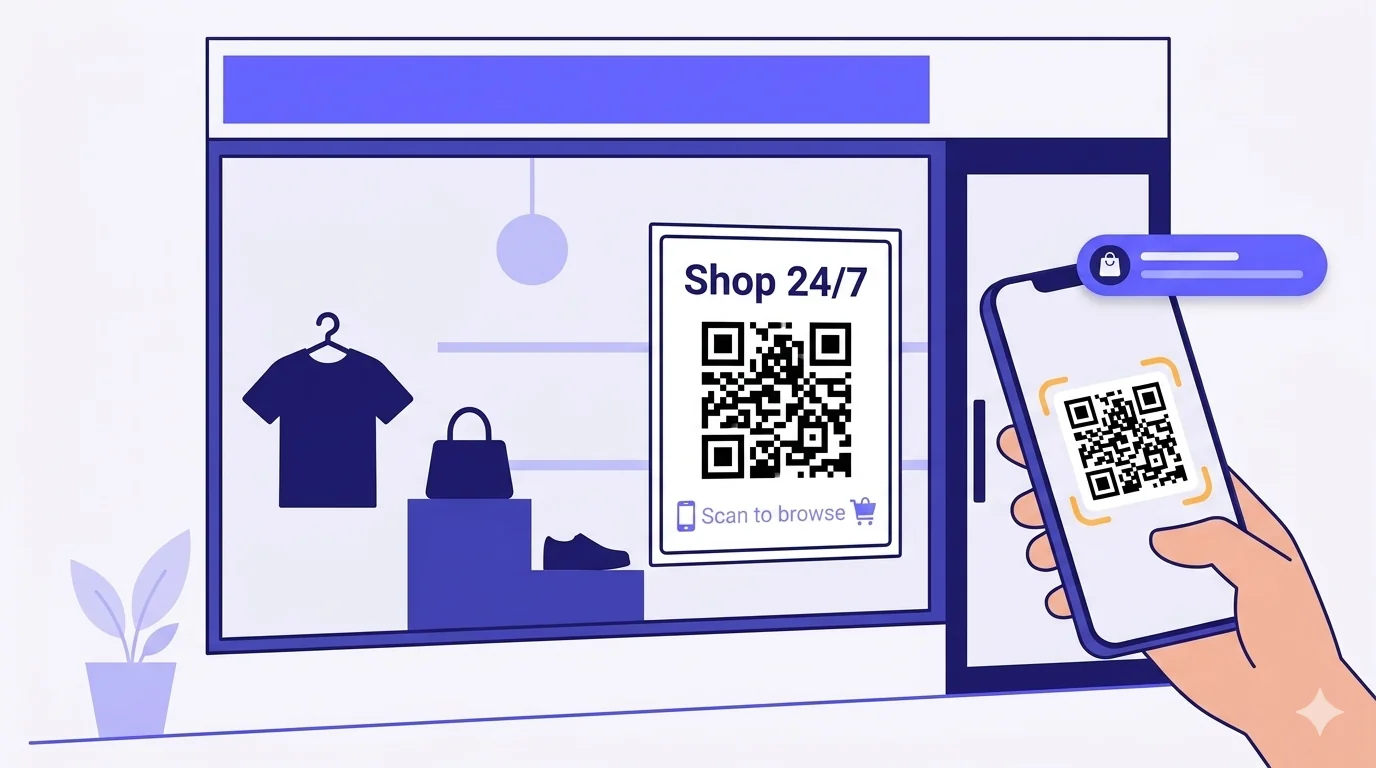
1. The shop-window 'Shop 24/7' QR
The single highest-leverage placement. A QR decal on the shop window, visible from the sidewalk even when the shop is closed, leading to your online catalogue or e-commerce page. MENA retail hours are constrained — most shops close for prayer, close mid-day in summer heat, close entirely on Fridays in some traditional contexts, close earlier than walking-traffic patterns in other contexts. A 'Shop 24/7' window QR captures the walk-by who saw something in the window and would have moved on if there were no after-hours path. Print on UV-resistant vinyl, mount inside the glass facing out, raise error-correction level to H, test from 3 metres away through tinted glass. The walk-by-to-conversion rate from this single placement frequently outperforms paid acquisition for the same shop.
2. The shelf-edge / shelf-talker product QR
Underrated placement. A small QR on the shelf-edge label of every product (or every category), leading to a per-product page with extended specs, reviews, sizing guides, fabric care, ingredient lists for cosmetics or food, or a 'check stock at other locations' lookup. Customers want the information; staff can't always provide it instantly; the shelf-edge QR fills the gap. Especially powerful in MENA contexts where customers ask detailed questions before committing (perfume composition, fabric origin, gold karat verification, electronics warranty terms) — the QR pre-empts the question and lets the customer self-serve at their own pace.
3. The fitting-room mirror QR
Apparel-specific placement worth its weight in conversion. A small unobtrusive QR on the fitting-room mirror or wall, leading to: a 'request another size' chat with staff, a 'check this in another colour' lookup, the brand's full size guide, similar items the customer might prefer, or a 'save to wishlist' flow. The decision moment in a fitting room is high-friction — the customer has to walk back out to find staff to ask a question, often abandoning the consideration entirely. A fitting-room QR captures that micro-friction and converts it. MENA-specific tweak: in shops serving conservative customer bases, the QR can offer 'send my measurements to staff for a private fitting consult' as an alternative to staff entering the room.
4. The product-tag care/origin QR
A small QR on the product tag or care label, leading to a page with the full provenance story, care instructions, origin/heritage details, designer/artisan profile (especially valuable for fabric and craft products in Egyptian, Moroccan, Levantine, and Saudi heritage retail), and authenticity verification for premium items. For Gulf jewellery shops, a per-piece QR linking to certification, hallmark verification, and the piece's craftsmanship story is genuine trust-building, not just marketing.
5. The fitting-counter / cashier-area follow-up QR
At the point-of-sale or fitting counter, a small placard QR leading to the loyalty-program signup, the newsletter, the WhatsApp Business chat for follow-up, or a feedback form. The natural decision-moment immediately post-purchase — the customer is already engaged, has just spent money, is open to the next step. A QR here converts at meaningfully higher rates than the same offer presented in advance or after the customer has left.
6. The shopping-bag insert QR
A small printed card slipped into the shopping bag at checkout, with a QR to: 'how to care for what you just bought', 'related products that pair with this purchase', the WhatsApp Business chat for questions, the returns/exchange portal, or a thank-you message with a discount code for the next visit. The bag-insert QR is read at home, in the customer's own time, with the purchase context fresh. Conversion to a second visit from this single touchpoint is consistently underestimated by retailers.
7. The 'check stock at other branches' QR
Multi-branch retailers in KSA, UAE, Egypt — a QR on the in-store signage or specific product displays leading to a 'this item at our other locations' page with real-time stock visibility. The customer who needs a different size or colour gets routed to a branch that has it, avoiding the lost-sale of 'we don't have it here'. Works particularly well for chains with branches in Riyadh + Jeddah + Eastern Province, or Cairo + Alexandria + Coastal cities, or Dubai + Abu Dhabi + Sharjah — where customers regularly travel between cities and would willingly pick up at another branch.
8. The seasonal-promotion QR (changes campaign-by-campaign)
Throughout the year, MENA retail has multiple promotional cycles: White Friday (the regional equivalent of Black Friday), Ramadan promotions, Eid sales, back-to-school, summer collection launches, year-end clearance. A dedicated dynamic QR on storefront windows, table-tents at the counter, and product-area placards, re-pointed throughout the year to the current campaign. Same printed QR every season; different destination per campaign. No reprint costs across cycles.
9. The bilingual product-launch / 'tell the story' QR
For locally-designed brands and artisan products with a story behind them — Saudi fashion houses launching new lines, Egyptian cotton brands telling the heritage story, Moroccan leather goods explaining their artisan workshop tradition — a product-area QR leading to the brand-story page with photography, videos, founder interviews, and a 'support this work' or 'join the newsletter' action. MENA consumers respond especially well to founder-led brand narratives; the QR is the on-shelf delivery mechanism for that narrative.
MENA-specific retail-context considerations
Prayer-time and operating-hour dynamics
In Saudi Arabia (and parts of the wider Gulf), retail closes for ~20-30 minutes around each prayer. This is the right window for the storefront QR to capture the walk-by customer who arrived 5 minutes before prayer closure and would have to wait 30 minutes. The QR opens the catalogue; the customer browses while waiting; conversion frequently happens before the shop reopens. The QR destination page can show the next-reopening time prominently to bridge the wait.
Ramadan and Eid retail rhythms
MENA retail traffic patterns transform during Ramadan — daytime traffic drops dramatically, evening traffic surges after iftar, late-night traffic in many markets stays high until 1-2 AM. Eid week is the highest-revenue stretch of the calendar year for most retail in the region. The QR's role: 'pre-shop' the inventory during the day so customers arrive at the shop with a list, then 'after-Eid sale' campaigns activated through the same printed QR in week 2 of Eid. Same QR, two destinations across two weeks, no reprint.
Gendered shopping environments
In Saudi Arabia, some traditional Egyptian retail contexts, and certain Gulf premium retail, men's and women's shopping environments are physically separated. The QR pattern is the same on both sides, but the destination page can route by entrance to gender-appropriate inventory or content. Practically: one parent QR design, two destination URLs with different content. Dynamic QR handles this trivially — different decals per entrance, same backend.
Bilingual and trilingual signage
MENA retail signage convention: Arabic primary, English secondary in most Gulf and Egypt; French secondary in Morocco, Tunisia, Algeria; Russian secondary in some UAE and Egyptian Red Sea resort retail. The QR destination page should respect the local pattern — Arabic-default-visible with English (and French/Russian/Urdu/etc.) toggleable. Don't ship a global English-first destination page into a MENA shop window.
Print durability for outdoor-facing storefront QRs
MENA sun is unforgiving on printed signage. Storefront QR decals exposed to direct sun (south-facing windows in Riyadh, Dubai, Doha, Cairo) need UV-resistant inks and lamination rated for high-temperature environments. Plan to replace every 12-18 months as a maintenance budget item. Indoor-facing decals (the back of the window, visible to passers-by through the glass) last much longer — that's the recommended mount unless the storefront's window construction prevents it.
Common retail-QR mistakes
- Single QR for everything — one QR pointing to the homepage covers no specific intent. Each placement should have its own destination matching the customer's moment.
- QR too small for the viewing distance — a 2 cm window QR is unreadable from across a sidewalk. Window QRs need to be 5-8 cm minimum for typical sidewalk-to-window distances.
- Static QR for a seasonally-changing promotion — leads to reprinting the decal every campaign. Use dynamic QRs and re-point the destination.
- Destination page not optimised for mobile — the shop visitor scanning at the storefront is on a phone, not a desktop. The destination page MUST be mobile-first, fast-loading, and Arabic-default-visible.
- Forgetting to add a vCard / WhatsApp follow-up path on the destination — the QR brought the customer to the catalogue, but the catalogue needs a path back to the shop for questions, orders, and the next visit.
- No analytics — without scan analytics by placement, the retailer can't tell whether the window QR is outperforming the shelf-edge QR or whether the fitting-room QR is being used. Treat scan analytics as marketing data.
How QRA fits retail operations
One QRA workspace per retail brand; folders per branch; per-placement dynamic QRs that re-point throughout the campaign calendar without reprinting. Bilingual Arabic-default destination pages with toggle-to-English/French/Russian. Bulk export of all QRs in the brand's house style with the brand's logo embedded in each QR centre, vector SVG/EPS export for the print shop. Scan analytics scoped by placement (window vs shelf-edge vs fitting-room vs counter) and by branch, with comparison views so the retailer can see which placements actually drive scans across the chain. Plan tiers scale by QR count and analytics depth; large multi-branch retailers benefit from enterprise tiers with team-management features.
The short answer
MENA retail QR placement is not 'put one QR in the window and call it done'. It's a network of 5-10 placements across the shop, each matched to a specific customer moment: walk-by interest (window), product consideration (shelf-edge), decision (fitting-room), purchase commitment (cashier), post-purchase relationship (bag insert), and follow-up engagement (vCard / WhatsApp). Each QR is dynamic, lives across seasons, accumulates scan analytics, and quietly compounds. The shop format doesn't change. The customer's options expand from 'visit, decide on the spot, buy or leave' to 'visit, defer the decision, come back tomorrow with a full understanding of what you saw'. That option-set expansion is what drives the conversion lift.
تجارة التجزئة في الشرق الأوسط تغطّي أرضاً لا يستطيع دليل واحد تغطيتها كاملةً. متجر الواجهة في مول بوليفارد بالرياض ومحلّ القماش في مدينة مرّاكش كلاهما «تجارة تجزئة»، وكلاهما يستطيع الاستفادة من QR — لكنّ الأنماط تختلف. بوتيكات الملابس العائليّة الحجازيّة في جدّة، متخصّصو العطور في القاهرة القديمة، تجّار السجّاد الإيرانيّون في الدوحة، صاغة سوق الذهب في دبي، أكشاك إكسسوارات الجوّال في كلّ محطّة مترو مصريّة، محلّات البقالة العضويّة في عمّان: كلّها تجزئة، كلّها سياقات متمايزة، كلّها تتلاقى على المجموعة نفسها من مواضع QR التي تضيف بهدوء ١٠-٣٠٪ على الإيرادات دون تغيير صيغة المحلّ نفسها.
هذا المقال موجَّه لأصحاب التجزئة، ومديري المتاجر، وفرق العلامات التجاريّة، والوكالات التي تصمّم تجارب التجزئة الفيزيائيّة عبر الشرق الأوسط. أين يكسب QR موقعه، ماذا تضع خلفه، كيف تتعامل مع تباينات سياق التجزئة بين السعوديّة ومصر والمغرب، والمواضع التي تعمل بهدوء أفضل من البديهيّة.
تسعة مواضع QR تكسب موقعها في تجزئة الشرق الأوسط
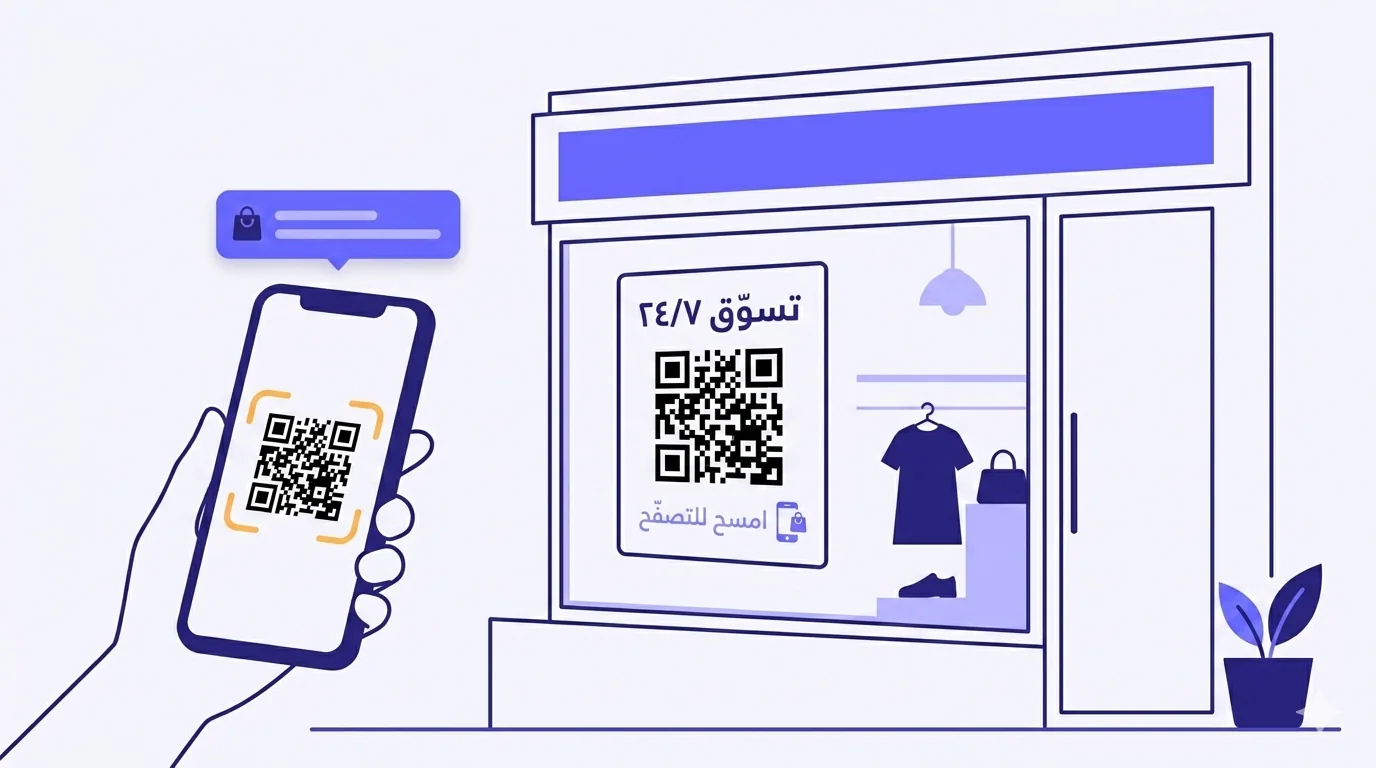
١. رمز QR «تسوّق ٢٤/٧» على واجهة المحلّ
أعلى موضع رفعاً وحيداً. لافتة QR على نافذة المحلّ، مرئيّة من الرصيف حتّى حين يكون المحلّ مغلقاً، تقود إلى كتالوجك على الإنترنت أو صفحة التجارة الإلكترونيّة. ساعات تجزئة الشرق الأوسط مقيّدة — معظم المحلّات تغلق للصلاة، تغلق في منتصف اليوم في حرّ الصيف، تغلق كاملةً يوم الجمعة في بعض السياقات التقليديّة، تغلق أبكر من أنماط حركة المشي في سياقات أخرى. لافتة QR «تسوّق ٢٤/٧» على النافذة تلتقط العابر الذي رأى شيئاً في الواجهة وكان سيمضي لو لم يكن هناك مسار لما بعد ساعات العمل. اطبع على فينيل مقاوم للأشعّة فوق البنفسجيّة، ركّب داخل الزجاج مواجهاً للخارج، ارفع مستوى تصحيح الأخطاء إلى H، اختبر من ٣ أمتار عبر الزجاج المظلّل. معدّل العابر-إلى-التحويل من هذا الموضع الواحد كثيراً ما يتفوّق على الاكتساب المدفوع للمحلّ نفسه.
٢. رمز QR حافّة الرفّ / المتحدّث على الرفّ للمنتج
موضع ناقص التقدير. رمز QR صغير على ملصق حافّة الرفّ لكلّ منتج (أو كلّ فئة)، يقود إلى صفحة لكلّ منتج بمواصفات موسّعة، مراجعات، دليل مقاسات، رعاية القماش، قوائم المكوّنات لمستحضرات التجميل أو الطعام، أو بحث «تحقّق من المخزون في فروع أخرى». يريد العملاء المعلومات؛ لا يستطيع الموظّفون توفيرها فوراً دائماً؛ يملأ رمز حافّة الرفّ الفجوة. قويّ بشكل خاصّ في سياقات الشرق الأوسط حيث يطرح العملاء أسئلة تفصيليّة قبل الالتزام (تركيب العطر، أصل القماش، التحقّق من قيراط الذهب، شروط ضمان الإلكترونيّات) — يستبق QR السؤال ويتيح للعميل خدمة نفسه بإيقاعه.
٣. رمز QR مرآة غرفة القياس
موضع خاصّ بالملابس يستحقّ وزنه في التحويل. رمز QR صغير غير مزعج على مرآة غرفة القياس أو الجدار، يقود إلى: محادثة «اطلب مقاساً آخر» مع الموظّفين، بحث «تحقّق من هذا بلون آخر»، دليل المقاسات الكامل للعلامة، عناصر مشابهة قد يفضّلها العميل، أو تدفّق «احفظ في قائمة الأمنيات». لحظة القرار في غرفة القياس عالية الاحتكاك — يجب على العميل الخروج لإيجاد الموظّفين للسؤال، فيتخلّى عن الاعتبار كثيراً تماماً. رمز QR في غرفة القياس يلتقط ذلك الاحتكاك الدقيق ويحوّله. تعديل خاصّ بالشرق الأوسط: في المحلّات التي تخدم قواعد عملاء محافظة، يستطيع رمز QR تقديم «أرسل مقاساتي للموظّفين لاستشارة تجربة خاصّة» كبديل عن دخول الموظّفين الغرفة.
٤. رمز QR رعاية/أصل المنتج على البطاقة
رمز QR صغير على بطاقة المنتج أو ملصق الرعاية، يقود إلى صفحة بقصّة المصدر الكاملة، تعليمات الرعاية، تفاصيل الأصل/التراث، ملفّ المصمّم/الحرفي (قيّم بشكل خاصّ لمنتجات القماش والحرف في تجزئة التراث المصري والمغربي والشامي والسعودي)، والتحقّق من الأصالة للعناصر الفاخرة. لمحلّات المجوهرات الخليجيّة، رمز QR لكلّ قطعة يحيل إلى الشهادة، والتحقّق من العلامة، وقصّة حرفيّة القطعة هو بناء ثقة حقيقي، لا مجرّد تسويق.
٥. رمز QR متابعة عند كاونتر القياس / منطقة المحاسبة
عند نقطة البيع أو كاونتر القياس، لافتة QR صغيرة تقود إلى تسجيل برنامج الولاء، النشرة، محادثة واتساب للأعمال للمتابعة، أو نموذج رأي. لحظة القرار الطبيعيّة بعد الشراء مباشرةً — العميل منخرط بالفعل، أنفق المال للتوّ، منفتح على الخطوة التالية. رمز QR هنا يحوّل بمعدّلات أعلى بشكل ملموس من العرض نفسه المقدَّم مسبقاً أو بعد مغادرة العميل.
٦. رمز QR إدخال كيس التسوّق
بطاقة مطبوعة صغيرة تُدسّ في كيس التسوّق عند المحاسبة، برمز QR إلى: «كيف ترعى ما اشتريته للتوّ»، «منتجات ذات صلة تتزاوج مع هذا الشراء»، محادثة واتساب للأعمال للأسئلة، بوّابة الإرجاع/الاستبدال، أو رسالة شكر برمز خصم للزيارة التالية. يُقرأ رمز QR الإدخال في البيت، في وقت العميل الخاصّ، مع سياق الشراء طازج. تحويل لزيارة ثانية من نقطة الاتّصال الواحدة هذه يقلّل التقدير له تجّار التجزئة باستمرار.
٧. رمز QR «تحقّق من المخزون في فروع أخرى»
تجّار التجزئة متعدّدو الفروع في السعوديّة والإمارات ومصر — رمز QR على لافتات داخل المتجر أو عروض منتجات محدّدة يقود إلى صفحة «هذا العنصر في مواقعنا الأخرى» برؤية مخزون آنيّة. العميل الذي يحتاج مقاساً أو لوناً مختلفاً يُوجَّه إلى فرع لديه، فيتجنّب البيع المفقود من «لا نملكه هنا». يعمل بشكل جيّد بشكل خاصّ للسلاسل بفروع في الرياض + جدّة + المنطقة الشرقيّة، أو القاهرة + الإسكندريّة + المدن الساحليّة، أو دبي + أبوظبي + الشارقة — حيث يسافر العملاء بانتظام بين المدن وسيختارون الالتقاط في فرع آخر بإرادتهم.
٨. رمز QR الترويج الموسمي (يتغيّر حملة بحملة)
على مدار السنة، تجارة الشرق الأوسط لها دورات ترويجيّة متعدّدة: الجمعة البيضاء (المعادل الإقليمي للجمعة السوداء)، تخفيضات رمضان، عروض العيد، العودة إلى المدرسة، إطلاقات تشكيلة الصيف، تخفيضات نهاية السنة. رمز QR ديناميكي مخصّص على نوافذ الواجهة، حاملات طاولة عند الكاونتر، ولافتات مناطق المنتج، يُعاد توجيهه عبر السنة إلى الحملة الحاليّة. نفس QR المطبوع كلّ موسم؛ وجهة مختلفة لكلّ حملة. لا تكاليف إعادة طباعة عبر الدورات.
٩. رمز QR إطلاق المنتج / «احكِ القصّة» ثنائي اللغة
للعلامات المصمَّمة محلّيّاً والمنتجات الحرفيّة بقصّة وراءها — دور أزياء سعوديّة تطلق خطوطاً جديدة، علامات قطن مصريّة تحكي قصّة التراث، سلع جلديّة مغربيّة تشرح تقليد ورشتها الحرفيّة — رمز QR في منطقة المنتج يقود إلى صفحة قصّة العلامة بالتصوير، فيديوهات، مقابلات مؤسّسين، وإجراء «ادعم هذا العمل» أو «انضمّ إلى النشرة». يستجيب مستهلكو الشرق الأوسط بشكل جيّد خاصّ للسرديّات بقيادة المؤسّس؛ رمز QR هو آليّة توصيل تلك السرديّة على الرفّ.
اعتبارات سياق تجزئة خاصّة بالشرق الأوسط
ديناميكيّات وقت الصلاة وساعات العمل
في السعوديّة (وأجزاء من الخليج الأوسع)، تغلق التجزئة لنحو ٢٠-٣٠ دقيقة حول كلّ صلاة. هذه هي النافذة الصحيحة لرمز QR الواجهة لالتقاط العميل العابر الذي وصل ٥ دقائق قبل إغلاق الصلاة وكان سيضطرّ إلى الانتظار ٣٠ دقيقة. يفتح QR الكتالوج؛ يتصفّح العميل وهو ينتظر؛ يحدث التحويل كثيراً قبل إعادة فتح المحلّ. تستطيع صفحة وجهة QR عرض وقت إعادة الفتح القادم بشكل بارز لجسر الانتظار.
إيقاعات تجزئة رمضان والعيد
تتحوّل أنماط حركة تجزئة الشرق الأوسط خلال رمضان — حركة النهار تنخفض بشكل دراماتيكي، حركة المساء تتزايد بعد الإفطار، حركة منتصف الليل في كثير من الأسواق تبقى عالية حتّى ١-٢ صباحاً. أسبوع العيد هو أعلى مدّ إيرادات في السنة التقويميّة لمعظم تجزئة المنطقة. دور QR: «التسوّق المسبق» للمخزون خلال النهار لكي يصل العملاء إلى المحلّ بقائمة، ثمّ حملات «تخفيضات ما بعد العيد» مُفعَّلة عبر QR المطبوع نفسه في الأسبوع الثاني من العيد. نفس QR، وجهتان عبر أسبوعَين، لا إعادة طباعة.
بيئات التسوّق المنفصلة بحسب الجنس
في السعوديّة، وبعض سياقات التجزئة المصريّة التقليديّة، وبعض التجزئة الخليجيّة الفاخرة، تكون بيئات تسوّق الرجال والنساء منفصلة فيزيائيّاً. نمط QR هو نفسه على كلا الجانبَين، لكنّ صفحة الوجهة يمكنها التوجيه بحسب المدخل إلى مخزون أو محتوى مناسب للجنس. عمليّاً: تصميم QR أبٍ واحد، رابطَا وجهة بمحتوى مختلف. يتعامل QR ديناميكي مع هذا بشكل تافه — لافتات مختلفة لكلّ مدخل، نفس الخلفيّة.
اللافتات ثنائيّة وثلاثيّة اللغة
اتّفاقيّة لافتات تجزئة الشرق الأوسط: العربيّة أساسيّة، الإنجليزيّة ثانويّة في معظم الخليج ومصر؛ الفرنسيّة ثانويّة في المغرب وتونس والجزائر؛ الروسيّة ثانويّة في بعض تجزئة منتجعات البحر الأحمر الإماراتيّة والمصريّة. يجب أن تحترم صفحة وجهة QR النمط المحلّي — افتراضيّ-عربي-ظاهر مع زرّ تبديل إلى الإنجليزيّة (والفرنسيّة/الروسيّة/الأرديّة/إلخ). لا تشحن صفحة وجهة عالميّة-إنجليزيّة-أوّلاً إلى نافذة محلّ شرق-أوسطي.
متانة الطباعة لرموز QR واجهة المحلّ المواجهة للخارج
شمس الشرق الأوسط لا ترحم اللافتات المطبوعة. لافتات QR واجهة المحلّ المعرّضة لأشعّة الشمس المباشرة (نوافذ مواجهة جنوباً في الرياض ودبي والدوحة والقاهرة) تحتاج أحباراً مقاومة للأشعّة فوق البنفسجيّة وتغليفاً مصنّفاً لبيئات درجة حرارة عالية. خطّط لاستبدالها كلّ ١٢-١٨ شهراً كبند صيانة. لافتات مواجهة للداخل (ظهر النافذة، مرئيّة للعابرين عبر الزجاج) تدوم أطول بكثير — هذا هو التركيب الموصى به إلّا إن منع بناء نافذة الواجهة ذلك.
أخطاء QR التجزئة الشائعة
- QR واحد لكلّ شيء — رمز يشير إلى الصفحة الرئيسيّة لا يغطّي أيّ نيّة محدّدة. كلّ موضع يجب أن تكون له وجهته الخاصّة المطابقة للحظة العميل.
- QR صغير جدّاً لمسافة المشاهدة — رمز ٢ سم على النافذة غير قابل للقراءة من عبر رصيف. رموز QR على النوافذ تحتاج ٥-٨ سم كحدّ أدنى لمسافات الرصيف-إلى-النافذة الاعتياديّة.
- QR ثابت لترويج يتغيّر موسميّاً — يقود إلى إعادة طباعة اللافتة كلّ حملة. استخدم QR ديناميكي وأعد توجيه الوجهة.
- صفحة الوجهة غير محسَّنة للموبايل — زائر المحلّ الذي يمسح عند الواجهة على هاتف، لا جهاز مكتبي. يجب أن تكون صفحة الوجهة موبايل-أوّلاً، سريعة التحميل، وافتراضيّة-عربيّة-ظاهرة.
- نسيان إضافة مسار متابعة vCard / واتساب على الوجهة — جلب QR العميل إلى الكتالوج، لكنّ الكتالوج يحتاج مساراً عودة إلى المحلّ للأسئلة والطلبات والزيارة التالية.
- بلا تحليلات — دون تحليلات مسح بالموضع، لا يستطيع تاجر التجزئة معرفة ما إذا كان QR الواجهة يتفوّق على QR حافّة الرفّ أو ما إذا كان QR غرفة القياس مستخدماً. تعامل مع تحليلات المسح كبيانات تسويق.
كيف تتناسب QRA مع عمليّات التجزئة
مساحة عمل QRA واحدة لكلّ علامة تجزئة؛ مجلّدات لكلّ فرع؛ رموز QR ديناميكيّة لكلّ موضع تُعاد توجيهها عبر تقويم الحملة دون إعادة طباعة. صفحات وجهة ثنائيّة اللغة افتراضيّة-عربيّة مع زرّ تبديل-إلى-الإنجليزيّة/الفرنسيّة/الروسيّة. تصدير جماعي لكلّ رموز QR بأسلوب العلامة الرسمي مع شعار العلامة مدمج في وسط كلّ رمز، تصدير SVG/EPS متّجهي لمحلّ الطباعة. تحليلات مسح بنطاق الموضع (نافذة مقابل حافّة رفّ مقابل غرفة قياس مقابل كاونتر) وبنطاق الفرع، مع عروض مقارنة لكي يرى تاجر التجزئة أيّ المواضع يدفع المسحات فعلاً عبر السلسلة. مستويات الخطّة تتدرّج بعدد QR وعمق التحليلات؛ تستفيد التجزئة متعدّدة الفروع الكبيرة من مستويات المؤسّسة بميزات إدارة الفريق.
الإجابة المختصرة
موضع QR لتجزئة الشرق الأوسط ليس «ضع QR واحداً في النافذة وانتهِ». إنّه شبكة من ٥-١٠ مواضع عبر المحلّ، كلّ منها مطابق للحظة عميل محدّدة: اهتمام العابر (النافذة)، اعتبار المنتج (حافّة الرفّ)، القرار (غرفة القياس)، التزام الشراء (الكاونتر)، علاقة ما بعد الشراء (إدخال الكيس)، ومتابعة الانخراط (vCard / واتساب). كلّ QR ديناميكي، يعيش عبر المواسم، يجمع تحليلات المسح، ويتراكم بهدوء. صيغة المحلّ لا تتغيّر. خيارات العميل تتوسّع من «زيارة، قرار في المكان، شراء أو مغادرة» إلى «زيارة، تأجيل القرار، عُد غداً بفهم كامل لما رأيته». توسّع مجموعة الخيارات ذلك هو ما يدفع رفعة التحويل.
Ready to make a smarter QR?جاهز لإنشاء رمز QR أذكى؟
Sign up free — no card needed. Track every scan, edit destinations anytime.سجّل مجاناً — بدون بطاقة. تتبّع كل عملية مسح وعدّل الوجهة في أي وقت.