QR Codes for Real Estate: Yard Signs That Update Themselvesرموز QR للعقارات: لافتات «للبيع» تحدّث نفسها
Every yard sign printed today is locked the day it goes up. A dynamic QR code unlocks live pricing, virtual tours, and per-listing analytics — without reprinting a single sign.كل لافتة «للبيع» تُطبع اليوم تُقفل في يوم تركيبها. رمز QR ديناميكي يفتح أسعاراً حيّة، وجولات افتراضية، وتحليلات لكل عقار — دون إعادة طباعة لافتة واحدة.
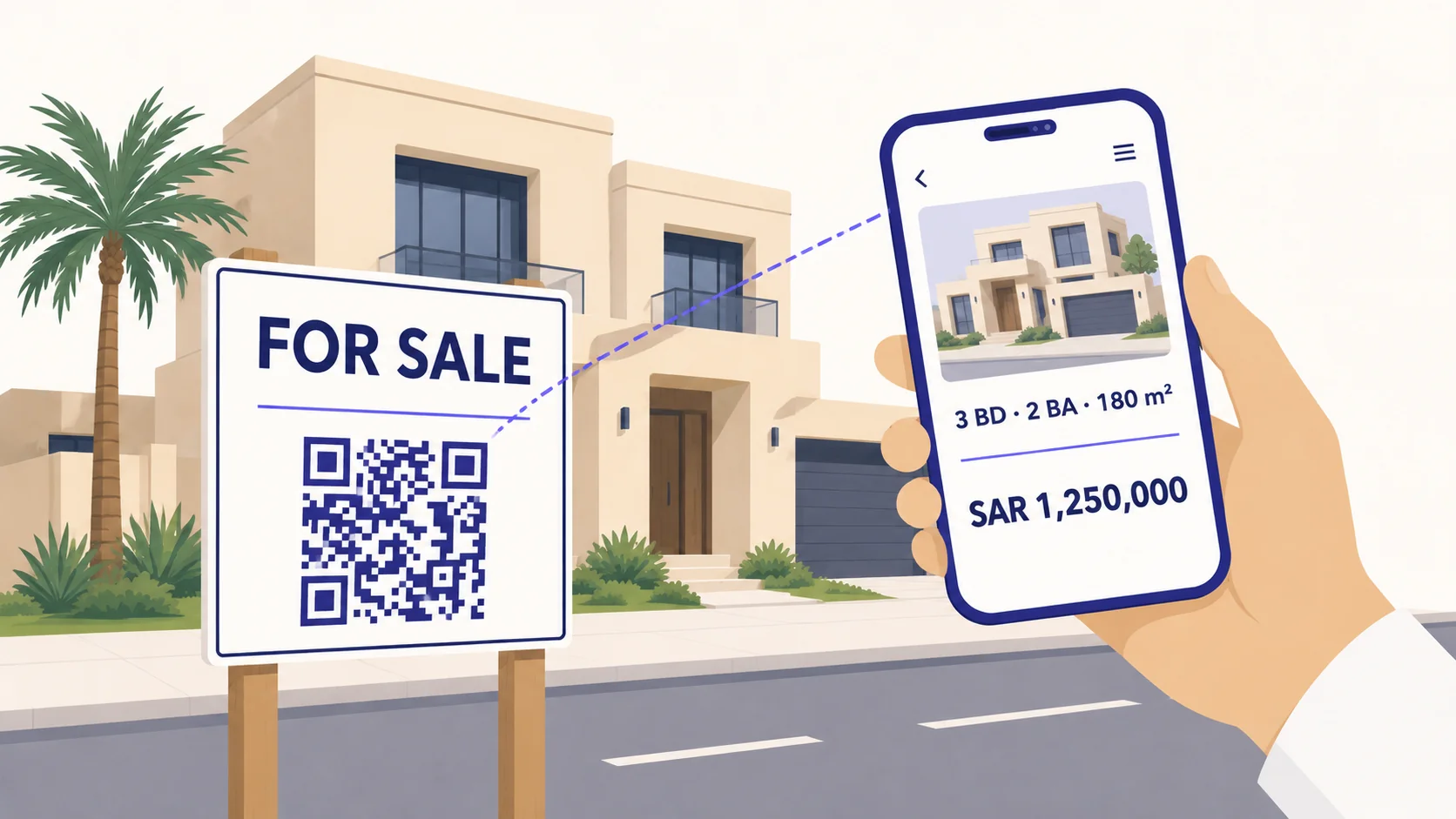
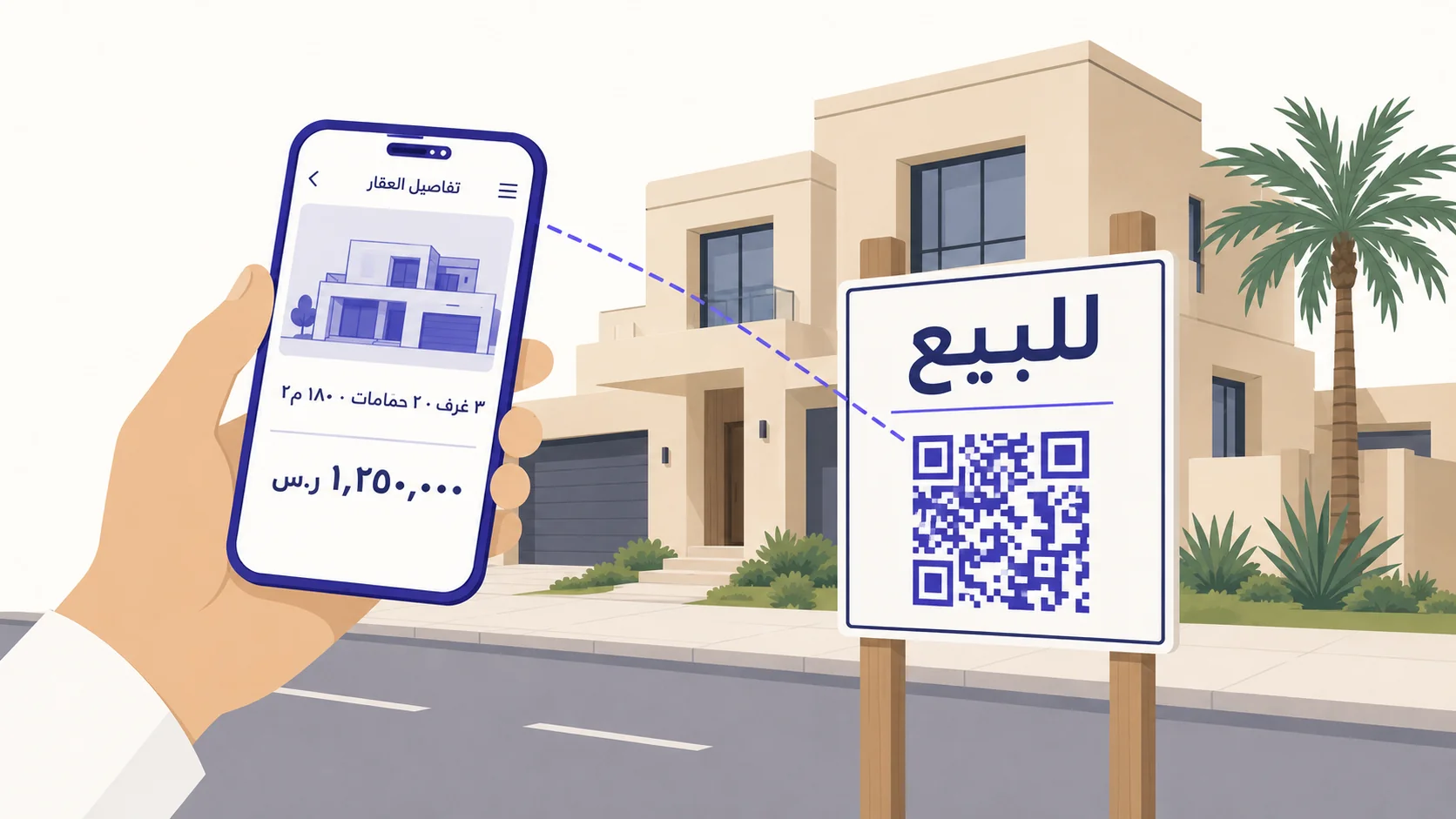
A yard sign that goes up on a property is a billboard for one specific listing in one specific neighbourhood, and the moment it’s printed, every word on it is locked. The price can drop, the open house can move, the video tour can finish editing, the listing can sell — and the sign keeps showing whatever it said on installation day. That’s the part dynamic QR codes fix. A small square on the same printed sign points to a destination you control from a dashboard, and you can update what visitors land on as often as the listing changes.
What dynamic QRs let real-estate teams do that static print can’t
- Live pricing — drop the price on the website at lunchtime and every visitor who scans this afternoon sees the new number. No reprinting, no sticker, no overnight delay.
- Virtual tours that go live the moment editing finishes — same printed sign, the destination switches from a placeholder image to a full 3D walkthrough the day it’s ready.
- Open-house scheduling — point the QR at a calendar link for the week of the open house, then switch it back to the listing page afterwards.
- Sold-status handling — when a listing closes, switch the destination to a “Sold by Acme Realty · See similar homes” page that captures the next lead instead of leaving the sign to dead-end.
- Per-listing scan analytics — see which signs actually drive scans (and which sit ignored), broken down by hour, weekday, and source neighbourhood.
- Multilingual handoff — show an English landing page to phones with English browser settings, Arabic to Arabic ones, all from the same printed QR.
Why a printed phone number isn’t enough anymore
The old yard-sign format — agent photo, phone number, brokerage logo — assumes the prospect will call. Most won’t. They’ll Google the address, try to find the listing on a portal, give up if it’s not the first result, and move on. A QR code intercepts that intent in the three seconds the prospect is actually standing next to the sign — exactly the window where they’re most curious. One scan, the listing page opens, the agent’s call-to-action is right there.
A practical setup for a brokerage
- One short URL per listing — the QR encodes something like qra.cc/villa-malqa-3b not the full portal URL. Edit the destination later without reprinting.
- Point each QR at a listing-specific landing page (your own site, or a portal’s listing URL with UTM parameters so you can attribute scans).
- Add UTM parameters so the scans show up as a distinct source in your portal’s analytics — sign vs flyer vs newspaper insert.
- Use the same QR design across yard signs, flyers, and window cards for one listing — easier brand recognition and one analytics view.
- When a listing closes, switch the destination to a ‘Sold · See similar homes’ page rather than leaving a dead link.
Sizing for yard signs specifically
Yard signs sit anywhere from 1.5m to 3m off the sidewalk, and prospects scan from their cars or while walking past. That’s a 1-2m scan distance in practice, which means a QR sized at 10-15 cm wide on the sign. Smaller than that, you’ll lose the drive-by scans. Bigger than 20 cm and you crowd the rest of the signboard.
Common mistakes
- Encoding the listing’s long portal URL directly into a static code. The day the portal changes the URL structure — and they all eventually do — every printed sign breaks.
- Using the brokerage’s home page as the destination. Visitors arrive on a generic site and have to navigate to find the specific listing. Most won’t bother.
- Forgetting to update the destination after a listing closes. A scan that lands on a 404 or an unrelated page is worse than no scan.
- Skipping analytics setup. Without UTMs, you can’t tell which signs drive scans, which neighbourhoods convert, or whether the sign is paying for itself.
How QRA fits a brokerage workflow
Each agent can manage their own listings under a shared brokerage workspace, with per-agent destinations and a brokerage-wide view of scan activity. Generate yard-sign QRs at print-ready sizes (SVG and PDF-CMYK), edit destinations after a sign is in the ground, and download per-listing analytics for the listing presentation. The dashboard is bilingual EN/AR so an Arabic-speaking agent and an English-speaking marketing lead can collaborate on the same workspace without language friction.
The short answer
A yard sign is a one-time print, but the listing it represents changes every week. Dynamic QR codes are how you keep the sign useful for the entire life of the listing — and beyond, since a sold listing becomes a lead-capture page for the next buyer who walks past. Every other piece of yard-sign real estate is fixed; the QR is the only square that can keep working.
اللافتة التي تُرفع أمام عقار هي لوحة إعلانيّة لقائمة بعينها في حيّ بعينه، ولحظة طباعتها تُقفل كلّ كلمة فيها. قد ينخفض السعر، ويتغيّر موعد الافتتاح، وتنتهي الجولة الفيديوية من المونتاج، وتُباع القائمة — وتبقى اللافتة تعرض ما كانت تعرضه يوم التركيب. هذا تحديداً ما تُصلحه رموز QR الديناميكية. مربّع صغير على اللافتة المطبوعة ذاتها يشير إلى وجهة تتحكّم بها من لوحة التحكم، ويمكنك تحديث ما يصل إليه الزائر كلّما تغيّرت القائمة.
ما تتيحه الرموز الديناميكية لفِرَق العقارات ولا تستطيعه المطبوعات الثابتة
- أسعار حيّة — أنزل السعر على الموقع وقت الغداء، ويرى كلّ زائر يمسح بعد الظهر الرقم الجديد. لا إعادة طباعة، لا ملصقات، لا تأخير ليلة كاملة.
- جولات افتراضية تنشر لحظة انتهاء المونتاج — اللافتة المطبوعة ذاتها، تتبدّل وجهتها من صورة مؤقّتة إلى جولة ثلاثية الأبعاد كاملة يوم تجهيزها.
- جدولة المعاينات — وجّه الرمز إلى رابط تقويم خلال أسبوع المعاينة المفتوحة، ثم أعِده إلى صفحة القائمة لاحقاً.
- إدارة حالة «مُباع» — حين تُغلق صفقة، حوّل الوجهة إلى صفحة «مُباع من قِبَل عقاريّو أكمي · شاهد عقارات مشابهة» تلتقط العميل التالي بدلاً من أن تنتهي اللافتة في طريق مسدود.
- تحليلات مسح لكلّ قائمة — اعرف أيّ اللافتات تُحقّق مسحات فعلاً (وأيّها مهملة)، مُصنَّفة حسب الساعة واليوم وحيّ المصدر.
- تسليم متعدّد اللغات — اعرض صفحة هبوط إنجليزيّة للهواتف ذات إعدادات إنجليزيّة، وعربيّة للعربيّة، كلّها من اللافتة المطبوعة ذاتها.
لماذا لم يعد رقم الهاتف المطبوع كافياً
صيغة لافتة العقار التقليدية — صورة الوكيل، رقم الهاتف، شعار المكتب — تفترض أنّ الزبون سيتّصل. أكثرهم لن يفعل. سيبحث عن العنوان في غوغل، ويحاول إيجاد القائمة على بوابة عقاريّة، ويستسلم إذا لم تكن أوّل نتيجة، وينتقل. رمز QR يلتقط هذه النيّة في الثواني الثلاث التي يقف فيها الزبون فعلاً بجانب اللافتة — وهي بالضبط النافذة الأكثر فضولاً. مسحة واحدة، تفتح صفحة القائمة، ودعوة الوكيل للعمل أمامه مباشرة.
إعداد عملي لمكتب عقاري
- رابط قصير واحد لكلّ قائمة — يحمل الرمز شيئاً مثل qra.cc/villa-malqa-3b لا رابط البوابة الكامل. عدّل الوجهة لاحقاً دون إعادة طباعة.
- وجّه كلّ رمز إلى صفحة هبوط خاصّة بالقائمة (موقعك، أو رابط قائمة البوابة مع معاملات UTM للإسناد).
- أضف معاملات UTM ليظهر المسح كمصدر منفصل في تحليلات البوابة — لافتة مقابل نشرة مقابل إعلان جريدة.
- استخدم تصميم QR واحداً عبر لافتات الفناء والنشرات وبطاقات النوافذ لقائمة واحدة — تعرّف أسهل على العلامة، وعرض تحليلات واحد.
- حين تُغلق القائمة، حوّل الوجهة إلى صفحة «مُباع · شاهد عقارات مشابهة» بدل ترك رابط ميّت.
المقاس المناسب للافتات العقاريّة تحديداً
لافتات الفناء تقف على ارتفاع من ١٫٥ إلى ٣ أمتار عن الرصيف، ويمسحها الزبائن من سياراتهم أو وهم يمرّون مشياً. مسافة المسح الفعليّة من ١ إلى ٢ متر، ما يعني رمزاً بمقاس ١٠-١٥ سم عرضاً على اللافتة. أصغر من ذلك تخسر مسحات المرور بالسيارة. أكبر من ٢٠ سم تزدحم بقيّة اللافتة.
أخطاء شائعة
- تشفير رابط البوابة الطويل مباشرة في رمز ثابت. يوم تغيّر البوابة بنية روابطها — وكلّها تفعل آجلاً — تنكسر كلّ لافتة مطبوعة.
- استخدام الصفحة الرئيسيّة للمكتب وجهةً. يصل الزوّار إلى موقع عامّ ويجب أن يتنقّلوا للوصول إلى القائمة بعينها. معظمهم لن يكلّف نفسه.
- نسيان تحديث الوجهة بعد إغلاق القائمة. مسحة تصل إلى صفحة ٤٠٤ أو صفحة لا علاقة لها أسوأ من عدم وجود مسحة أصلاً.
- تخطّي إعداد التحليلات. بلا UTM، لا تستطيع معرفة أيّ اللافتات تُحقّق مسحات، وأيّ الأحياء تُحوّل، أو ما إذا كانت اللافتة تدفع كلفتها.
كيف تناسب QRA تدفّق عمل مكتب عقاري
كلّ وكيل يدير قوائمه ضمن مساحة عمل مشتركة للمكتب، مع وجهات لكلّ وكيل وعرض تحليلات على مستوى المكتب لنشاط المسح. أنشئ رموز QR للافتات الفناء بأحجام جاهزة للطباعة (SVG وPDF-CMYK)، وعدّل الوجهات بعد رفع اللافتة، ونزّل تحليلات لكلّ قائمة لاستخدامها في عرض البيع. لوحة التحكم ثنائيّة اللغة عربي/إنجليزي حتّى يستطيع وكيل ناطق بالعربية ومسؤول تسويق ناطق بالإنجليزية التعاون في المساحة ذاتها دون احتكاك لغوي.
الإجابة المختصرة
لافتة الفناء طباعة لمرّة واحدة، لكنّ القائمة التي تمثّلها تتغيّر كلّ أسبوع. رموز QR الديناميكيّة هي الطريقة لإبقاء اللافتة نافعة طوال عمر القائمة — وما بعد ذلك، لأنّ قائمة بِيعت تصبح صفحة استقطاب للمشتري التالي الذي يمرّ من جانبها. كلّ بقيّة عناصر اللافتة ثابتة؛ الرمز هو المربّع الوحيد الذي يستطيع الاستمرار في العمل.
Ready to make a smarter QR?جاهز لإنشاء رمز QR أذكى؟
Sign up free — no card needed. Track every scan, edit destinations anytime.سجّل مجاناً — بدون بطاقة. تتبّع كل عملية مسح وعدّل الوجهة في أي وقت.