QR Codes for Museums and Cultural Venues Across MENAرموز QR للمتاحف والمواقع الثقافيّة في الشرق الأوسط
MENA is in the middle of a cultural-tourism boom — the Grand Egyptian Museum, Saudi's AlUla and Diriyah, Louvre Abu Dhabi, Qatar's MIA, Morocco's museum modernisation. Audio guides, multilingual exhibit interpretation, timed-entry tickets, and virtual collection access are all natural QR territory. This is the playbook for museum operators, cultural-venue managers, and the agencies designing exhibits across the region.الشرق الأوسط في خضمّ ازدهار السياحة الثقافيّة — المتحف المصري الكبير، العلا والدرعيّة في السعوديّة، اللوفر أبوظبي، متحف الفنّ الإسلامي في قطر، تحديث متاحف المغرب. الأدلّة الصوتيّة، والتفسير متعدّد اللغات للمعروضات، وتذاكر الدخول المجدوَلة، والوصول إلى المجموعات الافتراضيّة — كلّها مجالات طبيعيّة لرموز QR. هذا هو الدليل لمشغّلي المتاحف ومديري المواقع الثقافيّة والوكالات التي تصمّم المعروضات في المنطقة.
MENA is the most exciting museum market on Earth right now, and almost no one outside the region has clocked it. The Grand Egyptian Museum in Giza is now fully open with the largest archaeological collection ever assembled under one roof. Saudi Arabia is opening museums, heritage sites, and cultural districts at a pace no country has matched in decades — AlUla's progressive reveal, the Diriyah cultural quarter, the National Museum of Saudi Arabia, the King Abdulaziz Center for World Culture (Ithra), and a long pipeline behind them. Louvre Abu Dhabi continues expanding, Qatar's Museum of Islamic Art has its newer wings, Morocco's Mohammed VI Museum modernised its operations, Bahrain's Beit Al-Quran refreshed, Oman's National Museum opened a decade ago and keeps growing. The visitor mix is global, multi-language, and digitally native.
Museums are also a near-perfect use case for QR codes. Every interpretation challenge a museum faces — language coverage, exhibit context depth, accessibility, timed tickets, special-event programming — gets resolved more elegantly by a QR than by physical signage alone. This piece is for museum operators, curators, exhibit designers, agencies serving cultural venues, and the technology teams building visitor-facing apps across MENA. Specific patterns, what works and doesn't, and where the QR earns its keep.
Why physical-only exhibit labels lose to QR-augmented ones
The classic museum interpretation panel — a printed plaque with the object title, the date, the provenance, a paragraph of context — has structural limits that worked in the 1970s and don't in 2026.
- Language coverage. A panel can realistically hold two to three languages before legibility collapses. MENA museums need Arabic and English minimum; Gulf-tourist-heavy venues need Russian, Chinese, French, German, Urdu, Hindi for serious accommodation. That doesn't fit on a 20×30 cm panel.
- Depth. The casual visitor wants two sentences; the engaged visitor wants ten paragraphs; the scholar wants citations. A single panel can serve one of them, not three. QR-linked content delivers tiered depth — the panel itself remains brief; the QR opens the layered version.
- Updates. Provenance changes. New scholarship reframes an artefact. A loaning institution requests altered attribution. A printed panel that says something we no longer believe needs reprinting; a QR-linked digital interpretation page can be edited in minutes.
- Accessibility. Audio descriptions for visually impaired visitors, sign-language video for deaf visitors, simplified-text versions for visitors with cognitive disabilities or limited literacy — none of these fit on a panel; all are first-class behind a QR.
- Engagement layer. The visitor who wants more — bookmark the exhibit, share with a friend, save to a personalised gallery, sign up for the museum's newsletter — has no surface to do that on the physical panel.
The pattern that works across MENA museums: the panel stays. It's the physical anchor, the high-resolution single-language summary, the thing the curator hand-wrote and the typesetter set in the museum's house font. The QR sits in a designated corner, leading to everything the panel doesn't have room for. Pair, not replacement.
Six high-value QR placements inside the museum
1. The per-exhibit interpretation QR
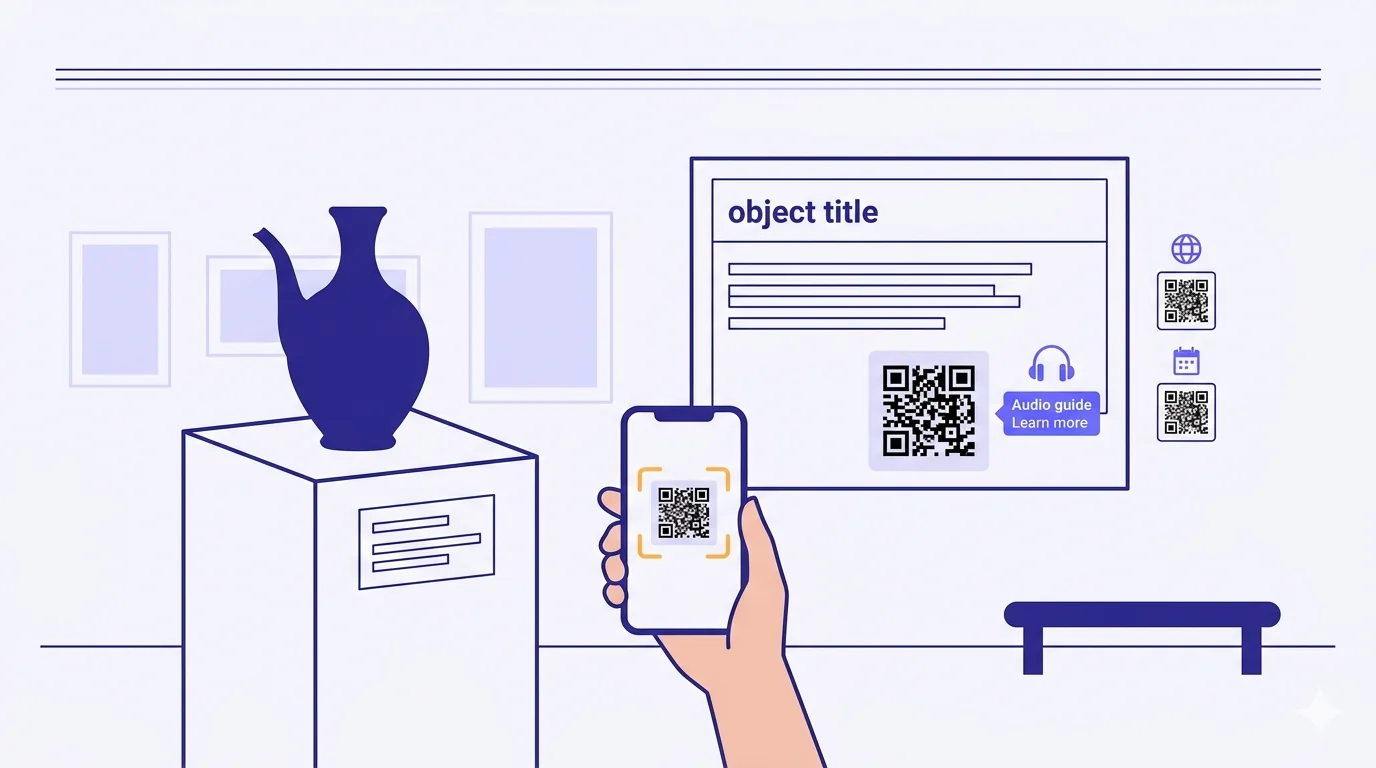
The core placement. One QR on (or near) every interpretation panel, leading to a per-exhibit digital page. That page hosts the deeper text, the audio narration in the visitor's chosen language, optional video commentary from the curator, related works in the collection, citations and bibliography for academic visitors, and a 'save this' bookmark action that builds the visitor's personal gallery for later. Visitors with an interest in this one piece stay; visitors moving through the gallery quickly aren't blocked by depth. The panel still does the panel's job.
2. The gallery-entrance overview QR
At the entrance to each gallery or themed room, a QR leading to a gallery-level overview: a curatorial intro setting the room's narrative, a map showing the suggested route through the works, the gallery's audio-tour playlist, and 'highlights to look for' from the curator. Especially valuable in large galleries where visitors miss key works because the room is dense. The QR turns the gallery itself into a layered guided experience without requiring a docent.
3. The audio-guide QR (replacing the rental-headphone counter)
Museum audio guides used to mean a counter at the entrance where you rented a clunky device, returned it on the way out, and paid for a deposit you sometimes forgot to collect. QR-based audio guides eliminate the entire workflow. The visitor scans a QR at the entrance, the museum's audio-guide player loads in their phone browser, they wear their own earbuds, they walk through at their own pace, they're not tethered to a hardware rental. Saudi Arabia's newer cultural venues, Louvre Abu Dhabi, and Qatar's MIA have all moved toward this model. The cost savings (no hardware fleet, no battery management, no theft) and visitor experience improvement (familiar interface, own earbuds, multilingual) are both substantial.
4. The timed-entry ticket QR
MENA's premier venues (GEM, AlUla sites, Louvre Abu Dhabi for popular exhibitions) use timed-entry to manage capacity. The ticket itself is a QR — generated at purchase, scanned by gate staff at the visitor's slot time, validated against the booking system. This is now standard, but worth flagging: the QR on the ticket must be a static QR encoding the booking ID directly, not a dynamic redirect — gate staff need to validate offline-capable in case connectivity drops, and the QR's payload must be self-sufficient.
5. The accessibility-focused QR
Audio descriptions for visually impaired visitors, sign-language video for the deaf, large-print or high-contrast versions for low-vision visitors, simplified-language versions for visitors with cognitive disabilities — none of these belong on the main panel, all of them belong behind a QR with a clear accessibility icon. The destination page should default the most common accessibility mode automatically (audio description prominently), with toggles to the others. MENA museums adopting this pattern improve accessibility compliance and the visitor experience for the underserved audiences simultaneously.
6. The post-visit engagement QR
At the exit, a QR for what happens after the museum visit: the gift-shop link (physical or online), the membership signup, the newsletter, upcoming events and exhibitions, a feedback survey, a thank-you note from the curator. Quality museums increasingly recognise that the visitor's relationship with the institution doesn't end at the exit — and a QR on the exit signage is the cheapest distribution surface for everything that builds the relationship beyond the visit.
MENA-specific considerations
Language defaults
Across MENA, the language default on any QR destination page should be Arabic visible with English (and other languages) selectable. This is true even in venues with heavy international-tourist mix — Saudi nationals visiting AlUla, Egyptian visitors at GEM, Emirati visitors at Louvre Abu Dhabi will appreciate Arabic-first; non-Arabic-readers will tap the toggle. The reverse default (English-first with Arabic-tap) signals a missed positioning. Beyond Arabic-English, the language priority order varies by venue: Saudi venues prioritise English, Urdu, Indonesian (Hajj-pilgrim adjacency); UAE prioritises English, Hindi/Urdu, Russian, Chinese; Egyptian venues prioritise English, French, Italian, German.
Connectivity
Wi-Fi coverage inside large MENA museum buildings is uneven — thick walls, dense crowds, basement-level galleries with no cellular signal. The destination pages should be lightweight (under 200 KB), with audio guides progressively-loaded by clip rather than as monolithic files, and with offline-fallback behaviour for the most-scanned exhibits. Some venues provide free guest Wi-Fi networks; the welcome QR at the entrance can pre-configure the visitor's phone with the network credentials in one scan (Wi-Fi QR type), saving the friction of typing a password.
Respectful imagery and content
Saudi Arabia and several Gulf venues maintain content-moderation standards for imagery in cultural content, particularly around depictions of the human form, regional and historical figures, and certain Islamic-art elements. QR destination pages serve the museum's content directly and should pass the same review process as any other museum-published material — the QR linking out doesn't transfer the content-moderation responsibility, the museum still publishes the page. This is operationally normal; just worth confirming with the curatorial and PR teams during page-content sign-off.
Prayer time and seasonal adjustments
Operating hours adjust for prayer times in many MENA venues; Ramadan hours differ from regular schedules; Hajj season changes flow patterns at venues near Mecca/Medina. The QR destination page should reflect today's actual hours, the next-prayer-time pause if applicable, and any seasonal scheduling. This is a 30-second daily update via the museum's content team, and it eliminates the visitor frustration of arriving 10 minutes before a prayer pause that the printed timetable on the door doesn't reflect.
Cultural-venue use cases beyond traditional museums
The same patterns extend cleanly to:
- Heritage sites — AlUla's Hegra, Diriyah's At-Turaif, Petra in Jordan, Marrakech's medina, Cairo's Khan el-Khalili. Outdoor signage with QRs leading to deeper-dive interpretation pages survives weather and crowds better than long printed panels.
- Cultural districts — Riyadh's Boulevard Riyadh City, Dubai's Alserkal Avenue, Cairo's Zamalek Arts District, Beirut's Mar Mikhael. Per-gallery and per-installation QRs let the district function as a distributed museum with light infrastructure.
- Mosques and heritage religious sites (where appropriate and with the institution's approval) — explanations of architectural features, ritual context for visitors unfamiliar with practice, history of the building. The Great Mosque of Cairo, Sheikh Zayed Grand Mosque in Abu Dhabi, the Hassan II Mosque in Casablanca have all experimented with QR-linked visitor information for non-Muslim tourists.
- Private collections and corporate art programs — the QR brings curatorial depth to lobby and conference-room placements where a traditional museum infrastructure isn't viable.
- Performing-arts venues, opera houses, theatres — pre-show programme notes, composer/playwright bios, plot synopses, post-show Q&A schedules, season-ticket sign-ups.
What QR analytics tell museum operators that visitor surveys can't
Every QR scan is logged with country, language preference (if the destination page captures it), device, time, and dwell time on the destination page. Aggregated over a season, this data set reveals things visitor surveys never surface:
- Which exhibits are actually engaging visitors (highest scans + longest dwell) vs which exhibits are decorative (low scans despite prominent placement). Curators use this to rework the next rotation.
- Which languages are actually being selected — often a meaningful percentage of visitors who would describe themselves as 'English-comfortable' in a survey actually switch to Arabic (or Urdu, or Russian) when the option is present. This data informs language investments for future exhibitions.
- Daily and seasonal flow patterns: which galleries fill at which hours, where bottlenecks form, where staff are over- or under-allocated relative to scan-driven engagement.
- Accessibility-feature usage — how often the audio-description, sign-language, or simplified-language variants are accessed gives a real measurement of underserved-audience presence, often previously invisible in attendance counts.
None of this requires the visitor to fill out anything. They scan; the data flows passively; the museum operations team gains a new instrument.
How QRA fits museum operations
One QRA workspace per museum; folders for each gallery or exhibition; per-exhibit dynamic QRs that the curatorial team can re-point or update without ever touching the printed signage. Multilingual destination pages with Arabic-default and toggle-to-other-languages built-in. Bulk export of all QRs in the museum's house style with the museum's logo placed in the centre of each QR (vector SVG export for the print shop). Scan analytics scoped by gallery, exhibit, language, device, time. Plan-tier features for cultural institutions are available with non-commercial pricing — contact through the venue partnerships email.
The short answer
MENA's museum boom is structurally underserved by SaaS — global museum-software vendors don't speak Arabic well, don't understand prayer-time scheduling, don't think about Hajj-season flow patterns, don't tier languages the way MENA visitors actually use them. QR codes are the connective tissue between physical exhibits and the digital layer modern visitors expect. One QR per panel, one QR per gallery entrance, one QR per audio-guide entry point, one QR per accessibility offering, one QR at the exit. The interpretation panel stays; everything the panel can't carry sits behind the QR, in the visitor's pocket, in the right language, at the right depth, updated as scholarship evolves.
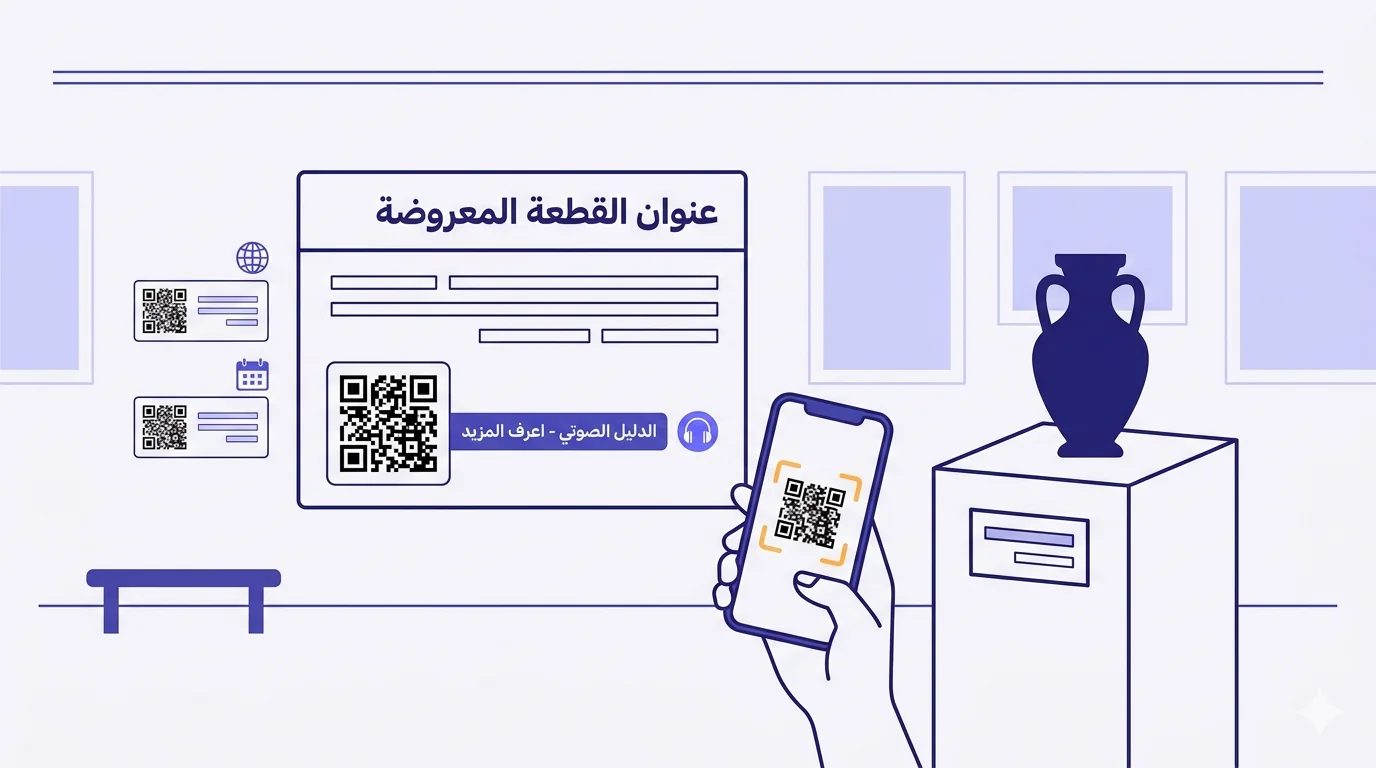
الشرق الأوسط هو سوق المتاحف الأكثر إثارة على وجه الأرض في هذه اللحظة، ولم ينتبه إلى ذلك تقريباً أحد من خارج المنطقة. المتحف المصري الكبير في الجيزة مفتوح الآن بالكامل، وهو أكبر مجموعة أثريّة جُمعت تحت سقف واحد على الإطلاق. تفتتح المملكة العربيّة السعوديّة متاحف ومواقع تراثيّة وأحياء ثقافيّة بوتيرة لم تطابقها أيّ دولة منذ عقود — الكشف التدريجي للعلا، حيّ الدرعيّة الثقافي، المتحف الوطني السعودي، مركز الملك عبدالعزيز الثقافي العالمي (إثراء)، وخطّ طويل خلفها. اللوفر أبوظبي يواصل التوسّع، متحف الفنّ الإسلامي في قطر يحوي أجنحته الأحدث، متحف محمّد السادس في المغرب حدّث عمليّاته، بيت القرآن في البحرين تجدّد، المتحف الوطني العماني افتُتح قبل عقد ويتنامى. مزيج الزوّار عالمي، متعدّد اللغات، ورقمي بطبيعته.
والمتاحف أيضاً حالة استخدام شبه مثاليّة لرموز QR. كلّ تحدّ تفسيري يواجهه المتحف — تغطية اللغات، عمق سياق المعروض، إمكانيّة الوصول، التذاكر المجدوَلة، برمجة المناسبات الخاصّة — يُحلّ بأناقة أكبر برمز QR منه باللافتات الفيزيائيّة وحدها. هذا المقال موجَّه لمشغّلي المتاحف، والقيّمين، ومصمّمي المعروضات، والوكالات التي تخدم المواقع الثقافيّة، وفرق التقنية التي تبني تطبيقات تواجه الزوّار في الشرق الأوسط. أنماط محدّدة، ما ينجح وما لا ينجح، وأين يكسب QR موقعه.
لماذا تخسر لوحات التفسير الفيزيائيّة-فقط أمام تلك المعزّزة بـ QR
لوحة التفسير المتحفيّة الكلاسيكيّة — لافتة مطبوعة بعنوان القطعة، التاريخ، المصدر، فقرة سياق — لها حدود هيكليّة عملت في السبعينيّات ولا تعمل في ٢٠٢٦.
- تغطية اللغات. لوحة تستطيع واقعيّاً حمل لغتَين إلى ثلاث قبل أن تنهار قابليّة القراءة. متاحف الشرق الأوسط تحتاج العربيّة والإنجليزيّة كحدّ أدنى؛ والمواقع كثيفة السيّاح الخليجيّين تحتاج الروسيّة والصينيّة والفرنسيّة والألمانيّة والأرديّة والهنديّة للتلبية الجدّيّة. هذا لا يتّسع في لوحة ٢٠×٣٠ سم.
- العمق. الزائر العابر يريد جملتَين؛ الزائر المنخرط يريد عشر فقرات؛ الباحث يريد المراجع. لوحة واحدة تستطيع خدمة واحد منهم، لا ثلاثة. محتوى QR-مرتبط يقدّم عمقاً متعدّد الطبقات — اللوحة نفسها تبقى مختصرة؛ ورمز QR يفتح النسخة المتعدّدة الطبقات.
- التحديثات. تتغيّر مصادر القطع. أبحاث جديدة تعيد تأطير قطعة أثريّة. مؤسّسة معيرة تطلب نسبة معدّلة. لوحة مطبوعة تقول شيئاً لم نعد نؤمن به تحتاج إعادة طباعة؛ صفحة تفسير رقميّة مرتبطة بـ QR يمكن تعديلها في دقائق.
- إمكانيّة الوصول. أوصاف صوتيّة للزوّار ضعاف البصر، فيديو لغة الإشارة للزوّار الصمّ، نسخ بنصّ مبسّط للزوّار ذوي الإعاقات المعرفيّة أو المحدودي القراءة — لا شيء من هذه يتّسع في لوحة؛ كلّها من الدرجة الأولى خلف رمز QR.
- طبقة التفاعل. الزائر الذي يريد المزيد — وضع علامة على المعروض، مشاركته مع صديق، حفظه في معرض مخصّص، التسجيل في نشرة المتحف — ليس له سطح للقيام بذلك على اللوحة الفيزيائيّة.
النمط الذي يعمل عبر متاحف الشرق الأوسط: تبقى اللوحة. هي المرسى الفيزيائي، الملخّص أحادي اللغة عالي الدقّة، الشيء الذي كتبه القيّم بخطّه ورتّبه المطبعجي بخطّ المتحف الرسمي. ويجلس QR في زاوية مخصّصة، يقود إلى كلّ ما لا تستطيع اللوحة استيعابه. اقتران، لا استبدال.
ستّ مواضع عالية القيمة لـ QR داخل المتحف
١. رمز QR التفسير لكلّ معروض
الموضع الجوهري. رمز QR واحد على (أو بالقرب من) كلّ لوحة تفسير، يقود إلى صفحة رقميّة خاصّة بالمعروض. تستضيف تلك الصفحة النصّ الأعمق، السرد الصوتي بلغة الزائر المختارة، تعليق فيديو اختياري من القيّم، الأعمال ذات الصلة في المجموعة، المراجع والمصادر للزوّار الأكاديميّين، وإجراء «احفظ هذا» يبني المعرض الشخصي للزائر لوقت لاحق. يبقى الزوّار المهتمّون بهذه القطعة الواحدة؛ والزوّار العابرون عبر القاعة بسرعة لا يعوقهم العمق. تستمرّ اللوحة في القيام بعملها.
٢. رمز QR نظرة عامّة عند مدخل القاعة
عند مدخل كلّ قاعة أو غرفة موضوعيّة، رمز QR يقود إلى نظرة عامّة على مستوى القاعة: مقدّمة قيّم تضع سرد الغرفة، خريطة تعرض المسار المقترح عبر الأعمال، قائمة تشغيل الجولة الصوتيّة للقاعة، و«أبرز ما تنظر إليه» من القيّم. قيّم بشكل خاصّ في القاعات الكبيرة حيث يفوّت الزوّار أعمالاً رئيسيّة لكون الغرفة كثيفة. يحوّل QR القاعة نفسها إلى تجربة موجَّهة متعدّدة الطبقات دون الحاجة إلى مرشد.
٣. رمز QR الدليل الصوتي (الذي يحلّ محلّ كاونتر سمّاعات الإيجار)
كانت الأدلّة الصوتيّة في المتاحف تعني كاونتراً عند المدخل تستأجر فيه جهازاً ثقيلاً، تُعيده عند الخروج، وتدفع تأميناً تنسى أحياناً استرداده. تلغي الأدلّة الصوتيّة المبنيّة على QR كامل تدفّق العمل ذاك. يمسح الزائر رمز QR عند المدخل، يتحمّل مشغّل الدليل الصوتي للمتحف في متصفّح هاتفه، يلبس سمّاعاته الخاصّة، يمشي بإيقاعه، ليس مقيّداً بإيجار أجهزة. المواقع الثقافيّة الأحدث في السعوديّة، اللوفر أبوظبي، ومتحف الفنّ الإسلامي في قطر، كلّها انتقلت نحو هذا النموذج. توفير التكاليف (لا أسطول أجهزة، لا إدارة بطّاريّات، لا سرقات) وتحسين تجربة الزائر (واجهة مألوفة، سمّاعات شخصيّة، متعدّد اللغات) كلاهما ملموس.
٤. رمز QR تذكرة الدخول المجدوَلة
المواقع الأبرز في الشرق الأوسط (المتحف المصري الكبير، مواقع العلا، اللوفر أبوظبي للمعارض الشعبيّة) تستخدم الدخول المجدوَل لإدارة الطاقة الاستيعابيّة. التذكرة نفسها رمز QR — يُولَّد عند الشراء، يُمسح من قِبَل موظّفي البوّابة في خانة وقت الزائر، يُتحقَّق منه مقابل نظام الحجز. هذا أصبح قياسيّاً، لكن يستحقّ الإشارة: رمز QR على التذكرة يجب أن يكون رمزاً ثابتاً يرمز معرّف الحجز مباشرةً، لا تحويلاً ديناميكيّاً — موظّفو البوّابة يحتاجون إلى التحقّق بقدرة على العمل دون اتّصال في حال انقطع الاتّصال، وحمولة QR يجب أن تكون مكتفية ذاتيّاً.
٥. رمز QR التركيز على إمكانيّة الوصول
الأوصاف الصوتيّة للزوّار ضعاف البصر، فيديو لغة الإشارة للصمّ، نسخ بخطّ كبير أو تباين عال للزوّار ضعاف البصر، نسخ بلغة مبسّطة للزوّار ذوي الإعاقات المعرفيّة — لا شيء من هذه يستحقّ مكاناً على اللوحة الرئيسيّة، وكلّها تستحقّ مكاناً خلف رمز QR بأيقونة إمكانيّة وصول واضحة. يجب أن تتخلّف صفحة الوجهة افتراضيّاً إلى وضع إمكانيّة الوصول الأكثر شيوعاً تلقائيّاً (الوصف الصوتي بشكل بارز)، مع أزرار تبديل للآخرين. متاحف الشرق الأوسط التي تتبنّى هذا النمط تحسّن الامتثال لإمكانيّة الوصول وتجربة الزائر للجماهير المحرومة في الوقت نفسه.
٦. رمز QR التفاعل ما بعد الزيارة
عند الخروج، رمز QR لما يحدث بعد زيارة المتحف: رابط متجر الهدايا (الفيزيائي أو الإلكتروني)، تسجيل العضويّة، النشرة، المناسبات والمعارض القادمة، استبيان رأي، رسالة شكر من القيّم. المتاحف الجيّدة تعترف بشكل متزايد بأنّ علاقة الزائر مع المؤسّسة لا تنتهي عند الخروج — ورمز QR على لافتة الخروج هو السطح الأرخص للتوزيع لكلّ ما يبني العلاقة بعد الزيارة.
اعتبارات خاصّة بالشرق الأوسط
اللغة الافتراضيّة
عبر الشرق الأوسط، يجب أن تكون اللغة الافتراضيّة على أيّ صفحة وجهة QR هي العربيّة الظاهرة مع زرّ تبديل إلى الإنجليزيّة (واللغات الأخرى) قابل للاختيار. هذا صحيح حتّى في المواقع ذات المزيج السياحي الدولي الكثيف — السعوديّون الذين يزورون العلا، الزوّار المصريّون في المتحف المصري الكبير، الزوّار الإماراتيّون في اللوفر أبوظبي سيقدّرون العربيّة أوّلاً؛ غير قارئي العربيّة سيضغطون زرّ التبديل. الافتراضي العكسي (الإنجليزيّة أوّلاً مع زرّ عربي) يرسل إشارة موقف خاطئة. وراء العربيّة-الإنجليزيّة، يتفاوت ترتيب أولويّات اللغة بحسب الموقع: المواقع السعوديّة تعطي الأولويّة للإنجليزيّة، الأرديّة، الإندونيسيّة (قرب-حجّاج)؛ الإمارات تعطي الأولويّة للإنجليزيّة، الهنديّة/الأرديّة، الروسيّة، الصينيّة؛ المواقع المصريّة تعطي الأولويّة للإنجليزيّة، الفرنسيّة، الإيطاليّة، الألمانيّة.
الاتّصال
تغطية الواي فاي داخل مباني المتاحف الكبيرة في الشرق الأوسط متفاوتة — جدران سميكة، حشود كثيفة، قاعات تحت مستوى الأرض دون إشارة خلويّة. يجب أن تكون صفحات الوجهة خفيفة الوزن (أقلّ من ٢٠٠ كيلوبايت)، مع تحميل تدريجي للأدلّة الصوتيّة مقطع-مقطع بدلاً من ملفّات متجانسة، وسلوك احتياطي دون اتّصال للمعروضات الأكثر مسحاً. توفّر بعض المواقع شبكات واي فاي ضيف مجّانيّة؛ ورمز QR الترحيب عند المدخل يمكنه تكوين هاتف الزائر مسبقاً ببيانات الشبكة بمسحة واحدة (نوع QR الواي فاي)، فيوفّر احتكاك كتابة كلمة السرّ.
الصور والمحتوى المحترم
تحافظ السعوديّة وعدّة مواقع خليجيّة على معايير ضبط محتوى للصور في المحتوى الثقافي، خاصّةً حول تصوير الشكل البشري، الشخصيّات الإقليميّة والتاريخيّة، وعناصر معيّنة من الفنّ الإسلامي. صفحات وجهة QR تخدم محتوى المتحف مباشرةً ويجب أن تمرّ بعمليّة المراجعة نفسها لأيّ مادّة أخرى منشورة من المتحف — رمز QR الذي يحيل إلى الخارج لا ينقل مسؤوليّة ضبط المحتوى، المتحف لا يزال يصدر الصفحة. هذا طبيعي تشغيليّاً؛ يستحقّ التأكيد فقط مع الفرق القيّميّة وفرق العلاقات العامّة خلال الموافقة على محتوى الصفحة.
أوقات الصلاة والتعديلات الموسميّة
تتعدّل ساعات العمل لأوقات الصلاة في كثير من مواقع الشرق الأوسط؛ ساعات رمضان تختلف عن الجداول العاديّة؛ موسم الحجّ يغيّر أنماط التدفّق في المواقع قرب مكّة/المدينة. يجب أن تعكس صفحة وجهة QR ساعات اليوم الفعليّة، توقّف الصلاة القادم إن وُجد، وأيّ جدولة موسميّة. هذا تحديث يومي ٣٠-ثانية من فريق محتوى المتحف، ويلغي إحباط الزائر الذي يصل قبل ١٠ دقائق من توقّف صلاة لا يعكسه الجدول المطبوع على الباب.
حالات استخدام المواقع الثقافيّة وراء المتاحف التقليديّة
تنتقل الأنماط نفسها بنظافة إلى:
- المواقع التراثيّة — الحجر في العلا، الطريف في الدرعيّة، البتراء في الأردن، مدينة مرّاكش، خان الخليلي في القاهرة. لافتات خارجيّة برموز QR تقود إلى صفحات تفسير عميقة تنجو من الطقس والحشود أفضل من اللوحات المطبوعة الطويلة.
- الأحياء الثقافيّة — بوليفارد رياض سيتي في الرياض، السركال أفنيو في دبي، حيّ فنون الزمالك في القاهرة، مار مخايل في بيروت. رموز QR لكلّ معرض وكلّ تركيب فنّي تتيح للحيّ أن يعمل كمتحف موزَّع ببنية تحتيّة خفيفة.
- المساجد والمواقع الدينيّة التراثيّة (حيث يكون مناسباً وبموافقة المؤسّسة) — شروحات الميزات المعماريّة، السياق الطقسي للزوّار غير المعتادين على الممارسة، تاريخ المبنى. الجامع الكبير في القاهرة، جامع الشيخ زايد الكبير في أبوظبي، مسجد الحسن الثاني في الدار البيضاء، كلّها جرّبت معلومات الزائر المرتبطة بـ QR للسيّاح غير المسلمين.
- المجموعات الخاصّة وبرامج الفنّ المؤسّسي — يجلب QR العمق القيّمي لأماكن البهو وقاعات الاجتماعات حيث لا تكون البنية التحتيّة المتحفيّة التقليديّة قابلة للتطبيق.
- مواقع الفنون الأدائيّة، دور الأوبرا، المسارح — ملاحظات البرنامج قبل العرض، سير مؤلّفي الموسيقى/الكتّاب، ملخّصات الحبكة، جداول جلسات الأسئلة والأجوبة بعد العرض، التسجيل لاشتراكات الموسم.
ما تخبر تحليلات QR مشغّلي المتاحف به ولا تستطيع استبيانات الزوّار
كلّ مسحة QR تُسجَّل بالبلد، تفضيل اللغة (إن التقطته صفحة الوجهة)، الجهاز، الوقت، ووقت البقاء على صفحة الوجهة. مجمّعةً عبر موسم، تكشف مجموعة البيانات هذه أشياء لا تستخرجها استبيانات الزوّار أبداً:
- أيّ المعروضات تتفاعل فعلاً مع الزوّار (أعلى مسحات + أطول بقاء) مقابل أيّ المعروضات زخرفيّة (مسحات قليلة رغم الموضع البارز). يستخدم القيّمون هذا لإعادة عمل التدوير القادم.
- أيّ اللغات تُختار فعلاً — كثيراً ما تكون نسبة ملموسة من الزوّار الذين سيصفون أنفسهم بـ «مرتاحين بالإنجليزيّة» في استبيان يتحوّلون فعلاً إلى العربيّة (أو الأرديّة، أو الروسيّة) حين يكون الخيار حاضراً. هذه البيانات تُعلِم استثمارات اللغة للمعارض المستقبليّة.
- أنماط التدفّق اليوميّة والموسميّة: أيّ القاعات تمتلئ في أيّ ساعات، أين تتشكّل الاختناقات، أين يوزَّع الموظّفون فوق الحاجة أو دونها بالنسبة للتفاعل المُسجَّل بالمسح.
- استخدام ميزات إمكانيّة الوصول — كم مرّة يتمّ الوصول إلى متغيّرات الوصف الصوتي، أو لغة الإشارة، أو اللغة المبسّطة يعطي قياساً حقيقيّاً لحضور الجمهور المحروم، الذي كان سابقاً غير مرئي في عدّ الحضور.
لا شيء من هذا يتطلّب من الزائر ملء أيّ شيء. يمسح؛ تتدفّق البيانات بشكل سلبي؛ يكسب فريق عمليّات المتحف أداةً جديدة.
كيف تتناسب QRA مع عمليّات المتحف
مساحة عمل QRA واحدة لكلّ متحف؛ مجلّدات لكلّ قاعة أو معرض؛ رموز QR ديناميكيّة لكلّ معروض يستطيع الفريق القيّمي إعادة توجيهها أو تحديثها دون أن يلمس اللافتة المطبوعة أبداً. صفحات وجهة متعدّدة اللغات مع افتراضي عربي وزرّ تبديل-إلى-لغات-أخرى مبني-داخل. تصدير جماعي لكلّ رموز QR في المتحف بأسلوب المتحف الرسمي مع وضع شعار المتحف في وسط كلّ رمز (تصدير SVG متّجهي لمحلّ الطباعة). تحليلات مسح بنطاق القاعة، المعروض، اللغة، الجهاز، الوقت. ميزات مستويات الخطّة للمؤسّسات الثقافيّة متاحة بأسعار غير تجاريّة — تواصل عبر بريد شراكات المواقع.
الإجابة المختصرة
ازدهار متاحف الشرق الأوسط مخدوم هيكليّاً بشكل ناقص من قِبَل SaaS — مزوّدو برامج المتاحف العالميّون لا يتكلّمون العربيّة بشكل جيّد، لا يفهمون جدولة أوقات الصلاة، لا يفكّرون في أنماط تدفّق موسم الحجّ، لا يصنّفون اللغات بالطريقة التي يستخدمها زوّار الشرق الأوسط فعلاً. رموز QR هي النسيج الموصِّل بين المعروضات الفيزيائيّة والطبقة الرقميّة التي يتوقّعها الزوّار العصريّون. رمز QR واحد لكلّ لوحة، واحد لكلّ مدخل قاعة، واحد لكلّ نقطة دخول دليل صوتي، واحد لكلّ عرض إمكانيّة وصول، واحد عند الخروج. تبقى لوحة التفسير؛ وكلّ ما لا تستطيع اللوحة حمله يجلس خلف رمز QR، في جيب الزائر، بلغته الصحيحة، بالعمق المناسب، محدَّث كلّما تطوّر البحث.
Ready to make a smarter QR?جاهز لإنشاء رمز QR أذكى؟
Sign up free — no card needed. Track every scan, edit destinations anytime.سجّل مجاناً — بدون بطاقة. تتبّع كل عملية مسح وعدّل الوجهة في أي وقت.