QR Codes and the GCC Tourism Boom: How Hotels, Attractions, and Transport Hubs Should Be Using Themرموز QR وطفرة السياحة في الخليج: كيف يجب أن تستخدمها الفنادق والمعالم ومحطّات النقل
Saudi Arabia is investing $1+ trillion in tourism infrastructure under Vision 2030, targeting 150M annual visitors. The UAE is consistently a top global destination. Qatar's post-FIFA-WC visitor momentum continues; Oman, Bahrain, and Kuwait all have parallel tourism strategies. Every arriving visitor brings a phone, speaks a different language, and expects multilingual digital touchpoints — and the QR is the simplest infrastructure to deliver them. Here's how GCC hotels, attractions, transport hubs, and visitor-facing businesses should actually be using QR.تستثمر المملكة العربيّة السعوديّة أكثر من تريليون دولار في البنية التحتيّة للسياحة تحت رؤية ٢٠٣٠، مستهدفةً ١٥٠ مليون زائر سنويّاً. الإمارات وجهة عالميّة في القمّة باستمرار. زخم زوّار قطر بعد كأس العالم لا يزال مستمرّاً؛ وعمان والبحرين والكويت جميعها لديها استراتيجيّات سياحة موازية. كلّ زائر قادم يحمل هاتفاً، يتحدّث لغة مختلفة، ويتوقّع نقاط تواصل رقميّة متعدّدة اللغات — ورمز QR هو أبسط بنية تحتيّة لتوصيلها. إليك كيف يجب أن تستخدم فنادق ومعالم ومحطّات النقل والأعمال المواجهة للزائرين في الخليج رموز QR فعلاً.
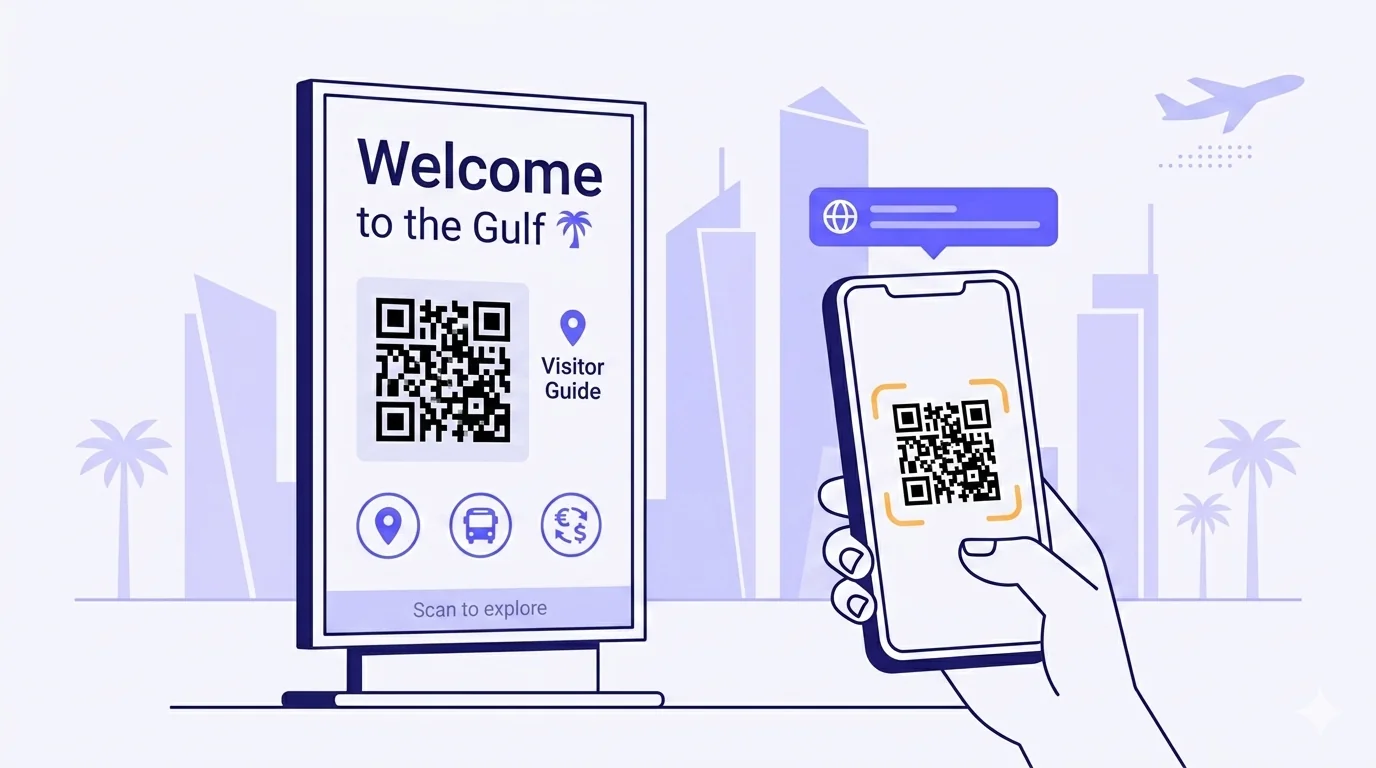
Saudi Arabia is pouring more than $1 trillion into tourism infrastructure under Vision 2030 — NEOM, the Red Sea project, AlUla's progressive opening, Diriyah, Riyadh's hospitality build-out — aiming for 150 million annual visitors by 2030. The UAE has been a tourism powerhouse for two decades and keeps growing. Qatar's post-2022 FIFA World Cup visitor momentum has not faded — the infrastructure is in place, the events keep coming, the cruise terminals expanded. Oman, Bahrain, and Kuwait each have parallel tourism-investment strategies pulling visitors from Europe, India, China, Russia, and increasingly Indonesia, Malaysia, and the wider Muslim world for both leisure and religious tourism. The GCC visitor economy is the most concentrated tourism build-up on the planet right now.
Every arriving visitor brings a smartphone. Most speak a language other than Arabic, often not English either. They land in arrival halls, take taxis to hotels, ask hotel concierges for restaurant recommendations, navigate to attractions, exchange currency, eat at restaurants, shop in malls, transit between cities. Every one of those touchpoints is a multilingual-communication challenge for the hospitality and infrastructure provider — and a QR is the cheapest, most universal infrastructure for solving it. This piece is for hotel operators, attraction managers, airport service teams, transport authorities, and tourism boards across the GCC. Where QR earns its keep in visitor-facing operations, what to put behind it, and how to handle the language-coverage and trust-signal nuances specifically.
Ten QR placements that move the visitor experience forward
1. Airport arrival-hall welcome QR
The first physical surface every visitor encounters is the arrival hall — immigration queues, baggage carousels, ground-transport signage. A welcome QR at this stage routes the visitor to a multilingual destination page covering: the city's local taxi/ride-share apps with installation links, currency-exchange locations and recommended rates, the official tourism site, embassy emergency contacts for the visitor's likely home countries, free Wi-Fi credentials for the airport, and the visa-on-arrival confirmation flow if relevant. Saudi Arabia, UAE, and Qatar's airport authorities are increasingly building this directly into the arrival experience; private hospitality providers can mirror it for their specific visitor base.
2. Hotel-room digital concierge QR
The printed in-room guide is dead. A QR on the desk, the bedside table, or the back of the door leads to a hotel-specific destination page: today's restaurant hours, today's prayer times in the hotel chapel/mosque area, room-service menu, housekeeping requests, spa booking, the airport-shuttle schedule, local attraction tickets with hotel-discounted rates, in-house dining reservations, Wi-Fi credentials, the do-not-disturb toggle. Updated daily by the hotel content team; static printed sign in the room never changes. Saves printing budget AND delivers a better experience.
3. Restaurant-table multilingual menu QR
MENA visitors include Russians, Chinese, Indians, Pakistanis, Indonesians, Germans, Italians, Brazilians, and many more language groups. A printed menu can serve 3-4 languages well; the destination page behind a QR can serve any language with a clean toggle. Ingredients allergens and halal certification surface cleanly in the destination; dietary restrictions for the visitor's home culture surface; the kitchen's spice level disclaimer for Indian/Pakistani visitors who actually want it spicy gets explained properly. The restaurant looks more sophisticated, the visitor is better-served, the menu printing budget drops by 70%.
4. Attraction-entry QR (museums, parks, heritage sites)
AlUla's Hegra site, the Burj Khalifa observation deck, Louvre Abu Dhabi, the Pyramids of Giza (when crossing through the GEM ticket flow), Sheikh Zayed Grand Mosque visitor centre, Doha's Museum of Islamic Art. Each has a tickets-and-info QR at the entrance: the visitor's pre-purchased ticket validates instantly, the multilingual audio-guide loads in their phone browser, the site map is bookmarkable, the rules and dress code render in their language. Smoother entry, better engagement, captured analytics on visitor language preferences and dwell time.
5. Public transport ticket / route QR
Dubai Metro, Riyadh Metro (opening), Doha Metro, Cairo Metro — all have parallel QR-driven ticketing infrastructure to varying maturity levels. Beyond tickets, station-area QRs leading to route-planner mini-apps in the visitor's language are increasingly common. For taxi services, the QR on the seat-back or window decal carrying the fare-estimation tool, the regulated complaint form, and the driver-rating system serves the visitor and accountability simultaneously.
6. Currency-exchange and shopping-tax-refund QR
In the UAE and Saudi Arabia, tourist VAT refund schemes work through specific approved channels (Planet Tax-Free in UAE, certain authorised operators in KSA). A QR at the cashier of a participating shop links to the refund-application flow in the visitor's language; another QR at the airport refund counter completes the flow. Friction reduction matters here — the typical alternative is paper forms, queues, and confusion about eligibility.
7. Cultural-context QR (mosques, heritage districts)
Non-Muslim visitors to a Grand Mosque, Muslim visitors to a historical district outside their cultural fluency, all benefit from a respectful 'context' QR at the entrance explaining: what to expect inside, dress code in the visitor's language with clear visual examples, photography rules, prayer-time impact on the visit, etiquette around interacting with locals. Several major MENA religious sites have rolled this out specifically because verbal explanation at the entrance creates congestion and inconsistent messaging.
8. Event QR (festivals, conferences, sporting events)
Riyadh Season, Doha International Book Fair, Dubai Shopping Festival, GITEX, LEAP, the Saudi Arabian Grand Prix — all are visitor-magnets where QR-driven entry and event-app distribution is now standard. The visitor scans at the gate; the event app loads with the visitor's language, schedule, venue map, ticket-validation, and live-update push-notifications. Without the QR, the visitor would need to find and install the event app blind; with the QR, the friction drops to near-zero.
9. Mall and shopping-district information QR
Dubai Mall, Mall of the Emirates, Riyadh's Boulevard, Doha Festival City — large retail destinations have wayfinding directories that work for locals but underperform for international visitors. A multilingual directory QR at the entrance routes the visitor to a phone-friendly mall map, store directory, restaurant hours, kid-friendly facilities, prayer rooms, parking validation. The mall's own app is download-friction-heavy; the QR-linked web page is friction-free.
10. Embassy-and-emergency QR at high-traffic visitor zones
Less marketing-driven, more service-driven — but worth noting. A small QR on the back of arrival-hall information desks, hotel reception, and major-attraction information points leading to a verified embassy-contact directory keyed to the visitor's home country, plus local emergency numbers and the regional health-service emergency app. Major insurance providers and tourism boards are starting to host these directly; cleanly built ones are a small public-service win that costs near-zero to deploy.
Language coverage — what really matters
GCC visitor mix varies by destination, but the typical priority order for QR destination pages is:
- Arabic (always present, often default for the local visitor) and English (the international lingua franca) — both languages, equal visual weight.
- Russian and Chinese (Mandarin) — strong, growing visitor share to Dubai, Doha, AlUla, Red Sea destinations.
- Urdu, Hindi, Tagalog — large diaspora populations, often serving both visitors and the resident expat workforce who'll informally translate for visiting family.
- Indonesian and Malay — significant for Hajj/Umrah-adjacent visitors and growing for general tourism.
- French — Maghreb visitor base, GCC-based French and francophone West African expats, traditional luxury-tourism segment.
- German, Italian, Spanish, Turkish, Persian — meaningful in specific destinations.
The destination page should auto-detect language from the device locale and let the visitor toggle. Don't ship Arabic-only or English-only destination pages for QRs aimed at international visitors — this is the single most-overlooked failure point in GCC tourism digital infrastructure.
Trust signals that matter for international visitors
Beyond language, what makes a QR destination feel trustworthy to an international visitor:
- Official-domain hosting — the URL behind the QR should resolve to a recognisable government or established-brand domain, not a random short-link service domain. For destinations where official tourism authorities host the page directly, brand the URL accordingly.
- HTTPS with valid certificate — basic but missing surprisingly often. Every QR destination should be HTTPS; expired certificates throw browser warnings that destroy trust.
- Visible bilingual fallback contact for human support — phone number with country code, email, WhatsApp Business contact for the official tourism authority. If the QR destination has a problem, the visitor needs a human path.
- Recognisable design language matching the official tourism identity of the destination — Saudi Tourism, UAE official visitor portal, Qatar Tourism Authority, Oman's Sultanate-branded tourism portal, etc. Visitors arrive familiar with these visual identities from pre-trip research; the QR destination should feel continuous with that brand.
The infrastructure-vendor pattern
Hotels and attraction operators don't build their visitor-QR infrastructure themselves — typically they work with a digital-vendor that provides the QR generation, destination-page hosting, multilingual content management, and analytics. The visitor sees a clean QRA-style QR with the hotel's branding; under the hood, the vendor handles routing, language detection, content delivery, and operational tooling for the hotel's digital team. Several MENA-resident vendors have specialised in this — QRA's enterprise tier explicitly supports this multi-tenant pattern with hotel-group-specific branding, brand-level analytics dashboards, and content management designed for the hotel-content-team workflow.
Operational considerations for GCC heat, humidity, and pilgrimage scale
GCC retail and hospitality QRs face environmental conditions that affect print durability:
- Outdoor placards in Riyadh, Dubai, Doha, Manama summer heat — UV-resistant inks, weatherproof lamination, mounting hardware rated for extreme temperature. Plan to refresh every 12-18 months.
- Indoor placards in air-conditioned environments — much longer durability, typically 3-5 years.
- Hajj/Umrah crowd density — Mecca and Medina shop placards in the pilgrim season experience contact wear that desert outdoor placards don't. Lamination grade matters.
- Coastal humidity (Bahrain, Sharjah, Oman coastal sites) — humidity-rated print stock; ink durability differs from inland dry-heat environments.
What scan analytics reveal about visitor flows
Aggregated QR scan analytics across a tourism property or destination yield insights that traditional visitor surveys can't:
- Which signage placements get scanned vs ignored — informs the next signage refresh budget.
- Real-time language-preference distribution — sometimes diverges meaningfully from the marketing team's assumed visitor mix; this data informs translation priorities for next season.
- Visitor flow through a multi-zone attraction — which exhibits hold attention, which transition zones get bypassed.
- Time-of-day patterns for tourism transport requests — informs operational staff scheduling.
- Country-of-origin distribution per attraction — calibrates destination-marketing investment in the relevant outbound markets.
How QRA fits GCC tourism operations
One QRA workspace per tourism property or destination authority; folders per zone (arrival hall, hotel rooms, attractions, transport, retail). Per-placement dynamic QRs that can be re-pointed through the visitor season and across campaigns without reprinting. Bilingual destination pages with Arabic-default and toggle-to-English/Chinese/Russian/Urdu/Indonesian/French/etc., auto-detected from device locale. Brand-level analytics dashboard separating property-by-property scan flows. Bulk export of QRs in the property's house style with brand logo embedded in each QR (vector SVG/EPS for print). Enterprise-tier features include hotel-group multi-tenant isolation, white-label destination domains, and SLA-backed uptime for high-stakes airport and attraction infrastructure.
The short answer
GCC tourism is in a structural growth phase, and the visitor experience is the differentiator. Every visitor brings a phone, speaks a language other than your default, and has a strong preference for digital-first information delivery. A network of dynamic QRs across the visitor journey — airport arrival, hotel room, restaurant table, attraction entry, transport, shopping, cultural sites, events, malls — delivers multilingual personalised content at the moments visitors need it, with operational flexibility for the property to update content without touching the printed surfaces. Build it once, refine continuously, accumulate the scan data, win the season. The QR is small; the visitor-experience uplift is the kind that turns first-time visitors into repeat ones.
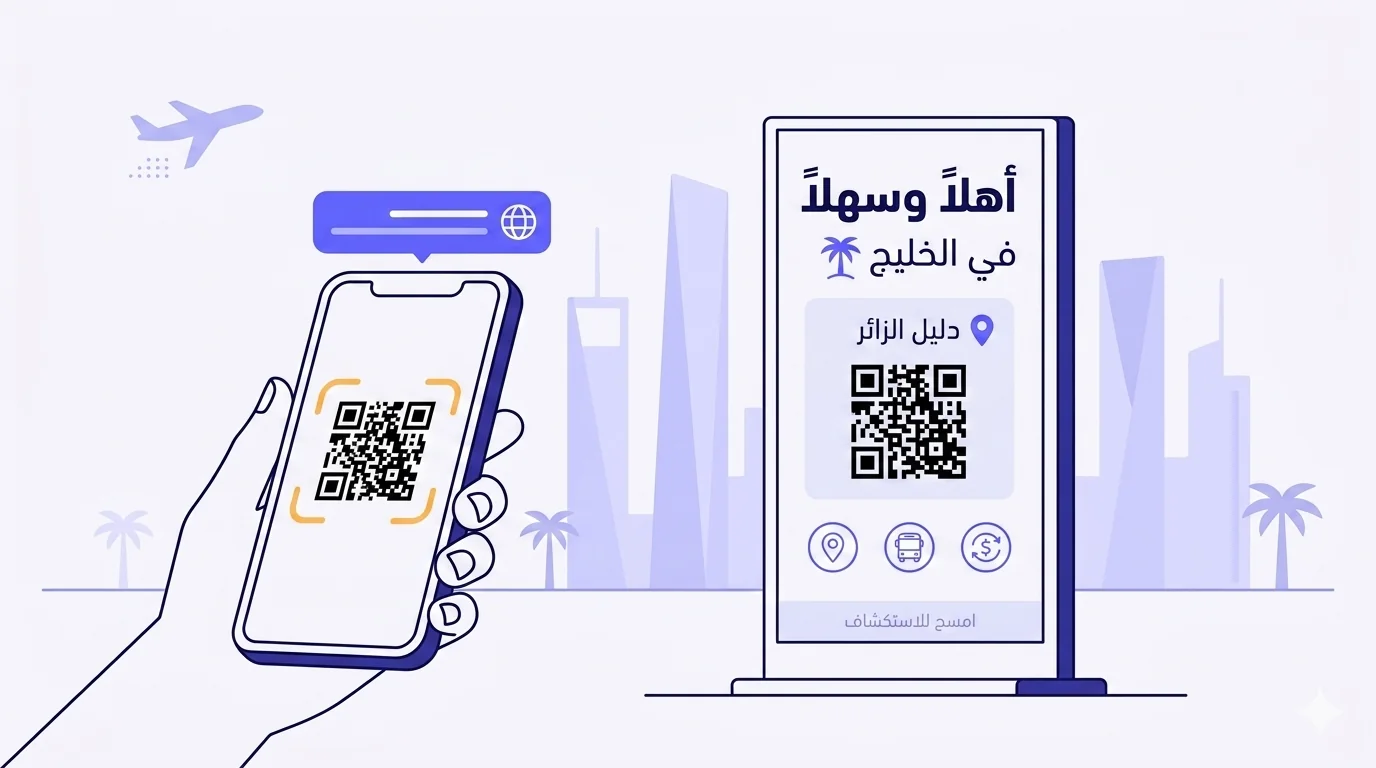
تضخّ المملكة العربيّة السعوديّة أكثر من تريليون دولار في البنية التحتيّة للسياحة تحت رؤية ٢٠٣٠ — نيوم، مشروع البحر الأحمر، الفتح التدريجي للعلا، الدرعيّة، التوسّع الضيافي في الرياض — مستهدفةً ١٥٠ مليون زائر سنويّاً بحلول ٢٠٣٠. الإمارات قوّة سياحيّة منذ عقدَين وتستمرّ في النموّ. زخم زوّار قطر بعد كأس العالم ٢٠٢٢ لم يتراجع — البنية التحتيّة في مكانها، الفعاليّات تتواصل، محطّات الرحلات البحريّة توسّعت. عمان والبحرين والكويت لكلّ منها استراتيجيّات استثمار سياحي موازية تجلب زوّاراً من أوروبا والهند والصين وروسيا، وبشكل متزايد من إندونيسيا وماليزيا والعالم الإسلامي الأوسع لكلّ من السياحة الترفيهيّة والدينيّة. اقتصاد زوّار الخليج هو أكبر تراكم سياحي مركّز على الكوكب في هذه اللحظة.
كلّ زائر قادم يحمل هاتفاً ذكيّاً. معظمهم يتحدّثون لغة غير العربيّة، وغالباً ليست الإنجليزيّة أيضاً. يهبطون في قاعات الوصول، يأخذون سيّارات الأجرة إلى الفنادق، يسألون موظّفي الفنادق عن توصيات المطاعم، يتنقّلون إلى المعالم، يصرفون العملة، يأكلون في المطاعم، يتسوّقون في الموالات، يتنقّلون بين المدن. كلّ نقطة من هذه نقاط تواصل تحدٍّ متعدّد اللغات لمزوّد الضيافة والبنية التحتيّة — ورمز QR هو أرخص وأكثر بنية تحتيّة عالميّة لحلّها. هذا المقال موجَّه لمشغّلي الفنادق، ومديري المعالم، وفرق خدمة المطارات، وسلطات النقل، ومجالس السياحة عبر الخليج. أين يكسب QR موقعه في العمليّات المواجهة للزوّار، ماذا تضع خلفه، وكيف تتعامل مع نوانس تغطية اللغة وإشارات الثقة تحديداً.
عشرة مواضع QR تدفع تجربة الزائر للأمام
١. رمز QR ترحيب قاعة وصول المطار
السطح الفيزيائي الأوّل الذي يصادفه كلّ زائر هو قاعة الوصول — طوابير الهجرة، حلقات الأمتعة، لافتات النقل البرّي. رمز QR ترحيب في هذه المرحلة يوجّه الزائر إلى صفحة وجهة متعدّدة اللغات تغطّي: تطبيقات سيّارات الأجرة/النقل التشاركي المحلّيّة مع روابط التثبيت، مواقع صرف العملة والأسعار الموصى بها، الموقع السياحي الرسمي، جهات اتّصال طوارئ السفارات للبلدان الأمّ المحتملة للزائر، بيانات الواي فاي المجّاني للمطار، وتدفّق تأكيد التأشيرة عند الوصول إن كان ذا صلة. سلطات مطارات السعوديّة والإمارات وقطر تبني هذا بشكل متزايد مباشرةً في تجربة الوصول؛ ومزوّدو الضيافة الخاصّون يستطيعون عكسه لقاعدة زوّارهم المحدّدة.
٢. رمز QR كونسيرج رقمي لغرفة الفندق
الدليل المطبوع داخل الغرفة مات. رمز QR على المكتب، أو طاولة السرير، أو خلف الباب يقود إلى صفحة وجهة خاصّة بالفندق: ساعات المطعم اليوم، أوقات الصلاة اليوم في مصلّى الفندق، قائمة خدمة الغرف، طلبات التدبير المنزلي، حجز السبا، جدول حافلات المطار، تذاكر المعالم المحلّيّة بأسعار الفندق المخفّضة، حجوزات الطعام داخل الفندق، بيانات الواي فاي، زرّ تبديل عدم الإزعاج. يُحدَّث يوميّاً من قِبَل فريق محتوى الفندق؛ اللافتة المطبوعة في الغرفة لا تتغيّر أبداً. توفّر ميزانيّة الطباعة وتقدّم تجربة أفضل في الوقت نفسه.
٣. رمز QR قائمة طعام متعدّدة اللغات لطاولة المطعم
زوّار الشرق الأوسط يشملون روساً وصينيّين وهنوداً وباكستانيّين وإندونيسيّين وألماناً وإيطاليّين وبرازيليّين، ومجموعات لغات أخرى عديدة. قائمة طعام مطبوعة تستطيع خدمة ٣-٤ لغات بشكل جيّد؛ صفحة الوجهة خلف QR تستطيع خدمة أيّ لغة بزرّ تبديل نظيف. مكوّنات المسبّبات للحساسيّة وشهادة الحلال تظهر بشكل واضح في الوجهة؛ القيود الغذائيّة لثقافة الزائر الأمّ تظهر؛ تنبيه مستوى التوابل في المطبخ للزوّار الهنود/الباكستانيّين الذين يريدونها حارّة فعلاً يُشرح بشكل صحيح. يبدو المطعم أكثر تطوّراً، الزائر مخدوم بشكل أفضل، ميزانيّة طباعة القائمة تنخفض بنسبة ٧٠٪.
٤. رمز QR دخول المعلم (متاحف، حدائق، مواقع تراثيّة)
موقع الحجر في العلا، سطح برج خليفة، اللوفر أبوظبي، أهرامات الجيزة (عند المرور بتدفّق تذاكر المتحف المصري الكبير)، مركز زوّار جامع الشيخ زايد، متحف الفنّ الإسلامي في الدوحة. كلّ منها لديه رمز QR للتذاكر والمعلومات عند المدخل: تذكرة الزائر المشتراة مسبقاً تتحقّق فوراً، الدليل الصوتي متعدّد اللغات يُحمَّل في متصفّح هاتفه، خريطة الموقع قابلة للحفظ، القواعد ومدوّنة اللباس تُصيَّر بلغته. دخول أنعم، انخراط أفضل، تحليلات ملتقطة عن تفضيلات لغة الزوّار ووقت البقاء.
٥. رمز QR تذكرة/مسار النقل العامّ
مترو دبي، مترو الرياض (يُفتتح)، مترو الدوحة، مترو القاهرة — كلّها لديها بنية تحتيّة موازية لتذاكر QR بمستويات نضج متفاوتة. وراء التذاكر، رموز QR قرب المحطّات تقود إلى تطبيقات مصغّرة لمخطّط المسارات بلغة الزائر شائعة بشكل متزايد. لخدمات سيّارات الأجرة، رمز QR على ظهر المقعد أو ملصق النافذة يحمل أداة تقدير الأجرة، نموذج الشكوى المنظَّم، ونظام تقييم السائق يخدم الزائر والمساءلة في الوقت نفسه.
٦. رمز QR صرف العملة واسترداد ضريبة التسوّق
في الإمارات والسعوديّة، تعمل خطط استرداد ضريبة القيمة المضافة للسيّاح عبر قنوات معتمدة محدّدة (Planet Tax-Free في الإمارات، مشغّلون مرخّصون معيّنون في السعوديّة). رمز QR عند كاشير محلّ مشارك يحيل إلى تدفّق طلب الاسترداد بلغة الزائر؛ ورمز QR آخر عند كاونتر الاسترداد في المطار يُكمل التدفّق. تقليل الاحتكاك يهمّ هنا — البديل النموذجي هو نماذج ورقيّة، طوابير، والتباس حول الأهلّيّة.
٧. رمز QR السياق الثقافي (مساجد، أحياء تراثيّة)
الزوّار غير المسلمين لجامع كبير، الزوّار المسلمون لحيّ تاريخي خارج طلاقتهم الثقافيّة، كلّهم يستفيدون من رمز QR «سياق» محترم عند المدخل يشرح: ماذا تتوقّع داخلاً، مدوّنة اللباس بلغة الزائر مع أمثلة بصريّة واضحة، قواعد التصوير، تأثير وقت الصلاة على الزيارة، آداب التفاعل مع السكّان المحلّيّين. عدّة مواقع دينيّة كبرى في الشرق الأوسط طرحت هذا تحديداً لأنّ الشرح الشفهي عند المدخل يُحدث ازدحاماً ورسائل غير متّسقة.
٨. رمز QR للمناسبات (مهرجانات، مؤتمرات، أحداث رياضيّة)
موسم الرياض، معرض الدوحة الدولي للكتاب، مهرجان دبي للتسوّق، GITEX، LEAP، الجائزة الكبرى السعوديّة للفورمولا — كلّها مغناطيس للزوّار حيث الدخول المُوجَّه بـ QR وتوزيع تطبيق المناسبة معياري الآن. يمسح الزائر عند البوّابة؛ يُحمَّل تطبيق المناسبة بلغة الزائر، الجدول، خريطة الموقع، التحقّق من التذكرة، وإشعارات التحديث المباشر. بدون QR، سيحتاج الزائر إلى إيجاد وتثبيت تطبيق المناسبة أعمى؛ مع QR، الاحتكاك ينخفض إلى قرب-الصفر.
٩. رمز QR معلومات الموالات وحيّ التسوّق
دبي مول، مول الإمارات، بوليفارد الرياض، فستيفال سيتي الدوحة — وجهات تجزئة كبيرة لديها أدلّة توجيه تعمل للسكّان المحلّيّين لكنّها تؤدّي أقلّ للزوّار الدوليّين. رمز QR دليل متعدّد اللغات عند المدخل يوجّه الزائر إلى خريطة مول صديقة للهاتف، دليل المحلّات، ساعات المطاعم، مرافق صديقة للأطفال، غرف الصلاة، التحقّق من موقف السيّارة. تطبيق المول الخاصّ ثقيل احتكاك التنزيل؛ صفحة الويب المرتبطة بـ QR خالية من الاحتكاك.
١٠. رمز QR السفارة والطوارئ في مناطق الزوّار عالية الحركة
أقلّ من السياسة التسويقيّة، أكثر من السياسة الخدميّة — لكنّه يستحقّ الإشارة. رمز QR صغير على ظهر مكاتب معلومات قاعات الوصول، استقبال الفندق، ونقاط معلومات المعالم الكبرى يقود إلى دليل جهات اتّصال سفارات مفهرس ومثبت ببلد الزائر الأمّ، إضافةً إلى أرقام الطوارئ المحلّيّة وتطبيق طوارئ خدمة الصحّة الإقليمي. مزوّدو التأمين الكبار ومجالس السياحة بدأوا في استضافة هذه مباشرةً؛ المبنيّة بشكل نظيف هي فوز خدمة عامّة صغير يكلّف قرب-الصفر لنشره.
تغطية اللغة — ما يهمّ فعلاً
مزيج زوّار الخليج يتفاوت بالوجهة، لكنّ ترتيب الأولويّة النموذجي لصفحات وجهة QR هو:
- العربيّة (حاضرة دائماً، غالباً افتراضيّة للزائر المحلّي) والإنجليزيّة (اللغة المشتركة الدوليّة) — كلتاهما، بوزن بصري متساوٍ.
- الروسيّة والصينيّة (الماندرين) — حصّة زوّار قويّة ومتنامية إلى دبي والدوحة والعلا ووجهات البحر الأحمر.
- الأرديّة والهنديّة والتاغالوغ — تجمّعات الجاليات الكبيرة، غالباً تخدم الزوّار وقوّة العمل المغتربة المقيمة التي ستترجم بشكل غير رسمي للعائلات الزائرة.
- الإندونيسيّة والملايو — مهمّة للزوّار قرب-الحجّ/العمرة ومتنامية للسياحة العامّة.
- الفرنسيّة — قاعدة زوّار المغرب العربي، المغتربون الفرنسيّون وأبناء غرب أفريقيا الفرانكوفونيّون المقيمون في الخليج، شريحة السياحة الفاخرة التقليديّة.
- الألمانيّة، الإيطاليّة، الإسبانيّة، التركيّة، الفارسيّة — ذات معنى في وجهات محدّدة.
يجب أن تكتشف صفحة الوجهة اللغة تلقائيّاً من محلّيّة الجهاز وتتيح للزائر التبديل. لا تشحن صفحات وجهة عربيّة-فقط أو إنجليزيّة-فقط لرموز QR موجَّهة للزوّار الدوليّين — هذه أكثر نقطة فشل ناقصة التقدير في البنية التحتيّة الرقميّة لسياحة الخليج.
إشارات الثقة التي تهمّ للزوّار الدوليّين
وراء اللغة، ما يجعل وجهة QR تشعر بالموثوقيّة للزائر الدولي:
- استضافة-نطاق رسمي — الرابط خلف QR يجب أن يحلّ إلى نطاق حكومي معروف أو علامة راسخة، لا نطاق خدمة رابط مختصر عشوائي. للوجهات حيث تستضيف سلطات السياحة الرسميّة الصفحة مباشرةً، أعلِم الرابط وفقاً لذلك.
- HTTPS بشهادة صالحة — أساسي لكنّه مفقود بشكل مفاجئ كثيراً. كلّ وجهة QR يجب أن تكون HTTPS؛ الشهادات المنتهية تطلق تحذيرات متصفّح تدمّر الثقة.
- جهة اتّصال احتياطيّة ثنائيّة اللغة مرئيّة للدعم البشري — رقم هاتف برمز بلد، بريد، جهة اتّصال واتساب للأعمال لسلطة السياحة الرسميّة. إن كان لوجهة QR مشكلة، يحتاج الزائر إلى مسار بشري.
- لغة تصميم قابلة للتعرّف تطابق الهويّة السياحيّة الرسميّة للوجهة — السياحة السعوديّة، البوّابة الرسميّة لزوّار الإمارات، هيئة السياحة القطريّة، البوّابة السياحيّة لسلطنة عمان، إلخ. يصل الزوّار مألوفين بهذه الهويّات البصريّة من البحث قبل الرحلة؛ يجب أن تشعر وجهة QR بالاستمراريّة مع تلك العلامة.
نمط مورّد البنية التحتيّة
الفنادق ومشغّلو المعالم لا يبنون البنية التحتيّة لرموز QR للزوّار بأنفسهم — يعملون عادةً مع مورّد رقمي يوفّر توليد QR، استضافة صفحة الوجهة، إدارة محتوى متعدّد اللغات، والتحليلات. يرى الزائر رمز QR نظيف بنمط QRA بعلامة الفندق التجاريّة؛ تحت الغطاء، يتعامل المورّد مع التوجيه، اكتشاف اللغة، توصيل المحتوى، والأدوات التشغيليّة لفريق الفندق الرقمي. عدّة مورّدين مقيمين في الشرق الأوسط تخصّصوا في هذا — تدعم مستوى QRA المؤسّسي هذا النمط متعدّد المستأجرين صراحةً بعلامة تجاريّة خاصّة بمجموعة الفنادق، لوحات تحليلات على مستوى العلامة، وإدارة محتوى مصمّمة لتدفّق عمل فريق محتوى الفندق.
اعتبارات تشغيليّة لحرارة الخليج والرطوبة ومقياس الحجّ
رموز QR التجزئة والضيافة في الخليج تواجه ظروفاً بيئيّة تؤثّر على متانة الطباعة:
- اللافتات الخارجيّة في حرّ صيف الرياض ودبي والدوحة والمنامة — أحبار مقاومة للأشعّة فوق البنفسجيّة، تغليف مقاوم للطقس، تركيبات معدنيّة مصنّفة لدرجة حرارة قصوى. خطّط للتجديد كلّ ١٢-١٨ شهراً.
- اللافتات الداخليّة في بيئات مكيّفة — متانة أطول بكثير، عادةً ٣-٥ سنوات.
- كثافة حشود الحجّ/العمرة — لافتات محلّات مكّة والمدينة في موسم الحجّاج تواجه تآكلاً من الاتّصال لا تواجهه لافتات الصحراء الخارجيّة. درجة التغليف تهمّ.
- الرطوبة الساحليّة (البحرين والشارقة ومواقع عمان الساحليّة) — ورق طباعة مصنّف للرطوبة؛ متانة الحبر تختلف عن بيئات الحرّ الجافّ الداخليّة.
ما تكشفه تحليلات المسح عن تدفّقات الزوّار
تحليلات مسح QR مجمّعة عبر عقار سياحي أو وجهة تنتج رؤى لا تستطيع استبيانات الزوّار التقليديّة:
- أيّ مواضع اللافتات تُمسح مقابل تُهمَل — تُعلِم ميزانيّة تجديد اللافتات التالية.
- توزيع تفضيل اللغة في الوقت الحقيقي — أحياناً يختلف بشكل ملموس عن مزيج الزوّار الذي افترضه فريق التسويق؛ هذه البيانات تُعلِم أولويّات الترجمة للموسم القادم.
- تدفّق الزوّار عبر معلم متعدّد المناطق — أيّ المعروضات تحتجز الانتباه، أيّ مناطق الانتقال تُتجاوز.
- أنماط الوقت من اليوم لطلبات نقل السياحة — تُعلِم جدولة موظّفي التشغيل.
- توزيع بلد المنشأ لكلّ معلم — يعاير استثمار التسويق إلى الوجهات في الأسواق الخارجة ذات الصلة.
كيف تتناسب QRA مع عمليّات سياحة الخليج
مساحة عمل QRA واحدة لكلّ عقار سياحي أو سلطة وجهة؛ مجلّدات لكلّ منطقة (قاعة الوصول، غرف الفندق، المعالم، النقل، التجزئة). رموز QR ديناميكيّة لكلّ موضع يمكن إعادة توجيهها عبر موسم الزوّار وعبر الحملات دون إعادة طباعة. صفحات وجهة ثنائيّة اللغة بافتراضي عربي وزرّ تبديل إلى الإنجليزيّة/الصينيّة/الروسيّة/الأرديّة/الإندونيسيّة/الفرنسيّة/إلخ، مكتشَفة تلقائيّاً من محلّيّة الجهاز. لوحة تحليلات على مستوى العلامة تفصل تدفّقات المسح بين العقارات. تصدير جماعي لرموز QR بأسلوب العقار الرسمي مع شعار العلامة مدمج في كلّ QR (متّجهي SVG/EPS للطباعة). ميزات المستوى المؤسّسي تشمل عزل متعدّد المستأجرين لمجموعات الفنادق، نطاقات وجهة بعلامة بيضاء، وزمن تشغيل مدعوم بـ SLA لبنية تحتيّة عالية المخاطر للمطار والمعالم.
الإجابة المختصرة
سياحة الخليج في مرحلة نموّ هيكلي، وتجربة الزائر هي الفرق. كلّ زائر يحمل هاتفاً، يتحدّث لغة غير افتراضيّتك، ولديه تفضيل قويّ لتوصيل معلومات رقمي-أوّلاً. شبكة من رموز QR ديناميكيّة عبر رحلة الزائر — وصول المطار، غرفة الفندق، طاولة المطعم، دخول المعلم، النقل، التسوّق، المواقع الثقافيّة، المناسبات، الموالات — توصل محتوى شخصياً متعدّد اللغات في اللحظات التي يحتاجها الزوّار، مع مرونة تشغيليّة للعقار لتحديث المحتوى دون لمس الأسطح المطبوعة. ابنه مرّة، صقله باستمرار، اجمع بيانات المسح، اربح الموسم. الرمز صغير؛ ورفعة تجربة الزائر هي النوع الذي يحوّل الزوّار للمرّة الأولى إلى زوّار متكرّرين.
Ready to make a smarter QR?جاهز لإنشاء رمز QR أذكى؟
Sign up free — no card needed. Track every scan, edit destinations anytime.سجّل مجاناً — بدون بطاقة. تتبّع كل عملية مسح وعدّل الوجهة في أي وقت.